
Best Scopes for Your 277 Fury Rifle

Best Scopes for Your 277 Fury Rifle
The 277 Fury cartridge has changed the game for long-range shooters who want serious performance in a compact package. Originally developed for military use, this high-pressure round delivers impressive velocities that push well beyond traditional hunting cartridges, making it a natural choice for precision shooting at extended distances.
Pairing your 277 Fury rifle with the right optic is critical to unlocking its full potential. This isn’t a cartridge you’ll be shooting at 100 yards with a basic hunting scope – you need an optic built for the demands of long-range work, with enough elevation travel to reach out past 1,000 yards, glass quality that lets you spot impacts in variable conditions, and tracking precision that won’t let you down when you dial for distance.
Top 5 Long-Range Scopes for 277 Fury Rifles
When shopping for a scope to mount on your 277 Fury, you’re looking at premium glass designed for serious long-range work. The cartridge’s flat trajectory and high velocity mean you can stretch distances, but only if your optic can keep up with the demands.
First focal plane scopes are the standard for this application because your reticle measurements stay consistent at any magnification. Look for magnification ranges starting around 5-7x on the low end and reaching 35-40x on the high end – this gives you flexibility for closer shots while providing the power needed to resolve targets and read wind at distance. Features like zero stop mechanisms, locking turrets, and exposed tactical turrets are essential, not optional extras. Glass quality matters tremendously when you’re trying to spot trace or impacts at 1,200+ yards, so Japanese or European glass is worth the investment.
Quick Checklist: Scope Features for 277 Fury
- Minimum 20 MOA elevation travel (preferably 30+ MOA)
- First focal plane reticle with usable holdover points
- Magnification range of at least 5-25x or 7-35x
- 34mm or 36mm main tube for maximum adjustment range
- Exposed tactical turrets with positive clicks (0.1 mil or 0.25 MOA)
- Parallax adjustment down to 25 yards minimum
- Zero stop or return-to-zero feature
- Weatherproof construction rated for recoil
Elevation Travel: How Much You Really Need
The 277 Fury’s ballistic performance means you’ll be dialing elevation regularly, and running out of adjustment range is frustrating. With factory 140-grain loads pushing around 3,000 fps, you’re looking at roughly 30 MOA of drop at 1,000 yards, depending on your zero distance and environmental conditions.
Here’s where the math gets important. If you zero at 100 yards and want to reach 1,200 yards reliably, you need at least 35-40 MOA of total elevation travel in your scope. This assumes you’re using a 20 MOA scope base or rings to cant your scope downward and gain extra upward adjustment. Scopes with 34mm or 36mm main tubes typically offer 25-35 MOA of travel, while 30mm tubes often max out around 20-25 MOA. Don’t forget to account for the clicks you’ll use getting zeroed – you rarely get to use the full advertised range.
| Tube Diameter | Typical Elevation Range | Effective Range with 20 MOA Base |
|---|---|---|
| 30mm | 20-25 MOA | Good to 900 yards |
| 34mm | 25-30 MOA | Good to 1,100 yards |
| 36mm | 30-35+ MOA | Good to 1,300+ yards |
Best Reticles for 277 Fury Ballistics
Reticle selection matters more than many shooters realize, especially with a flat-shooting cartridge like 277 Fury. Christmas tree-style reticles like the Tremor3, H59, or similar designs give you wind holds at every distance, which is invaluable when you’re engaging targets beyond 800 yards where wind drift becomes the primary challenge.
The 277 Fury’s velocity advantage means less wind drift compared to slower cartridges, but you still need precise wind calling at distance. A reticle with 0.2 mil or 0.5 MOA hash marks lets you make fine adjustments without dialing your windage turret. Some shooters prefer simpler reticles with just crosshairs and a few holdover points, but when you’re serious about long-range work, the extra information from a detailed reticle becomes second nature after practice. Match your reticle type (mil or MOA) to your turrets – mixing systems creates unnecessary mental math under pressure.
Scope Ring Height and Mounting Mistakes
Getting your scope mounted at the correct height is more complicated with modern precision rifles than it used to be. You need enough clearance for a 50-56mm objective lens to avoid touching your barrel, while also achieving proper cheek weld and eye alignment without straining your neck.
Most 277 Fury rifles built on AR-style platforms or bolt guns with larger objective scopes need medium to high rings, typically in the 1.0-1.5 inch height range. Too low and your objective bell contacts the barrel or rail – too high and you’re craning your neck to get behind the scope. A good rule is to have about 1/8 inch clearance between your objective and the barrel at the closest point. If you’re running night vision or a clip-on thermal device in front of your scope, you may need even higher rings to accommodate the extra equipment.
Quick Takeaways: Mounting Height
- Measure objective lens diameter and calculate needed clearance
- Account for any accessories (lens covers, anti-reflection devices)
- Test cheek weld with unloaded rifle before final tightening
- Use a scope leveling system during installation
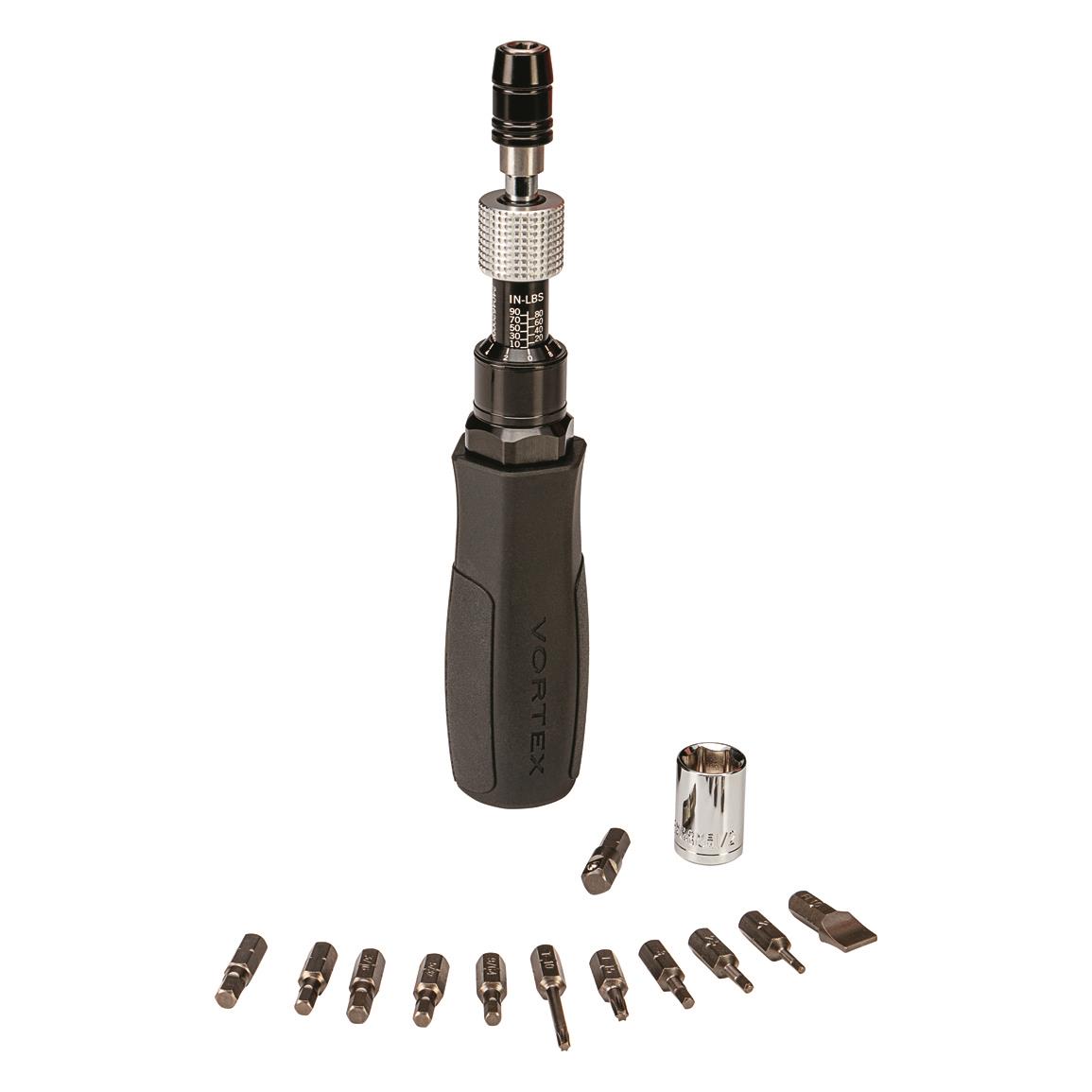
- Torque ring screws to manufacturer specifications (typically 15-25 inch-pounds)
Common Mistakes When Choosing a 277 Fury Scope
One of the biggest errors shooters make is underestimating the quality of glass they need for long-range work. Buying a scope based solely on magnification numbers or feature lists without considering optical clarity leads to disappointment when you can’t resolve targets or read mirage at 1,000 yards. The difference between mid-grade and premium glass becomes obvious in low light, heat mirage, or when trying to spot your own impacts.
Another common mistake is choosing scopes with inadequate adjustment range. Shooters see "25 MOA of elevation" and assume that’s enough, forgetting they’ll use 10-12 MOA just getting zeroed at 100 yards on a flat base. Then they hit the limit around 800 yards and wonder why they can’t reach further. Always plan for more adjustment than you think you need.
Mismatching reticle and turret measurements causes endless frustration. If your reticle is in mils but your turrets are in MOA (or vice versa), you’re constantly converting numbers when you should be focusing on wind and target. Stick with one system throughout your entire setup.
Finally, many shooters skip proper scope leveling during installation. Even a few degrees of cant throws your shots off horizontally as you dial elevation, creating mysterious misses that seem like wind calls but are actually mounting errors. Use a quality leveling kit and take your time – this step matters more than most realize.
FAQ: 277 Fury Scope Selection
Q: Can I use a standard hunting scope on my 277 Fury rifle?
For typical hunting ranges under 400 yards, a quality hunting scope works fine. But if you want to explore the cartridge’s long-range capabilities, you need a tactical scope with enough elevation travel and precise turrets. Most hunting scopes run out of adjustment before 700 yards.
Q: Do I really need a scope that costs as much as my rifle?
Premium optics hold value and last through multiple rifle builds. A $2,000-3,000 scope on a $1,500 rifle makes more sense than the reverse – you can upgrade the rifle later while keeping quality glass. That said, there are solid options in the $1,200-1,800 range that perform well for most shooters.
Q: What magnification do I actually need for 1,000-yard shooting?
You can hit targets at 1,000 yards with 10x magnification if conditions are good and the target is large enough. But for precision work and reading wind, 20-25x is more practical. Variable scopes give you flexibility – use lower power for target acquisition and higher power for wind calls and precise aiming.
Q: Should I choose mil or MOA for my 277 Fury scope?
Either system works perfectly well. Mils are more common in tactical shooting and offer slightly faster math for ranging and holdovers. MOA is traditional in American shooting and gives finer adjustments per click. Choose based on what you’re comfortable with and stick with it across all your equipment.
Q: How important is the warranty when buying an expensive scope?
Extremely important. Premium scope manufacturers typically offer lifetime warranties that cover defects and damage. This matters when you’re investing thousands of dollars. Verify the warranty terms before buying, especially regarding tracking issues or reticle failures.
Q: Do I need an illuminated reticle for long-range shooting?
It’s helpful but not essential. Illumination aids in low-light conditions and helps the reticle stand out against certain backgrounds. For dedicated long-range work in good light, a non-illuminated reticle works fine and often costs less. Consider your typical shooting conditions when deciding.
Selecting the right scope for your 277 Fury rifle comes down to understanding the cartridge’s capabilities and matching them with optics built for serious long-range work. You need adequate elevation travel to reach the distances this cartridge can handle, glass quality that lets you see what you’re shooting at, and mechanical precision that tracks reliably shot after shot.
The investment in quality glass pays dividends every time you’re behind the rifle. Whether you’re pushing the limits at 1,200+ yards or working on precision fundamentals at mid-range, a properly matched scope transforms your 277 Fury from an impressive cartridge into a complete long-range system. Take your time choosing, mount it correctly, and spend your money on the features that actually matter – your shooting will reflect the difference.





Comments are closed.