
9mm vs .45 ACP for Self-Defense: Myths and Reality


The 9mm vs 45 ACP self-defense argument has raged for over a century. Shooters on both sides have dug into their positions with near-religious conviction, often citing anecdotes from wartime service, law enforcement encounters, or range-day impressions. The problem is that most of these arguments lean on outdated ammunition technology, gut feelings, or a misunderstanding of what actually stops a threat.
Today, we have something better than opinions – we have data. Modern 9mm hollow point effectiveness, standardized FBI gel testing protocols, and decades of real-world shooting incident analysis have given us a clearer picture than ever before. This article breaks down the actual ballistic performance of both calibers using current evidence, so you can make a decision based on science rather than folklore.

How Stopping Power Myths Mislead Shooters
The phrase “stopping power” is probably the single most misused term in the self-defense world. It implies that a single round from a particular caliber can reliably incapacitate a threat on contact – like flipping a switch. In reality, handgun rounds of any common caliber are relatively poor at instantly stopping a determined attacker. What actually matters is shot placement, adequate penetration, and the ability to put follow-up rounds on target quickly.
The mythology around 45 ACP stopping power grew largely from its military history, particularly its adoption after the Moro Rebellion in the early 1900s. The story goes that 38-caliber revolvers failed to stop charging warriors, so the Army needed a bigger bullet. While there is truth to the historical context, the conclusion that “bigger always equals better” ignores a century of ammunition development. Early 9mm ball ammunition was genuinely underwhelming in terminal performance. But ball ammo is not what anyone should be carrying for self-defense in 2024.
Modern Hollow Points Changed the 9mm Game
The single biggest factor that has shifted the 9mm vs 45 ACP ballistics conversation is the modern bonded hollow point. Ammunition like Federal HST, Speer Gold Dot, and Hornady Critical Duty in 9mm Luger now expands reliably to 0.60 inches or more while still penetrating 14 to 16 inches in calibrated gel. That expansion diameter overlaps significantly with what 45 ACP hollow points achieve – often landing in the 0.70 to 0.75 inch range.
The gap has narrowed dramatically. Thirty years ago, a 9mm hollow point might clog with clothing and pencil through a target with minimal expansion. Today’s engineered projectiles are designed to perform through heavy denim, leather, and even automotive glass. When you factor in that a 9mm pistol typically holds 15 to 17 rounds in a standard magazine versus 7 to 10 for a comparable 45 ACP, the capacity advantage becomes hard to ignore. More rounds on board means more opportunities to place effective hits under the stress of a real encounter.
FBI Gel Tests Show Surprising Results
The FBI’s ammunition testing protocol measures performance across multiple barrier types – bare gel, heavy clothing, sheet metal, wallboard, plywood, and auto glass. To pass, a round must penetrate between 12 and 18 inches in calibrated 10% ordnance gelatin while expanding reliably. This protocol has become the industry standard for evaluating self-defense ammunition, and both 9mm and 45 ACP premium loads pass it consistently.
Here is a compact comparison of representative loads tested in bare gel:
| Metric | 9mm 147gr Federal HST | 45 ACP 230gr Federal HST |
|---|---|---|
| Muzzle velocity | ~1000 fps | ~890 fps |
| Penetration depth | 14.5 in | 14.0 in |
| Expanded diameter | 0.61 in | 0.85 in |
| Typical capacity (compact) | 15+1 | 8+1 |
| Recoil impulse | Lower | Higher |
The 45 ACP does create a larger permanent wound cavity due to its greater expanded diameter. That is a real, measurable advantage. However, the penetration depths are nearly identical, and the 9mm’s expansion is well within the range that the FBI considers fully effective. The Bureau itself transitioned back to 9mm in 2015 after extensive testing, concluding that modern 9mm loads offered equivalent terminal performance with significant advantages in capacity and shootability.
Common Mistakes When Choosing a Caliber
Choosing between 9mm or 45 for home defense – or concealed carry – should be a practical decision, not an emotional one. Here are the most common mistakes shooters make:
- Prioritizing caliber over shot placement. A 9mm hit to the thoracic cavity is vastly more effective than a 45 ACP miss. Recoil management directly affects accuracy under stress.
- Carrying ball or FMJ ammunition for self-defense. Neither caliber performs well without a quality hollow point. Always carry purpose-built defensive loads.
- Ignoring capacity in a defensive context. Real-world encounters often involve multiple threats, missed shots under adrenaline, or barriers that absorb rounds. More capacity provides a real margin.
- Buying a caliber you cannot afford to train with. 45 ACP typically costs 30% to 50% more per round than 9mm. If cost limits your range time, your proficiency suffers – and proficiency saves lives.
- Choosing a platform that is too large to actually carry. The best handgun caliber for concealed carry is irrelevant if the gun stays in your nightstand because it is uncomfortable to carry daily.
- Falling for internet mythology. Phrases like “they don’t make a 46” or “9mm is just a 45 set on stun” are jokes, not ballistic analysis.
A more productive approach is to test-fire both calibers in similarly sized platforms and honestly assess which one you shoot better and faster.
Pick the Right Round for Your Scenario
The right choice depends on your specific situation, body type, and legal environment. For concealed carry, 9mm wins for most people. Compact and subcompact 9mm pistols are lighter, slimmer, and hold significantly more ammunition than their 45 ACP equivalents. Split times – the time between accurate shots – are measurably faster for the majority of shooters with 9mm due to reduced recoil. If you are a smaller-framed person or someone newer to handguns, 9mm will almost certainly let you train more effectively and carry more comfortably.
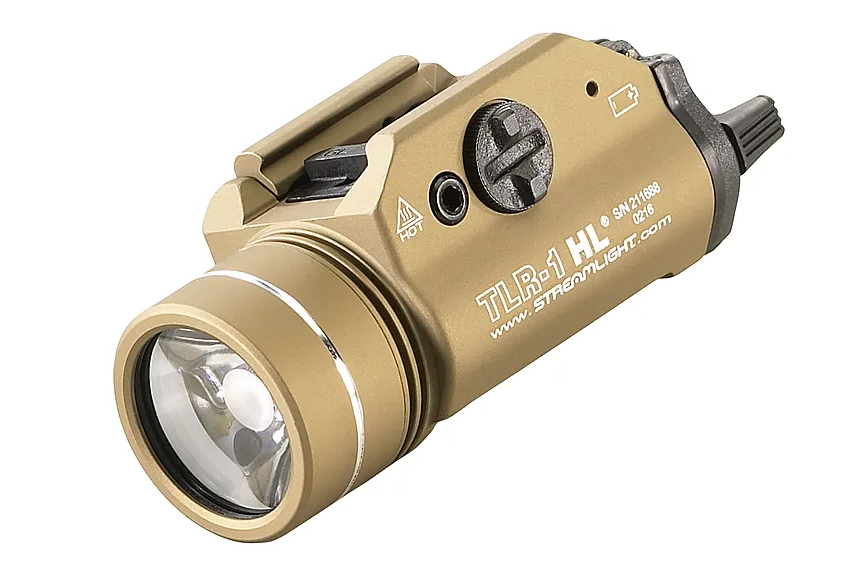
For home defense, the calculus shifts slightly. Recoil and capacity still matter, but concealability does not. A full-size 45 ACP with a weapon-mounted light is a formidable home defense tool, and its subsonic nature means it suppresses exceptionally well if you run a suppressor. If you already have a quality 45 ACP pistol and shoot it well, there is no ballistic reason to switch. The key is honest self-assessment.
Quick Checklist – Choosing Your Defensive Caliber
- Can you consistently hit a 6-inch circle at 7 yards under time pressure with your chosen caliber?
- Does your carry gun hold enough rounds for your comfort level and local capacity laws?
- Can you afford to practice at least 200 rounds per month with your chosen caliber?
- Does the pistol’s size and weight allow you to carry it every day without excuses?
- Are you running a quality modern hollow point – not ball, not old stock?
- Have you tested your defensive ammunition through your specific firearm for reliability?
- Does your choice account for household members who may also need to use the firearm?
Quick Takeaways
- Modern 9mm hollow points have closed the terminal performance gap with 45 ACP to a statistically narrow margin.
- Capacity, recoil management, and training volume favor 9mm for the majority of defensive shooters.
- 45 ACP still offers a larger wound channel and is an excellent choice for shooters who are proficient with it and accept the trade-offs.
- The FBI, most major law enforcement agencies, and the US military have all moved to 9mm based on testing data.
- Shot placement and penetration depth matter far more than caliber diameter in handgun encounters.
- Neither caliber is a magic talisman – training and mindset are the real force multipliers.
FAQ – 9mm vs .45 ACP for Self-Defense
Does 45 ACP have more stopping power than 9mm?
In the traditional sense of the phrase, no. Both calibers are handgun rounds, and no common handgun round reliably produces one-shot stops. 45 ACP does create a slightly larger permanent wound cavity, but modern 9mm hollow points penetrate to the same depth and expand to an overlapping range. The real-world difference in terminal effectiveness between premium loads in each caliber is minimal according to current data.
Is +P ammunition worth using for self-defense?
9mm +P loads can offer slightly higher velocity and expansion, but they also increase recoil and wear on your firearm. Many standard-pressure 9mm loads – like 147-grain Federal HST – perform exceptionally well in gel testing without the added pressure. If your firearm is rated for +P and you shoot it well, it is a valid option. For 45 ACP, +P loads exist but push recoil significantly higher and are not rated for all pistols. Always check your owner’s manual before using +P ammunition.

What is the best self-defense load for each caliber?
For 9mm, consistently top-performing options include Federal HST 124-grain or 147-grain, Speer Gold Dot 124-grain +P, and Hornady Critical Duty 135-grain. For 45 ACP, Federal HST 230-grain and Speer Gold Dot 230-grain are proven performers. If you are shopping for defensive ammunition, look for loads that have been tested against the FBI protocol by independent reviewers and that cycle reliably in your specific pistol.
Should I switch from 45 ACP to 9mm?
Not necessarily. If you shoot your 45 ACP well, train with it regularly, and are comfortable with its capacity and recoil, it remains a fully effective defensive caliber. Switching makes the most sense if you want higher capacity, lower training costs, or a more compact carry gun. The data supports 9mm as the more practical choice for most people, but it does not invalidate 45 ACP as a serious defensive round.
Does caliber choice matter for home defense versus concealed carry?
It matters more for concealed carry, where size, weight, and capacity directly impact whether you carry consistently. For home defense, where you can run a full-size pistol with a light and potentially a suppressor, 45 ACP’s larger bullet diameter and subsonic velocity are genuine advantages. Either caliber loaded with quality hollow points will serve you well in a home defense role. Always consider overpenetration risks and use ammunition designed for controlled expansion regardless of caliber.






Comments are closed.