
224 Valkyrie vs 22 Nosler: AR-15 Long-Range 22 Caliber


The AR-15 platform has come a long way from its 223 Rem roots. Shooters chasing longer effective range without jumping to a bigger, heavier rifle have pushed cartridge designers to get creative – and two of the most interesting results are the 224 Valkyrie and the 22 Nosler. Both are 22-caliber rounds built for the AR-15, but they take very different roads to get there.
If you are trying to stretch your gas gun out to 800 or even 1000 yards, picking the right cartridge matters more than most people expect. This article breaks down exactly how these two rounds compare so you can make a practical decision based on your range, your goals, and what you already have on hand.

224 Valkyrie vs 22 Nosler: Key Differences
The 224 Valkyrie was introduced by Federal Premium in 2018 and is built on a necked-down 6.8 SPC case. That wider case body allows it to seat long, high-BC bullets – think 90-grain Sierra MatchKings – while still feeding through an AR-15. The whole design philosophy is about staying supersonic past 1000 yards with a bullet that bucks the wind efficiently.
The 22 Nosler, released in 2017, takes a different approach. It is based on an improved 223 Rem case with a rebated rim, which means it uses the same bolt face as a standard 5.56/223 setup. Nosler prioritized velocity over bullet weight, pushing 55 to 77-grain bullets faster than a standard 223 Rem can manage. These two cartridges are solving different problems, and that distinction shapes every decision downstream.
Quick Takeaways
- 224 Valkyrie is built for long-range, high-BC bullets (75-90 grains)
- 22 Nosler is built for flat trajectory and speed with lighter to mid-weight bullets
- Valkyrie requires a dedicated bolt and 6.8 SPC magazine
- 22 Nosler uses a standard 223/5.56 bolt but needs its own magazine
- Valkyrie stays supersonic past 1000 yards; Nosler typically drops out around 700-800 yards
- Both are niche cartridges – ammo availability is limited compared to 223 Rem
How the 224 Valkyrie Reaches 1000 Yards
The secret behind the 224 Valkyrie’s long-range ability is its ability to stabilize high-BC, heavy-for-caliber bullets. A 90-grain Sierra MatchKing has a G1 BC around 0.563, which is exceptional for a 22-caliber projectile. That aerodynamic efficiency means the bullet retains velocity and resists wind deflection far better than anything a standard 223 Rem can push.
At a muzzle velocity of roughly 2,700 fps, a 90-grain Valkyrie load stays supersonic well past 1000 yards at sea level. This is the core reason it caught attention in PRS gas gun competition circles. Shooters who want to run an AR-15 in long-range precision matches – where transonic stability matters – found something genuinely capable in the Valkyrie that did not exist before.
Barrel Twist for the Valkyrie
To stabilize those long, heavy bullets, the 224 Valkyrie needs a 1:7 twist barrel. Standard 223 barrels in 1:9 or 1:8 twist will not stabilize the 90-grain bullets that make this cartridge worth shooting at distance. If you are building or buying a Valkyrie upper, confirm the twist rate before anything else.
Why 22 Nosler Prioritizes Raw Velocity
The 22 Nosler was designed to give AR-15 shooters a meaningful velocity upgrade over 223 Rem without requiring a completely different platform. With a 55-grain bullet, you can expect velocities around 3,500 fps from a 24-inch barrel. That is a significant jump over what a 223 Rem produces with the same bullet weight, and it translates to a noticeably flatter trajectory inside 500 yards.
For varmint hunters and shooters who work in the 200-600 yard range, that extra velocity means less holdover and more margin for error on range estimation. The 22 Nosler makes a strong case for anyone who wants to run an AR-15 faster and flatter without committing to the heavier, longer bullets the Valkyrie demands. It is a practical upgrade for speed-focused applications rather than a dedicated long-range precision tool.
Ballistics Head-to-Head: BC, Drop, Wind Drift
Here is a compact comparison of two common loads at 500 yards to illustrate the practical difference:
| Load | Bullet Weight | Muzzle Velocity | BC (G1) | Drop at 500 yd | Wind Drift (10 mph) at 500 yd |
|---|---|---|---|---|---|
| 224 Valkyrie | 90 gr SMK | ~2,700 fps | ~0.563 | ~-47 in | ~8.5 in |
| 22 Nosler | 77 gr TMK | ~3,000 fps | ~0.450 | ~-38 in | ~10.5 in |
| 22 Nosler | 55 gr V-Max | ~3,500 fps | ~0.267 | ~-28 in | ~14 in |
Values are approximate and vary by barrel length and elevation.
The Valkyrie’s advantage becomes clearer as distance increases. At 500 yards the 22 Nosler with a lighter bullet looks competitive on drop, but wind drift starts to expose the BC gap. By 800-1000 yards, the Valkyrie’s high-BC bullets hold a clear edge in both wind resistance and retained velocity. If your target distances are inside 500 yards, the 22 Nosler’s speed advantage is real. Past that, the Valkyrie pulls ahead.
Platform Swaps – What Each Cartridge Needs
This is where the two cartridges diverge most practically. The 22 Nosler uses a rebated rim that matches the standard 223/5.56 bolt face, so your existing bolt carrier group works. However, you will need a 22 Nosler-specific magazine – standard 223 Rem magazines do not feed it reliably due to the wider case body.
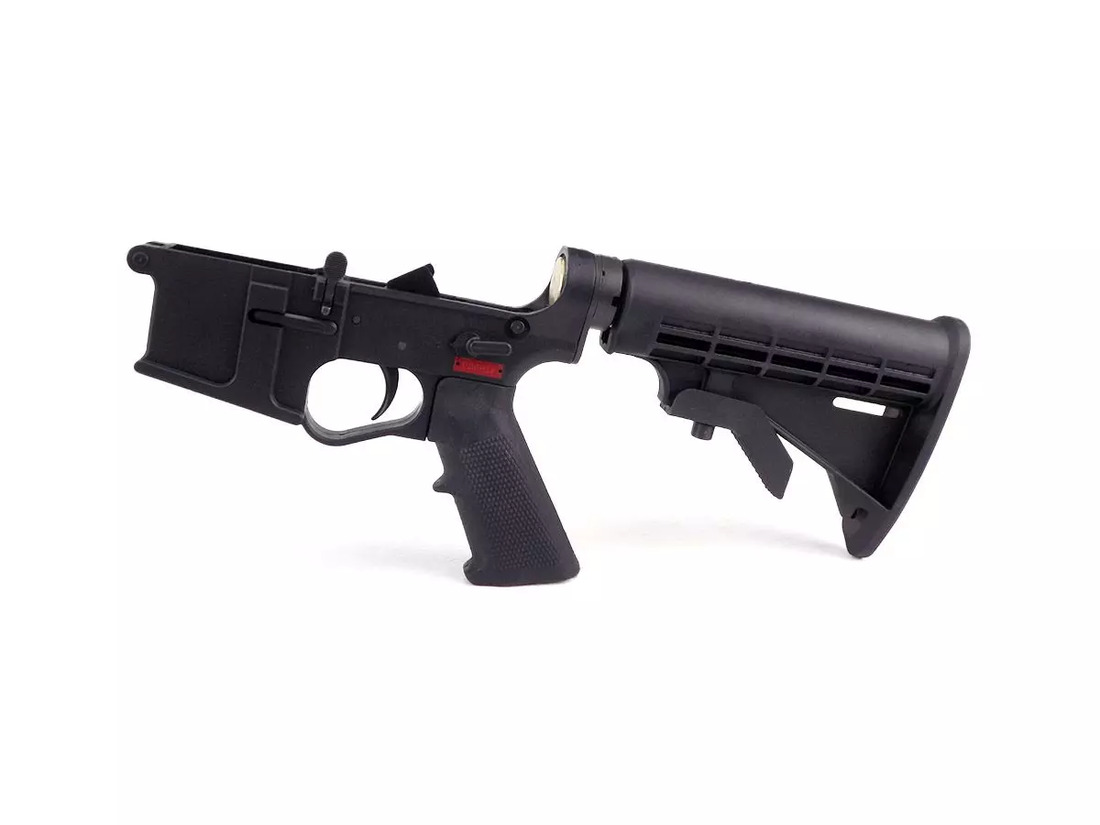
The 224 Valkyrie requires a 6.8 SPC bolt and a 6.8 SPC magazine, which reduces your standard capacity compared to a 223 setup. You will also need a dedicated Valkyrie barrel. On the positive side, the lower receiver, trigger, buffer, and stock all carry over. If you are already set up for 6.8 SPC, the swap to Valkyrie is straightforward.
Quick Checklist – Building a Long-Range AR-15 in Either Cartridge
- Confirm your barrel twist rate (1:7 for Valkyrie, 1:8 for 22 Nosler with 77 gr bullets)
- Verify bolt face compatibility before purchasing a BCG
- Source the correct magazines – do not assume 223 mags will work
- Choose a barrel length of 22-24 inches for maximum velocity
- Pair with a quality adjustable gas block for reliable cycling with heavier loads
- Use a free-float handguard for consistent accuracy
- Invest in a scope with enough elevation travel for your target distances
- Check local ammo availability before committing to either cartridge
Ammo Access and Cost for Both Cartridges
Neither of these cartridges is easy to find on a random Tuesday at your local gun shop. Federal Premium has been the primary commercial supporter of the 224 Valkyrie, and their Gold Medal Match 90-grain load is the benchmark. A few other manufacturers have added Valkyrie loads, but selection remains thin compared to mainstream cartridges.

The 22 Nosler is even more boutique. Nosler produces factory loads, and options from other manufacturers are limited. Cost for either cartridge runs $1.50 to $2.50+ per round for quality loads, which adds up quickly at the range. If you reload, both cartridges are manageable – brass is available, and the Valkyrie in particular benefits from handloading because you can tune for specific high-BC projectiles that factory ammo does not always offer.
Common Mistakes When Building a Long-Range AR-15
Shooters making the jump to either of these cartridges often run into the same avoidable problems. Here are the most common ones:

- Using the wrong twist barrel – A 1:9 barrel will not stabilize 90-grain Valkyrie bullets. This is the single most common build error.
- Assuming 223 magazines work – Both cartridges require their own magazines. Running the wrong mag causes feeding failures.
- Skipping the gas system adjustment – Heavier bullets and different pressures mean your factory gas setting may not cycle reliably. An adjustable gas block solves this.
- Buying before checking local ammo supply – If you cannot find ammo within a reasonable distance or online, the cartridge becomes impractical for regular practice.
- Choosing a short barrel for a long-range build – A 16-inch barrel costs you significant velocity with both cartridges. For serious long-range work, 22-24 inches is the practical minimum.
- Ignoring scope elevation range – Shooting at 800-1000 yards requires substantial elevation adjustment. Make sure your optic has enough travel before you build around it.
- Expecting factory ammo to match handload performance – If you want the best the Valkyrie can offer, reloading is almost necessary to access the full bullet selection.
FAQ: 224 Valkyrie vs 22 Nosler for AR-15
Is 224 Valkyrie actually good to 1000 yards?
Yes – with a 90-grain high-BC bullet from a 22-24 inch barrel, the 224 Valkyrie stays supersonic past 1000 yards at most elevations. It is one of the few AR-15 cartridges that can genuinely claim this.
Can I use my existing 223 bolt with 22 Nosler?
Yes. The 22 Nosler uses a rebated rim sized to the standard 223/5.56 bolt face. You do not need a new bolt, but you do need a 22 Nosler barrel and compatible magazines.
Which cartridge is better for PRS gas gun competition?
The 224 Valkyrie is the more common choice in PRS gas gun divisions because of its ability to engage steel targets past 800 yards with high-BC bullets. The 22 Nosler is better suited for closer-range speed work.
Which is better for varmint hunting?
Both work well for varmints. The 22 Nosler with a 55-grain fragmenting bullet is excellent inside 400 yards. The 224 Valkyrie extends that capability further but uses heavier bullets that can be overkill for small animals at close range.
Is 22 Nosler just a faster 223 Rem?
Essentially, yes – but the velocity gain is meaningful. Expect roughly 300-400 fps over a comparable 223 Rem load. That adds up to noticeably flatter shooting inside 500 yards.
Which cartridge is easier to find ammo for?
The 224 Valkyrie has slightly broader commercial support, primarily through Federal. Neither is easy to find in stores, so planning to order online or reload is practical advice for both.





Comments are closed.