
9mm vs 45 ACP AR-15 Pistols: PCC Caliber Comparison


Pistol caliber carbines have carved out a serious spot in the AR-15 world, and for good reason. They give you rifle ergonomics with handgun ammo – a combination that works well for home defense, competition, and range fun without the blast and cost of rifle rounds.
The two most popular options for an AR-platform PCC are 9mm and 45 ACP. Both have real strengths, and neither is a bad choice – but they suit different shooters and different goals. This comparison breaks down exactly where each caliber wins and where it falls short.
Why PCCs Are Dominating the AR-15 Market
Pistol caliber carbines have exploded in popularity over the last decade, and the AR-15 platform is the biggest reason why. Manufacturers figured out how to adapt standard AR lowers and uppers to run pistol rounds reliably, which gave shooters a familiar manual of arms with cheaper ammo. For anyone who already owns an AR, the transition to a PCC feels completely natural.

The use cases are genuinely broad. Home defense shooters like the reduced over-penetration risk compared to 556 Rem or 308 Win. USPSA PCC competitors love the flat recoil and fast follow-up shots. And for general range training, burning through 9mm or 45 ACP costs a fraction of what rifle ammo does right now. PCCs are not a compromise – they are a purpose-built tool for specific jobs.
9mm AR Pistols – Capacity and Cost Wins
The 9mm AR pistol – often called the AR-9 – is the most popular PCC on the market by a wide margin. The biggest reason is simple: 9mm ammunition is cheap, widely available, and produced in enormous volume. If you want to shoot a lot without draining your wallet, 9mm is the obvious starting point.
Capacity is another major win. Many AR-9 builds accept Glock-pattern magazines, which means 17, 21, or even 33-round options are easy to find. That matters in competition and in a home defense scenario where you want rounds available. Recoil is also noticeably lighter than 45 ACP, which makes fast accurate strings easier to manage, especially for newer shooters.
9mm AR-15 Pistol – Key Advantages
- Lower ammo cost per round (often 30-50% cheaper than 45 ACP)
- Higher magazine capacity in the same form factor
- Wide selection of factory loads – from 115gr to 147gr subsonic
- Glock mag compatibility on many popular builds
- Lighter bolt carrier group reduces felt recoil
- Strong aftermarket support for parts and upgrades
45 ACP AR Pistols – Bigger Bullet, Less Noise
The AR-45 is a more niche build, but it has a dedicated following for good reason. The 45 ACP fires a wide, heavy bullet – typically 230gr – that travels at subsonic velocities right out of the box. You do not need special subsonic loads. Standard 45 ACP is already quiet enough to run a suppressor without the supersonic crack you get with most 9mm loads.
For shooters focused on suppressed use, the 45 ACP AR pistol is genuinely hard to beat. The wide bullet diameter also appeals to those who prioritize terminal performance, though modern 9mm defensive loads have largely closed that gap. If you already handload or stockpile 45 ACP for a 1911 or Glock 21, sharing ammo across platforms adds real practical value.
45 ACP AR-15 Pistol – Key Advantages
- Naturally subsonic – no need to seek out specialty loads for suppressor use
- Heavier bullet for those who prefer more momentum on target
- Lower muzzle velocity means less supersonic crack when suppressed
- Ammo compatibility with other 45 ACP handguns you may already own
- Softer, slower recoil impulse compared to some 9mm +P loads
Ballistics Compared – Velocity, Energy, and Drop
A longer barrel changes the game for pistol calibers. In a standard handgun barrel (4-5 inches), 9mm 115gr runs around 1,150-1,200 fps. In a 16-inch PCC barrel, that same load can push 1,400 fps or more. You gain real energy without changing your ammo. A 45 ACP 230gr round starts around 830-850 fps from a pistol and may reach 950-1,000 fps from a carbine barrel – still subsonic, still quiet.
| Caliber | Typical Pistol Velocity | Typical 16″ Carbine Velocity | Subsonic by Default? |
|---|---|---|---|
| 9mm 115gr | 1,150 fps | 1,350-1,450 fps | No |
| 9mm 147gr | 950-1,000 fps | 1,100-1,150 fps | Usually |
| 45 ACP 230gr | 830-850 fps | 950-1,000 fps | Yes |
Trajectory differences between the two calibers at typical PCC ranges (under 100 yards) are minor enough that they will not matter in most practical scenarios. Both rounds drop noticeably past 150 yards, which is expected – these are pistol bullets. For home defense or competition inside 50 yards, neither caliber has a meaningful trajectory disadvantage.
Platform Builds – Lowers, Mags, and Compatibility
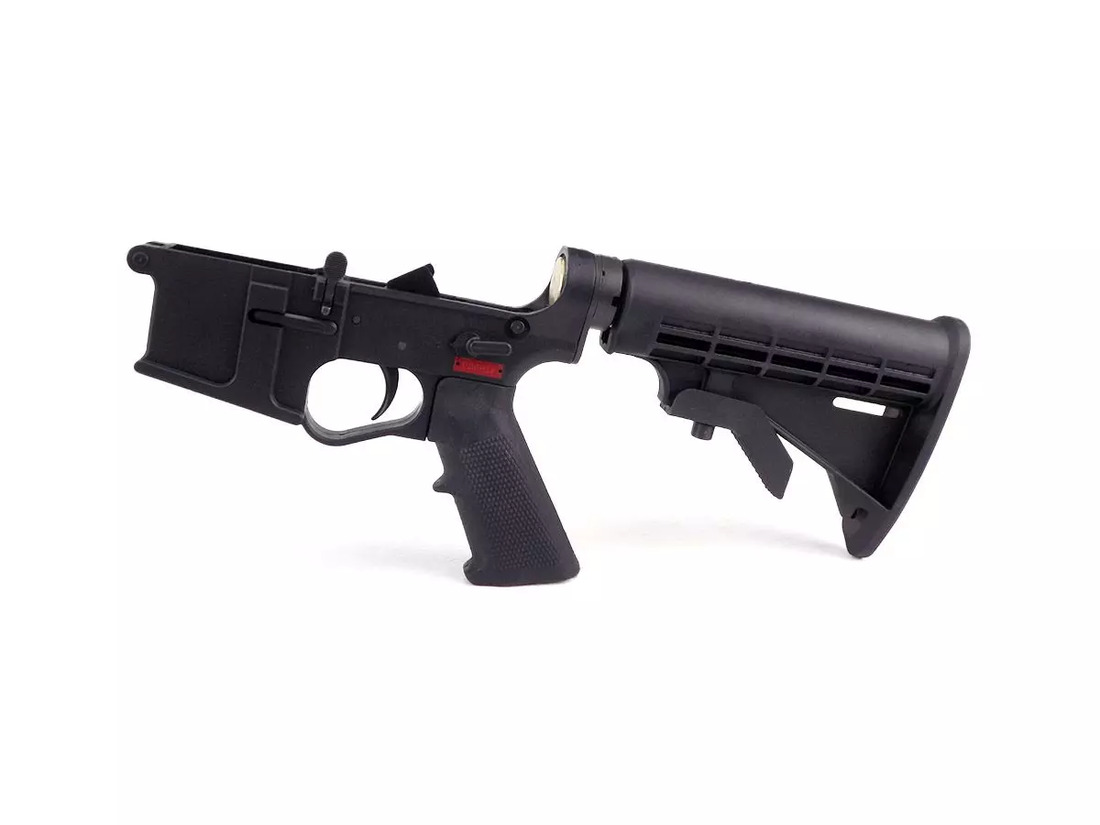
Most AR-9 builds use either a Colt-pattern magazine well or a Glock-pattern magazine well, and the difference matters when you go to buy magazines. Glock-pattern lowers are more popular right now because Glock mags are everywhere and cost less than dedicated Colt 9mm magazines. If you already run Glocks, this is an easy decision.
AR-45 platform options are more limited. You are mostly looking at dedicated 45 ACP lowers that use either Glock 21-style magazines or proprietary options depending on the manufacturer. Compatibility is not as broad, and magazine options are fewer. If you want to build or buy an AR-45, do your homework on what mags the specific lower accepts before you commit. Running the wrong mag pattern is one of the most common and avoidable mistakes in PCC builds.
Quick Checklist – Before You Buy a PCC Lower
- Confirm magazine compatibility (Glock-pattern, Colt, or proprietary)
- Check if the lower requires a specific bolt carrier group
- Verify buffer system requirements (dedicated PCC buffer vs standard)
- Look for last-round bolt hold-open compatibility with your chosen mags
- Confirm barrel length meets legal requirements in your state or province
- Check if the build qualifies as a pistol or SBR under current ATF rules (US) or RCMP guidelines (Canada)
Suppressor Results – 45 ACP vs 9mm Subsonic
When it comes to suppressed shooting, 45 ACP has a built-in edge. Because standard 230gr loads are already subsonic, you do not get the loud supersonic crack that follows a bullet breaking the sound barrier. A suppressed AR-45 is genuinely hearing-safe in many cases – not Hollywood quiet, but well within safe levels. This is the single biggest argument for choosing 45 ACP in a PCC build.

9mm can absolutely be suppressed, but you need to be intentional about your ammo selection. Standard 115gr or 124gr loads are supersonic and will produce a noticeable crack even with a can attached. 147gr subsonic 9mm is the solution, and it works well – but it costs more than standard 9mm and is not always on shelves in bulk. If suppressed shooting is your primary goal, 45 ACP simplifies the process. If you are okay managing ammo selection, 9mm subsonic is a perfectly capable option.
Common Mistakes When Choosing a PCC Caliber
- Choosing a caliber before confirming ammo availability in your area – 45 ACP can be harder to find in bulk compared to 9mm
- Assuming 45 ACP is dramatically more effective – modern 9mm defensive loads perform comparably in terminal testing
- Buying a 9mm PCC and then trying to run standard velocity ammo suppressed – you need subsonic loads for a quiet result
- Ignoring magazine compatibility – not all AR-9 lowers take the same mags; confirm before buying
- Overlooking buffer system requirements – PCC builds often need a dedicated buffer weight and spring
- Skipping a quality barrel – pistol calibers in a carbine barrel benefit significantly from a well-made, properly-rifled barrel (1:10 twist is common for 9mm)
- Not accounting for Canadian import and transport rules – if you are building in Canada, verify the final configuration is compliant before purchasing components
FAQ – 9mm vs 45 ACP Carbine Answered Fast
Is 9mm or 45 ACP better for a PCC?
It depends on your goal. 9mm wins on cost, capacity, and ammo availability. 45 ACP wins for suppressed use and if you prefer a naturally subsonic round. For most shooters – especially those new to PCCs – 9mm is the practical starting point.
Can I use my Glock magazines in an AR-9?
Yes, if your lower is built around a Glock-pattern magazine well. Many popular AR-9 lowers are designed specifically for this. Confirm the pattern before purchasing – Colt-pattern lowers will not accept Glock mags.
Does a longer barrel actually help pistol calibers?
Yes, noticeably. Going from a 4-inch handgun barrel to a 16-inch carbine barrel can add 200-300 fps to a 9mm load. That translates to real energy gains and a flatter trajectory at distance.
Is 45 ACP always subsonic?
Standard 230gr 45 ACP loads typically stay below the speed of sound (roughly 1,125 fps). That makes them naturally suppressor-friendly. Some lighter or hotter 45 ACP loads can go supersonic, so check your specific ammo specs if suppressed shooting is the goal.
What is the best PCC caliber for home defense?
Both calibers are effective for home defense. 9mm offers more rounds per magazine and lower recoil, which supports faster follow-up shots. 45 ACP offers a wider bullet. Shot placement matters far more than caliber choice in a defensive scenario.
Are AR-45 builds legal in Canada?
Legality depends on the specific configuration and how the firearm is classified under Canadian law. Barrel length, overall length, and whether it is registered as a restricted or non-restricted firearm all factor in. Always verify with a licensed dealer or legal resource before building or purchasing in Canada.
Quick Takeaways
- 9mm AR pistols offer lower cost, higher capacity, and broader platform support
- 45 ACP AR pistols are the cleaner choice for suppressed shooting
- Both calibers gain meaningful velocity from a longer carbine barrel
- Magazine compatibility should be confirmed before buying any PCC lower
- Modern 9mm defensive loads close the terminal performance gap significantly
- For competition and training volume, 9mm is the budget-friendly winner
- If you already own 45 ACP handguns, an AR-45 build adds real ammo-sharing value






Comments are closed.