
Bipods vs Shooting Sticks vs Tripods: The Rifle Support Options


Getting a stable shooting position is one of the most practical things you can do to improve accuracy in the field or on the range. Whether you are hunting elk at 400 yards, running a precision rifle stage, or sitting in a ground blind waiting for a whitetail, your support system matters as much as your optic.
This article breaks down the three main rifle support options – bipods, shooting sticks, and tripods – so you can pick the right tool for your situation without guessing.
What Makes a Rifle Support System Worth Using
A good rifle support system does one thing above all else: it removes human error from the equation. When your rifle is rested on a stable platform, you stop fighting the wobble and start focusing on trigger control and wind. That translates directly into tighter groups and cleaner ethical shots in the field.

Not every support option works in every situation. A prone bipod is useless if you are shooting across a canyon from a standing position. A heavy tripod becomes a liability on a 10-mile backcountry elk hunt. Understanding what each system does well – and where it falls short – is the foundation of making a smart choice.
What to look for in any support system
- Stability – does it hold the rifle steady under recoil from cartridges like 308 Win or 300 Win Mag
- Height range – can it match your shooting position
- Weight – will it slow you down in the field
- Setup speed – can you get on target before the opportunity passes
- Durability – will it hold up to rough terrain and weather
Bipods – Prone Stability With Fast Deployment
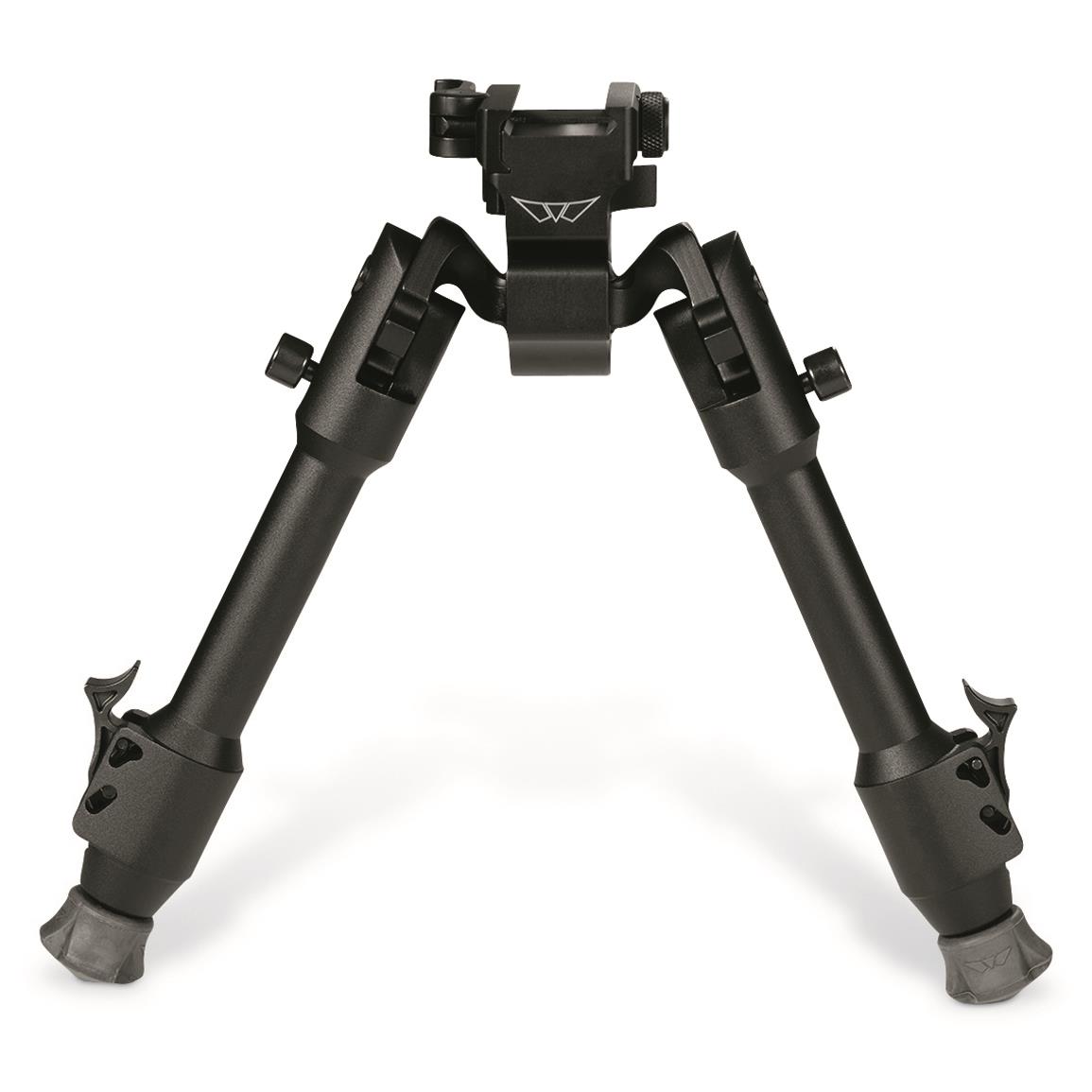
A bipod attaches directly to the rifle’s forend or Picatinny rail and deploys in seconds. The most common styles are the Harris-pattern swivel bipod and the Atlas-style precision bipod. Harris-style bipods are lightweight, affordable, and widely used by hunters and tactical shooters. Atlas-style bipods add cant and pan adjustability, which is valuable in PRS competition and uneven terrain.
Bipods shine in the prone position. You get a rock-solid front rest that lets you control rear bag pressure and nail your natural point of aim. Height-adjustable legs – typically ranging from 6 to 13 inches depending on the model – let you adapt to slightly uneven ground, but prone is where a bipod is at its best. If your hunting style involves a lot of glassing from a ridge and then dropping prone for a shot, a bipod is hard to beat.
Bipod strengths at a glance
- Attaches to the rifle – no extra gear to carry separately
- Fastest deployment of the three options
- Excellent stability in the prone position
- Works well with rear bags for a complete shooting system
- Mid-range price point, roughly $50 to $300 depending on style
Shooting Sticks for Hunting – Field Versatile and Light
Shooting sticks are the go-to support tool for mobile hunters. They come in two main forms: a simple V-stick (a single pole with a forked top) and an adjustable tripod-style stick like the Primos Trigger Stick or Swagger brand designs. The tripod-style shooting sticks can hold a rifle at any height from kneeling to standing, which makes them incredibly practical in thick brush, open fields, and any terrain where prone is not an option.
The biggest advantage of shooting sticks is versatility. You can shoot standing, sitting, or kneeling with the same tool. They are also the lightest option of the three – most quality sticks weigh under two pounds. If you are hunting in Africa-style or following a guide through varied terrain, shooting sticks are the field-proven standard for a reason.
Why hunters lean toward shooting sticks
- Lightweight and easy to carry in one hand or attach to a pack
- Works across multiple shooting positions
- No rifle modification needed – it cradles the forend
- Quick to adjust height on the fly
- Most affordable entry point – quality sticks start around $30 to $100
Tripod Rifle Rests – Maximum Stability at a Cost
A rifle tripod is the most stable platform you can use in the field. Purpose-built rifle tripods like those from Really Right Stuff, Leupold, or brands offering head-mounted rifle rests give you a level of stability that neither a bipod nor shooting sticks can match. They allow you to shoot standing or seated with a precision that is hard to achieve any other way. This makes them popular in long-range hunting, mountain hunting where glassing and shooting share the same platform, and precision shooting applications.
The trade-offs are real. A quality rifle tripod with a rifle head can weigh 4 to 8 pounds and cost $300 to over $1,000. Setup takes longer than either of the other options, and packing one into backcountry terrain requires a serious commitment. For hunters who prioritize precision over mobility, or who do most of their shooting from a fixed glassing point, the tripod earns its weight. For everyone else, it may be overkill.
Stability vs Portability – Picking the Right Trade-Off
The core tension in choosing a rifle support system is stability versus portability. More stability almost always means more weight and more setup time. Understanding where your hunting or shooting falls on that spectrum is more important than picking the “best” option.
If you walk miles to your stand or cover a lot of ground during a hunt, weight is a decision-making factor you cannot ignore. A shooting stick that weighs 1.5 pounds will always beat a tripod that weighs 6 pounds when you are 8 miles from the truck. On the other hand, if you are hunting from a fixed position – a blind, a cliff glassing point, or a precision rifle match stage – that extra stability from a tripod pays dividends in shot confidence.
Quick checklist – matching support to your situation
- Mobile hunting, varied terrain – shooting sticks are the right call
- Prone-focused shooting, range work, or stand hunting – bipod is the practical choice
- Long-range or mountain hunting with fixed glassing spots – tripod adds real value
- PRS or competition shooting – Atlas-style bipod or tripod with a rifle head
- Budget under $100 – quality shooting sticks offer the most versatility per dollar
- Recoil-heavy cartridges like 300 PRC or 338 Lapua – prioritize a rock-solid platform
- Backcountry pack hunts – shooting sticks win on weight alone
Setup Speed and Weight Compared Side by Side
| Support Type | Avg. Weight | Setup Time | Best Position | Typical Cost |
|---|---|---|---|---|
| Bipod | 0.5 – 1.5 lbs | Under 5 seconds | Prone | $50 – $300 |
| Shooting Sticks | 1 – 2 lbs | 5 – 15 seconds | Standing/Kneeling | $30 – $150 |
| Tripod | 3 – 8 lbs | 20 – 60 seconds | Standing/Seated | $200 – $1,000+ |
Setup speed matters more than most shooters admit until they miss an opportunity because they were fumbling with gear. A bipod deploys the fastest because it is already on the rifle – just flip the legs down. Shooting sticks are quick once you have practiced, especially the single-pole V-style. Tripods require leveling and positioning, which takes the most time of the three.
Common Mistakes When Choosing Rifle Support Gear
Choosing the wrong support system for your actual shooting style is the most common mistake, and it usually comes down to buying what looks impressive rather than what solves your specific problem.
- Buying a bipod for a primarily standing hunt – a bipod does not help you when you are on your feet
- Choosing shooting sticks for precision long-range work – they stabilize well but cannot match a bipod or tripod for consistent accuracy
- Ignoring weight until you are already in the backcountry – always weigh your full kit before a trip
- Skipping height adjustment – fixed-height bipods or sticks that do not match your terrain will cost you a shot
- Buying the cheapest option without checking leg lock quality – cheap legs that slip under recoil are worse than no support at all
- Forgetting to practice with the support system before the hunt – any new gear needs range time to become second nature
- Assuming a tripod replaces a rear bag – for prone precision, a tripod at the front still benefits from a rear bag or rear support
Quick takeaways
- Bipods are best for prone shooting and attach directly to the rifle
- Shooting sticks are the most versatile and lightest option for mobile hunting
- Tripods offer the highest stability but come with weight and cost penalties
- Setup speed favors bipods, followed by shooting sticks, then tripods
- Match your support system to your hunting style, not the other way around
- Any support is better than no support when ethical long-range shots are on the table
FAQ – Bipods vs Shooting Sticks vs Tripods
Q: Are shooting sticks accurate enough for shots past 300 yards?
A: Yes, if the sticks are well-built and you use proper technique. Tripod-style shooting sticks with a solid head can support accurate shots well past 300 yards in calm conditions. They are not as consistent as a bipod in prone, but they are far better than a freehand standing shot.

Q: Can I use a bipod and shooting sticks together?
A: You can, but it is rarely practical in the field. Some hunters use a rear shooting stick under the stock while a bipod supports the front. This is more common on a bench or at a fixed position than in a mobile hunting scenario.

Q: What is the difference between Harris and Atlas bipod styles?
A: Harris-pattern bipods are spring-loaded, lightweight, and swivel at the base. They are a reliable, affordable choice for most hunters. Atlas-style bipods add cant (side-to-side tilt) and pan (left-right rotation), which gives more adjustment on uneven ground. Atlas-style is preferred in precision rifle competition. If you are shopping, consider whether you need that extra adjustability or if a Harris-style covers your needs.
Q: Is a rifle tripod worth the weight for elk hunting?
A: It depends on the terrain and your style. For hunters who glass from fixed positions and take long shots across open country, a lightweight tripod can absolutely be worth it. For hunters covering miles of timber, shooting sticks will serve better. A compact carbon fiber tripod can reduce the weight penalty significantly if you are set on a tripod.
Q: Do shooting sticks work for cartridges with heavy recoil like 300 Win Mag?
A: They work, but you need a stout set of sticks with a tight head. Lighter or cheaply made sticks can shift under recoil, which throws your follow-up shot. If you are shooting a hard-kicking cartridge, look for shooting sticks with a positive locking head and wide leg spread for stability.
Q: Should I put a bipod on my hunting rifle if I already own shooting sticks?
A: If you hunt primarily from a prone or low position, adding a bipod makes sense. If you are mostly hunting in standing or kneeling situations, your shooting sticks probably cover you already. There is no rule against having both – many hunters use a bipod for range work and shooting sticks in the field.





Comments are closed.