
Affordable Prism Scopes Under $300: Primary Arms, Swampfox, and More


A prism scope under $300 won’t give you premium glass. It will give you something a red dot never can: an aiming point that works when the battery is dead.
What You’re Actually Buying at This Price
The sub-$300 prism scope category is crowded with options and full of honest trade-offs worth understanding before you buy. You’re not getting the glass quality of a Vortex Spitfire HD Gen II or a Sig Sauer Bravo3. You are getting a compact, rugged optic with a physically etched reticle that stays visible without any battery power – and at 1x or 3x magnification, that combination covers a wide range of practical shooting applications well enough to earn a place on a working rifle.
The etched reticle is the feature that defines this category and separates it from red dots. On a red dot, the battery is the aiming point. When it dies – and it will, at some point – you’re aiming with iron sights or guessing. On a prism scope, the reticle is physically engraved into a glass element inside the optic. Cut the power entirely and you have a black crosshair visible in daylight. That’s not a premium feature at this price. That’s the baseline, and it’s genuinely useful.
What you’re trading away: edge-to-edge sharpness, best-in-class coatings, and extreme low-light performance. The center image at typical carbine distances – inside 200 yards in reasonable light – is adequate on every reputable option in this category. The edges of the field of view will show softness that a $400+ prism scope wouldn’t. In low light at the outer edges of the image, budget glass shows its limits. Know that going in and you’ll evaluate options correctly rather than being disappointed by realistic limitations.
Magnification First: 1x or 3x
Before brand comparison, settle the magnification question, because it determines which options are relevant to your situation.
1x prism scopes behave operationally like red dots with one important difference: the etched reticle backup. If your rifle is a home defense firearm, a patrol carbine, or any setup where shots are consistently inside 100 yards and speed of acquisition is the primary requirement, 1x is the correct answer. At 1x you can shoot with both eyes open, transitions are fast, and situational awareness isn’t degraded by magnification narrowing your field of view.
3x prism scopes add enough magnification to make a meaningful difference at 100 to 300 yards without the close-range penalty of a traditional variable scope on its low end. At 3x you’re not shooting both eyes open, but you’re not fighting the scope to find a target at 50 yards either. For a general-purpose AR-15, a 3x prism covers the practical range of most shooting without being limiting at either end.
The mistake to avoid: buying a 3x because it sounds more capable and then putting it on a rifle that lives inside 75 yards. The extra magnification doesn’t help you, and the narrower field of view works against you in fast situations. Honest assessment of where your shots actually happen matters more than spec sheet maximalism.
Primary Arms: The ACSS Argument
Primary Arms is the most talked-about brand in the budget prism category, and the reason is the ACSS reticle system. Where most prism scopes offer a basic BDC or duplex crosshair, the ACSS (Advanced Combined Sighting System) integrates ranging references, wind holds, and a moving target lead into a single horseshoe-and-chevron design. For a shooter who actively uses reticle features rather than just aiming at the center and shooting, ACSS is genuinely more capable than the alternatives at comparable prices.
The SLx 1x MicroPrism at roughly $260 and the SLx 3x MicroPrism at roughly $320 are the primary options. Both are reasonably lightweight for prism scopes, produce adequate center image clarity at their intended ranges, and illuminate well enough for practical use in varied lighting. The etched ACSS reticle is visible without power. Controls are accessible without being awkward.
The honest limitations: glass quality trails Vortex at similar prices, edge softness is present but doesn’t matter much inside 200 yards, and the ACSS reticle is information-dense in a way that takes some learning. Shooters who prefer a clean sight picture with minimal clutter sometimes find ACSS busy. That’s a preference point, not a flaw – but it’s worth knowing before you commit to a reticle you’ll live with for years.
Primary Arms’ warranty service is generally reliable and the brand has been established long enough that support infrastructure is real rather than theoretical. For a shooter who specifically wants the ACSS system and is shopping under $300, Primary Arms is the natural answer.
Swampfox: Compact and No-Nonsense
Swampfox doesn’t have the reticle ecosystem that Primary Arms built with ACSS, but they produce compact prism scopes with solid build quality and intuitive operation that work well on carbines where simplicity and ruggedness matter more than feature density.
The Swampfox Sentinel 1x and Trihawk 3x are the options most commonly discussed. The Trihawk specifically has developed a following for its unusually wide field of view at 3x – noticeably wider than most competitors at the same magnification, which makes it feel less restricting at close range and faster to acquire targets through. For competition shooters and anyone who does a lot of transitions, that field of view advantage is real and meaningful.
Build quality on Swampfox prisms is honest for the price – robust enough for hard use on a training or competition gun, sealed against weather, and reasonably shock-resistant. On a run-and-gun stage where the optic takes incidental abuse against barriers and bags, it holds up without drama.
The glass is where Swampfox is most comparable to Primary Arms rather than clearly superior – center clarity is adequate for the application, edges are soft, low-light performance is limited. The reticle options are simpler than ACSS. For a shooter who wants a clean BDC-style reticle without a learning curve, Swampfox is arguably easier to pick up and use immediately than a dense ACSS design.
The Athlon Midas Line: Value per Dollar
The Athlon Midas TSP3 and TSP4 represent strong value in the sub-$300 range, with the TSP3 at 3x and the TSP4 at 3.9x. Both use dual-color illuminated etched reticles, nitrogen-filled sealed housings, and build quality that punches slightly above their price.
The TSP4 at 3.9x is particularly interesting because it sits between 3x and 5x in a way that addresses a genuine complaint: 3x occasionally feels short at 300 yards, but 5x’s close-range limitations are frustrating. The 3.9x compromise is real and workable for a mixed-distance carbine. If you’ve tried both 3x and 5x prisms and found both unsatisfying for different reasons, the TSP4 is worth evaluating directly.
Athlon’s lifetime warranty is unconditional and the brand has established enough of a track record that the warranty is meaningful rather than aspirational. For the price, the Midas line competes directly with Primary Arms’ SLx options on most criteria except reticle sophistication – the TSP reticle is simpler and cleaner than ACSS, which is a preference advantage for some shooters.
Vortex Spitfire 1x – The Entry Point to the HD Line
The original Vortex Spitfire 1x at around $225 sits at the bottom of the Spitfire family and offers the Vortex VIP warranty – unconditional, transferable, covers damage you caused – at a price that competes with Primary Arms and Swampfox options. The DRT reticle is simpler than ACSS and the 1x format limits it to close-range applications, but for a home defense or patrol carbine optic with Vortex’s warranty backing it, the entry Spitfire is worth knowing about.
The step up to the Spitfire HD Gen II 3x takes you above $300 (typically $360-400), which is outside this article’s scope but worth mentioning as the obvious upgrade path when budget allows. The HD glass jump between the original Spitfire and Gen II is real and visible – if you’re going to spend money at the top of this category, it’s worth spending the extra $60-80 to get into HD glass territory.
How to Set One Up Correctly
A prism scope mounted wrong underperforms good glass. The fundamentals are the same as any other optic, but a few specifics apply to the shorter eye relief typical of prism scopes (usually 2.5 to 3.5 inches).
Mount height determines whether you’ll find a consistent cheek weld. Most AR-15 platforms running a prism scope use lower-third co-witness height – the mount positions the optic so the iron sights appear in the lower portion of the view rather than centered. This gives a natural cheek weld on standard stocks without requiring you to crunch your face down to find the center of the optic. Before finalizing your mount, shoulder the rifle naturally with your eyes closed and then open them. Your eye should find the scope center without head adjustment.
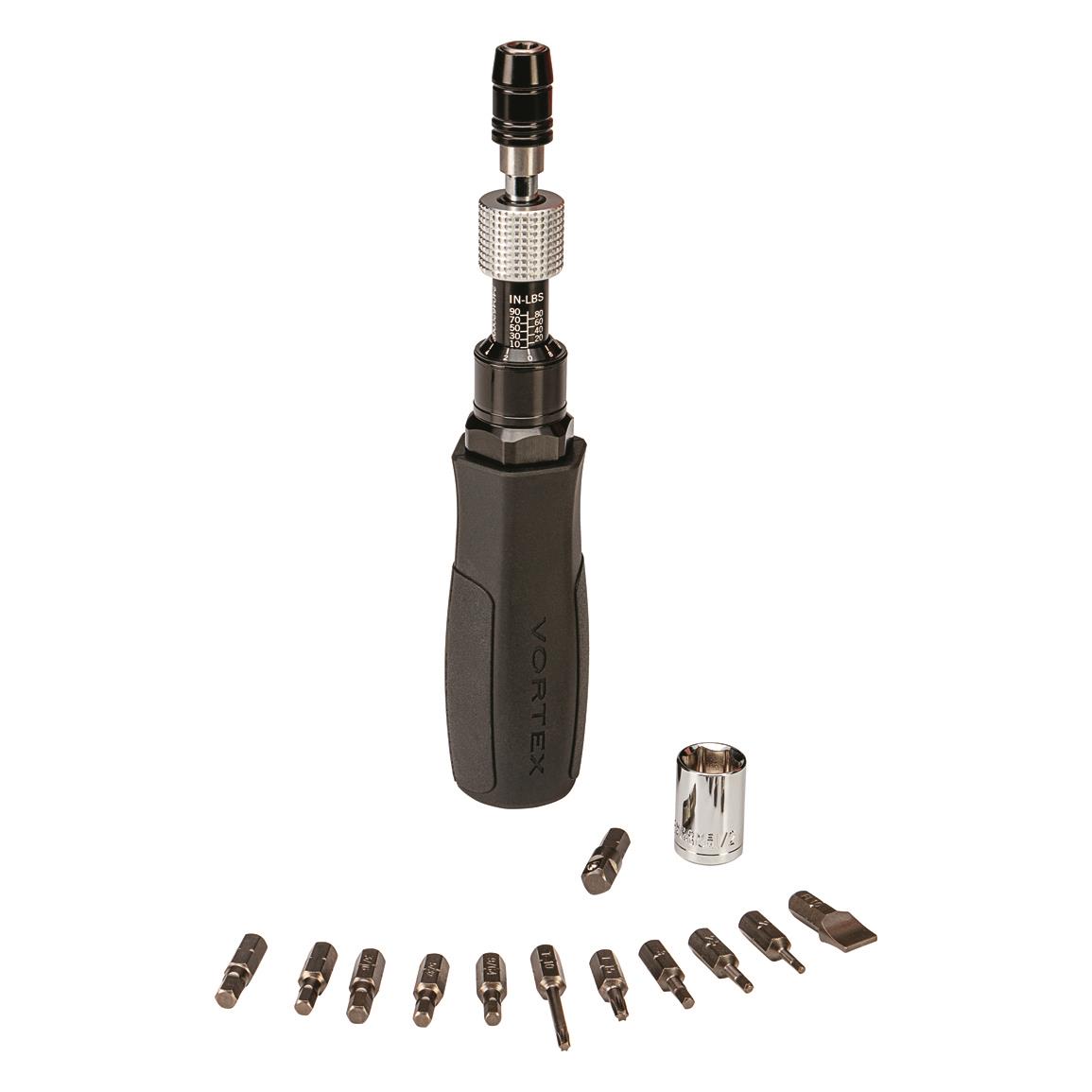
Torque your ring and mount screws to the manufacturer’s specification. Prism scopes experience the same recoil forces as any other optic, and under-torqued rings will creep over time. Get a torque driver calibrated for the spec – it’s a one-time purchase that prevents repeated zero problems.
For zeroing a 3x prism on an AR-15 in 5.56, start at 25 yards to get on paper, then move to 50 yards to establish a practical hunting or field zero. A 50-yard zero on standard velocity 5.56 keeps the bullet within an inch of point of aim from muzzle to roughly 200 yards – practical for any application where this category of scope belongs.
Set illumination brightness to the minimum level where the reticle is clearly visible. More brightness doesn’t help you aim – it blooms the reticle and reduces precision. For outdoor daylight use, you need less illumination than you think. For dawn or dusk work, mid-level is usually enough. Reserve high settings for direct sunlight backlighting situations where the reticle would otherwise be lost.
The Decision
Under $300 with an ACSS reticle and strong brand support: Primary Arms SLx in 1x or 3x depending on your magnification need. The reticle is the differentiator and it earns its reputation if you use it actively.
Under $300 prioritizing field of view and simplicity: Swampfox Trihawk 3x. The wide FOV is genuine and the clean reticle suits shooters who want to aim rather than decode.
Under $300 with the flexibility of 3.9x and a strong warranty: Athlon Midas TSP4. Best for shooters who’ve found 3x and 5x both unsatisfying.
Close-range home defense or patrol with Vortex warranty: Vortex Spitfire 1x at $225. Simple, reliable, and unconditionally backed.
None of these are wrong choices within their category. All of them are better than a cheap red dot with no etched reticle backup on a rifle you might actually need in the dark.
Frequently Asked Questions
What is the main advantage of a prism scope over a red dot at this price?
The etched reticle. A red dot’s aiming point is entirely battery-dependent – when the electronics fail, you have no reticle. A prism scope’s reticle is physically engraved into glass and remains visible as a black crosshair in daylight regardless of battery status. For a home defense rifle, a patrol gun, or any application where the optic needs to work reliably under stress without requiring battery management, this is a meaningful practical advantage. Prism scopes also tend to perform better for shooters with astigmatism, since the etched reticle doesn’t distort through an irregular cornea the way an LED projection does.
Is the Primary Arms ACSS reticle worth learning?
Yes, if you’ll use its features. The ACSS integrates ranging references, BDC holdovers, wind holds, and a moving target lead into one design – functions that would otherwise require separate calculations or a separate rangefinder. For practical competition shooting or any defensive application where holdover decisions happen under time pressure, ACSS reduces the cognitive load. For a hunter or shooter who primarily aims at center and shoots, the additional information in the reticle is background noise rather than a benefit. Evaluate honestly whether you’ll use the holdover marks before deciding the ACSS reticle is worth the learning investment over a simpler alternative.
Can I use a sub-$300 prism scope for hunting?
Yes, within its limitations. For hunting applications inside 200 yards in reasonable daylight conditions – whitetail in timber, predators in open country at moderate range, small game – the center image quality of reputable options like the Athlon Midas TSP3 or Primary Arms SLx 3x is adequate for confident shot placement. The limitations show in low-light performance at the edges of shooting light and at image edges. If you’re a serious dawn-and-dusk hunter where maximizing usable shooting time matters, the glass quality step-up to the Vortex Spitfire HD Gen II 3x at $360-400 is worth the extra money. For occasional hunting in reasonable conditions, the sub-$300 category works.
How do I choose between 1x and 3x?
Honestly assess where your shots actually happen, not where you’d like them to happen. Inside 100 yards consistently: 1x. Mixed distances from 50 to 300 yards: 3x. The 1x gives you both-eyes-open speed and wider situational awareness for close-range work. The 3x gives you a cleaner, more precise sight picture at distance but narrows the field of view and slows target acquisition slightly compared to a 1x or red dot. If you’re genuinely unsure, the 3x is more versatile across a wider range of applications – but if your rifle lives inside 100 yards, the 1x’s speed advantage is real and the 3x magnification buys you nothing useful.
What common mistakes should I avoid when setting up a prism scope?
Three mistakes account for most prism scope performance problems. First, wrong mount height: prism scopes have short eye relief and if the mount height places the optic too low or too high for your cheek weld, you’ll fight the scope on every shot rather than finding it naturally. Shoulder the rifle naturally and verify your eye finds the scope center before finalizing the mount. Second, under-torqued rings: prism scopes shift zero when rings aren’t torqued to spec. Use a torque driver and hit the manufacturer’s number. Third, excessive illumination brightness: running the illumination at maximum in normal conditions blooms the reticle and reduces precision. Use the minimum brightness where the reticle is clearly visible – usually much lower than you’d expect outdoors.





Comments are closed.