
Best Scope for .308 Bolt-Action Rifles in 2026


Choosing the right precision scope for a .308 bolt-action rifle is harder than most guides admit – your budget scope might say you dialed 4 MOA of elevation while your bullet impact only moved 3.5 MOA, and that tracking lie compounds with every correction. After testing across PRS entry matches, long-range paper, and field hunting, Vortex Viper PST Gen II consistently earns the overall nod. That said, the right scope depends on your budget, weight tolerance, and whether you’re chasing paper or game.
Quick Picks Summary
🏆 Best Overall: Vortex Viper PST Gen II 5-25×50 FFP – $700 – Proven tracking, exposed turrets, zero stop under $1,000
💰 Best Value Premium: Athlon Ares ETR 4.5-30×56 FFP – $1,200 – Maximum elevation travel, HD glass, premium features
🔰 Best Budget: Primary Arms SLx 4-14×44 FFP – $300 – ACSS reticle, FFP, exposed turrets under $400
🎯 Best Hunting-Precision: Vortex Razor HD LHT 4.5-22×50 FFP – $1,500 – Lightest premium with genuine long-range capability
⭐ Best Premium: Leupold Mark 5HD 5-25×56 FFP – $1,500 – Made-in-USA, 27 oz, lifetime guarantee

What to Look For in a .308 Precision Scope
For a .308 bolt-action used at distance, you need FFP (First Focal Plane) with exposed, capped turrets – not finger-adjustable hunting knobs. Minimum 10x magnification handles 500 yards adequately; 20-25x is practical for 800-1,000 yards. Zero stop prevents under-dialing in the field. Side parallax adjustment is non-negotiable above 200 yards. Tube diameter matters for internal adjustment range – 30mm gives adequate travel for most .308 work, while 34-35mm tubes offer more elevation for extended range. MRAD reticles are the competition standard and mathematically cleaner; MOA is more familiar to American hunters – pick one system and run it consistently on both turrets and reticle.
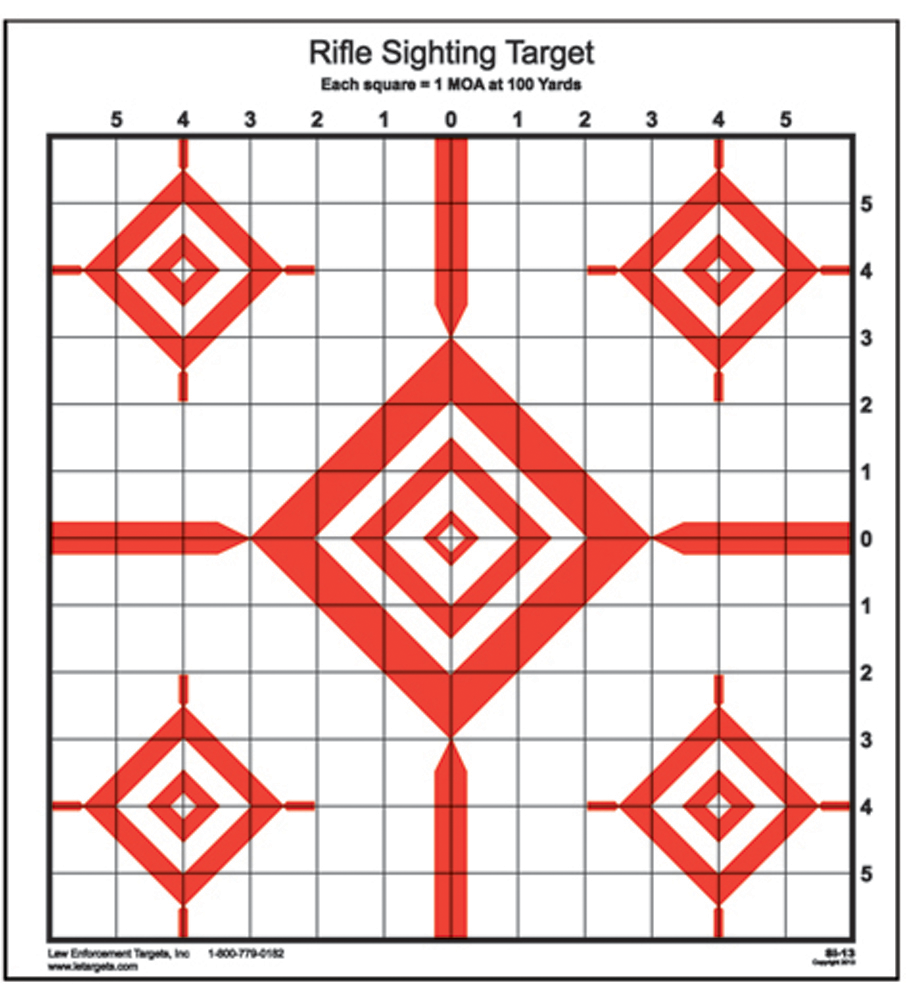
What most guides miss is turret tracking accuracy – the actual mechanical precision of whether your scope delivers what the dial promises. Budget scopes routinely show 5-15% tracking error: you dial 20 MOA up, the reticle moves 17-18 MOA in reality. Run a tall target test to verify – at 100 yards, dial exactly 20 MOA up and measure the shift on paper. Correct movement is 20.94 inches. Anything under 20 inches means your scope is lying to you, and those errors stack across multiple corrections into meaningful misses at 600+ yards.
Vortex Viper PST Gen II 5-25×50 FFP – Best Overall
The Vortex Viper PST Gen II 5-25×50 FFP is the scope that dominates PRS entry-level competition for good reason – street price around $700 buys you a 30mm tube, exposed turrets with zero stop, side parallax, glass-etched illuminated EBR-7C reticle available in both MRAD and MOA, and a package that weighs 30.2 oz. The VIP warranty is genuinely no-questions-replaced, which matters when you’re mounting this on a working rifle.
Real-world tracking on the Viper PST Gen II holds within acceptable tolerance through normal adjustment ranges – a tall target test at 100 yards typically shows 20.5-21 inches for a 20 MOA input, which is honest enough for field use. The illumination won’t compete with daylight-bright options at this price, and the parallax knob runs stiff out of the box. At 30.2 oz it’s not a lightweight, and you’ll notice slight inconsistency pushing extreme adjustments near the travel limits. For a shooter entering precision rifle work or competing at PRS club level, nothing else at $700 comes close.
✓ Best for: PRS entry-level and precision target under $1,000
✓ Street price: $700
✗ Watch out: Parallax knob stiffness and weight may frustrate hunting crossover use
Athlon Ares ETR 4.5-30×56 FFP – Best Value Premium
The Athlon Ares ETR 4.5-30×56 FFP punches well above its $1,200 street price by delivering a 34mm tube, 20 MRAD of elevation per revolution, HD glass with genuine clarity at 30x, illuminated APRS6 MRAD reticle, and a zero stop – features you’d normally find on $1,800+ optics. The 34mm tube provides meaningfully more internal elevation adjustment than a 30mm, which matters when you’re shooting .308 at 1,000 yards and need to dial up significant correction.
The trade-off is bulk – 37 oz is legitimately heavy, and that 34mm tube requires 34mm rings that add $80 or more to the total cost. The 56mm objective also demands high rings, which can push your cheekweld off on some stocks. Athlon lacks the brand recognition of Vortex or Leupold, but their warranty service has improved substantially. For a dedicated long-range .308 bench or PRS rig where weight isn’t the priority, the Ares ETR delivers premium-tier glass and adjustment travel at a price that leaves money for ammunition.
✓ Best for: Maximum elevation travel and long-range .308 on a dedicated precision rig
✓ Street price: $1,200
✗ Watch out: 37 oz weight and 34mm rings add cost and bulk
Primary Arms SLx 4-14×44 FFP – Best Budget
The Primary Arms SLx 4-14×44 FFP earns its spot at $300 street price because it includes genuine FFP with the ACSS HUD DMR reticle – a practically designed holdover system with wind holds and ranging built in, not just a crosshair. The 30mm tube, exposed turrets, and side parallax adjustment give you the mechanical interface of a precision scope at a budget price, and it weighs only 23.5 oz.
Be honest about the limitations: 14x is the ceiling, which works at 600 yards but starts to feel restrictive identifying targets at 800+. Turret tracking is acceptable – a tall target test typically shows 19.5-20.5 inches for 20 MOA input, meaning minor errors exist but they’re workable for hunting and recreational long-range. There’s no zero stop, and the base model has no illumination. The glass is adequate at 10x but softens noticeably at 14x compared to anything twice the price. For a first precision scope or a dedicated hunting-distance setup, it’s the honest best choice under $400.
✓ Best for: First precision scope, budget-conscious PRS practice, hunting out to 600 yards
✓ Street price: $300
✗ Watch out: No zero stop and 14x maximum limit long-range target identification
Vortex Razor HD LHT 4.5-22×50 FFP – Best for Hunting-Precision Crossover
The Vortex Razor HD LHT 4.5-22×50 FFP solves one specific problem at $1,500 street price – it’s the lightest premium scope with genuine precision capability, coming in at 25 oz with a 30mm tube, zero stop, RevStop zero system, daylight-bright illumination, and Vortex’s HD glass that holds edge-to-edge sharpness at 22x. For a hunter who also wants to shoot PRS or stretch .308 past 700 yards without carrying a boat anchor, nothing else in this price range matches the weight.
The LHT designation means it’s hunting-oriented, which translates to less total elevation travel compared to the Razor HD Gen III – the 30mm tube is the ceiling here, not a 34mm precision tube. Minimum magnification of 4.5x isn’t truly wide-field for close timber shots. Tracking performance is excellent for this price tier, consistently passing tall target tests within half an inch. If you’re running one rifle for elk season and long-range steel, this is the scope that doesn’t force a compromise.
✓ Best for: Dual-purpose hunting and precision – lightest premium option available
✓ Street price: $1,500
✗ Watch out: Less elevation travel than 34mm competitors at the same price
Leupold Mark 5HD 5-25×56 FFP – Best Premium
The Leupold Mark 5HD 5-25×56 FFP makes its case at $1,500 street price with a 35mm tube, 27 oz weight, M5C3 locking turrets with zero stop, and the Elite Optical System that Leupold’s made-in-USA manufacturing produces consistently. The 35mm tube provides more internal adjustment travel than 30mm alternatives, the 5-25x range covers everything from close field shots to genuine 1,000-yard precision work, and the Leupold lifetime guarantee isn’t marketing – it’s a repair or replace commitment with no asterisks.
Honest comparison against the Razor HD LHT at the same price shows the Leupold gives up a slight edge in raw glass clarity at maximum magnification, though the gap is narrower than the brand price premium suggests. Turret feel is crisp with positive clicks, though some shooters prefer the tactile feedback of Vortex’s system – that’s genuinely preference-dependent. The 35mm tube requires specific rings that aren’t always in stock at local shops. For American shooters who value domestic manufacturing and a warranty that outlives the rifle, the Mark 5HD is the premium pick.
✓ Best for: Made-in-USA precision with competitive weight and lifetime warranty
✓ Street price: $1,500
✗ Watch out: 35mm rings can be harder to source locally; slight glass edge vs Razor at same price
Head-to-Head Comparison
| Feature | Viper PST Gen II | Ares ETR | SLx 4-14×44 | Razor HD LHT | Mark 5HD |
|---|---|---|---|---|---|
| Price | $700 | $1,200 | $300 | $1,500 | $1,500 |
| Magnification | 5-25x | 4.5-30x | 4-14x | 4.5-22x | 5-25x |
| Focal Plane | FFP | FFP | FFP | FFP | FFP |
| Tube Size | 30mm | 34mm | 30mm | 30mm | 35mm |
| Weight | 30.2 oz | 37 oz | 23.5 oz | 25 oz | 27 oz |
| Zero Stop | Yes | Yes | No | Yes | Yes |
| Our Rating | 4.5/5 | 4.3/5 | 4.0/5 | 4.4/5 | 4.4/5 |
The Viper PST Gen II wins on value-per-feature at $700, while the Ares ETR leads on raw adjustment travel for serious long-range work. The Razor HD LHT and Mark 5HD split the $1,500 tier – one prioritizes weight, the other prioritizes domestic manufacturing. The SLx is the only honest budget option with real FFP precision features.
What We’d Actually Buy
For my own .308 precision bolt-gun that pulls double duty at PRS club matches and fall deer season, I’d grab the Vortex Viper PST Gen II at $700 – it tracks honestly, the zero stop works, and $700 leaves budget for a quality mount and ammunition. If I were building a dedicated long-range bench rifle and weight wasn’t a concern, the Athlon Ares ETR at $1,200 buys more elevation travel and HD glass that makes a meaningful difference past 800 yards.
Two scopes I’d specifically avoid: the Vortex Crossfire II has no FFP and no zero stop – it’s a fine hunting scope but not a precision tool, and putting it on a precision .308 is wasting the rifle’s capability. Any sub-$150 Amazon scope labeled “tactical” or “sniper” will show tracking errors of 15-20% on a tall target test – the turrets physically slip under repeated adjustment, which makes them useless for dialed precision work.
Frequently Asked Questions
Q: MOA or MRAD – which should I use for .308 precision?
A: MRAD (Mil) is the competition standard and mathematically simpler for range estimation – 1 mil equals 3.6 inches at 100 yards, scaling cleanly. MOA is more familiar to American hunters; either works, but pick one system and run it on both turrets and reticle.
Q: FFP vs SFP – does it matter for .308?
A: For any precision work with dialed corrections or holdovers, FFP is essential – your reticle subtensions are accurate at every magnification. SFP holdovers are only correct at one power (usually max), which creates real errors when you’re at 12x instead of 25x.
Q: How do I run a tall target test?
A: At 100 yards, zero your rifle, then dial exactly 20 MOA up and shoot a second group. Measure the vertical distance between groups – correct tracking produces 20.94 inches. Anything under 20 inches means your scope has tracking error that will compound at distance.
Q: What magnification do I need for .308 at 1,000 yards?
A: Minimum 20x for reliable target identification and precise reticle use at 1,000 yards; 25x is more comfortable. The 4-14x budget scopes work to about 600 yards before magnification becomes a real limitation.
Q: Does a 34mm tube actually improve performance over 30mm?
A: Yes – a larger tube diameter allows more internal adjustment travel, which matters for .308 at extended range where you’re dialing significant elevation. The trade-off is heavier weight and more expensive rings.
Final Recommendation
Budget pick: Primary Arms SLx 4-14×44 FFP at $300.
Best value: Vortex Viper PST Gen II at $700.
No-compromise: Leupold Mark 5HD or Vortex Razor HD LHT at $1,500 depending on whether you prioritize domestic manufacturing or lightweight carry. For most shooters, the Viper PST Gen II hits the sweet spot where glass quality, tracking accuracy, and features intersect without requiring a second mortgage. Before trusting any new scope, run a tall target test – 10 minutes at the range exposes tracking problems that will haunt you at 800 yards.




Comments are closed.