
Hunting Rifle Scope Buying Guide


The scope is where a rifle meets the shot. Everything else is just how you carry it there.
Why This Decision Matters More Than Most Hunters Think
There’s a moment every serious hunter has experienced at least once. You’ve done the work – the early wake-up, the approach in the dark, the long wait on stand. Something moves on the edge of a clearing at first light. You shoulder the rifle, look through the scope, and see a gray, formless blur. You can’t tell if it’s antlers or a branch. You wait for more light. The animal dissolves back into the timber, and the chance is gone.
That’s what a bad scope costs you. Not money – opportunities. The hunts you put in the work for and then couldn’t finish because the optic failed you at the moment that mattered. A scope that washes out in low light, fosters eye strain after an hour of glassing, or shifts point of impact between shots doesn’t just fail as a piece of equipment – it undermines everything else you brought to the field.

Good glass, by contrast, gives you time. It extends the usable edges of shooting light in both directions. It keeps the image sharp enough that you can make confident decisions about what you’re looking at and whether to shoot. It doesn’t tire your eyes on a long glassing session, which means you see more in four hours than you would have seen in six with inferior optics. These are real, measurable advantages that compound over a season.
This guide is a practical framework for making the scope decision correctly. Not by trusting the marketing copy on the box – which is almost universally written to obscure rather than clarify – but by understanding the underlying physics and running your own tests before money changes hands.
Types of Scopes and What They’re Actually For
The first question is what kind of hunting you’re doing, because it determines what kind of scope belongs on the rifle. This sounds obvious, but more mismatched scope-to-application setups exist in hunting cabins and gun safes than you’d expect.
Low-Power Variables: 1-4x, 1-6x, 1-8x
These are for driven hunts, brush country, close-range shooting in heavy timber, and any application where shots happen fast and the animal is inside 150 yards. At 1x, a good LPVO operates like a red dot – both-eyes-open acquisition, full situational awareness, fast target transitions. At 6x or 8x you have enough magnification to make a precise shot at 300 yards if the opportunity opens up.
The mistake people make with LPVOs is putting a 1-8x on a rifle they intend to use primarily for 400-yard open-country shots. The 8x ceiling feels limiting when you’ve found an animal across a basin and need to judge it carefully. LPVOs are genuinely versatile, but they’re optimized for close-to-medium range and that optimization should match your most common scenario.
Red Dots and Prism Scopes
Red dots are the fastest possible aiming solution at close range – no magnification, both eyes naturally open, minimal mechanical complexity. They’re excellent for hog hunting, driven hunts, and any application where shot opportunities are brief and close. The limitation is obvious: no magnification means no reach.
Prism scopes split the difference. At 3x or 5x fixed magnification, they’re more capable at distance than a red dot while remaining compact and fast compared to a variable scope. The etched reticle – physically engraved into the glass rather than electronically projected – stays visible even if the illumination fails. I’ve covered this in more depth in the Prism Scope Buying Guide on this site, but the short version is: prism scopes belong on rifles where the application is well-defined and you’re not trying to cover ground from 25 to 500 yards with a single optic.
General-Purpose Variables: 3-9x, 2-10x, 3-15x
The 3-9×40 has been the standard deer hunting scope for fifty years, and the reason it’s lasted is that the compromise it makes is a good one. The 3x minimum is versatile enough for any realistic close-range hunting shot. The 9x ceiling is adequate for confident shots at 300 yards in good conditions. The 40mm objective keeps weight and ring height reasonable. For a hunter who shoots inside 300 yards in varied terrain – the description of most North American hunting – this remains the sensible default.
The 2-10x or 3-12x represents the modern evolution of the same idea with a wider range at both ends. The 2x minimum improves close-range versatility. The 10 or 12x ceiling adds reach for open-country opportunities. If I were advising someone buying a single scope for a deer or elk rifle that would see mixed terrain, 2-10x or 3-12x is where I’d start the conversation.
The 3-15x moves into open-country territory. At 15x you can judge antler score at 400 yards with confidence, which matters for trophy-selective hunters. It adds weight and typically requires a 50mm objective for adequate low-light brightness at maximum magnification, but for western hunting where shots extend and glassing matters, it earns its place.
Long-Range Hunting Scopes: 4-16x, 4-20x and Beyond
Scopes in this range are purpose-built tools for specific applications – mountain hunting where shots might extend to 500 yards, open plains where animals are routinely glassed at long distance before approach, and any hunting that involves shooting past 400 yards as a regular expectation rather than an exception. They’re heavier, require higher rings, and are more demanding to use correctly than general-purpose scopes. They’re also the right answer when the application genuinely calls for them, and the wrong answer when the application doesn’t.
Tube Diameter: What It Actually Affects
One-inch (25.4mm) tubes are lighter and use widely available rings. The adjustment range is limited by the tube diameter, which only matters if you’re shooting at extreme distances or elevations where you’d run out of elevation travel. For most hunting inside 400 yards, 1-inch is perfectly adequate.
30mm tubes provide more internal adjustment range and allow slightly better light transmission at equal glass quality because the larger tube allows larger internal lens elements. This is a modest practical difference for most hunting applications, but it’s real. The majority of quality hunting scopes today are 30mm, and ring options are abundant.
34mm tubes are precision and competition territory. The additional adjustment range matters for extreme-range ballistic work where you’re dialing significant elevation correction. For hunting applications, 34mm adds weight and cost without proportionate benefit unless you’re shooting at ranges where the adjustment range advantage actually matters – which is past 600 yards in most cartridges.
First Focal Plane vs Second Focal Plane
This is the reticle question that generates the most confusion, and the answer is simpler than the debate around it suggests.
In a first focal plane (FFP) scope, the reticle grows and shrinks with magnification, which means the subtensions – the distance between hash marks in MOA or MRAD – stay accurate at any magnification setting. If you’re using holdover marks at 8x, they work the same at 4x. This matters for precision shooting where you’re making deliberate holds at varied power settings.
In a second focal plane (SFP) scope, the reticle stays the same apparent size regardless of magnification. The subtensions are only accurate at one specific power setting, usually maximum. At other settings the marks are present but don’t correspond to the published values. This is simpler for traditional hunting where you dial to your preferred magnification for a shot and use the center crosshair rather than holdover marks.
The practical decision: if you’re building a precision or long-range setup where you’ll actively use holdover marks at different magnification settings, FFP is the correct choice. If you’re a traditional hunter who sets the scope to a comfortable power and uses the center crosshair, SFP is simpler and typically cheaper. Neither is universally superior – they’re optimized for different shooting approaches.
Glass, Coatings, and Why They Determine Everything Else
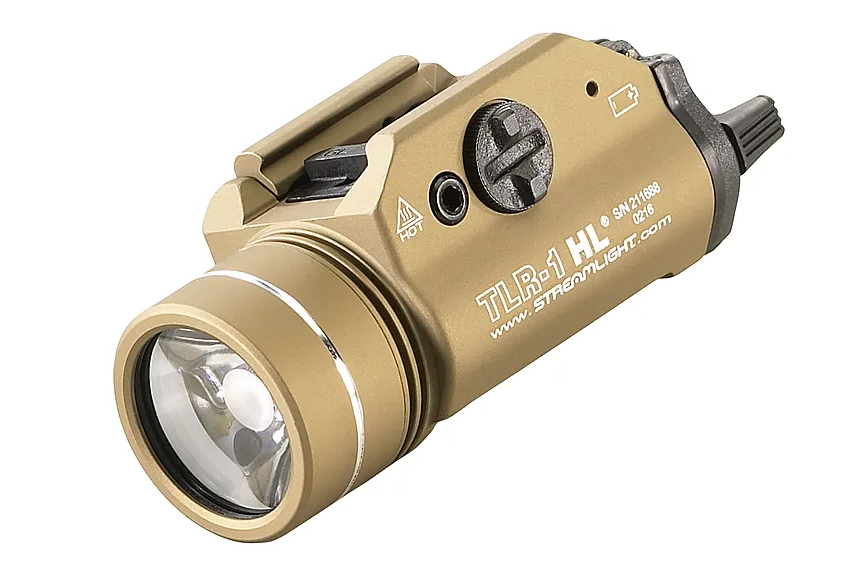
I wrote about this in depth in the Flashlight Test article on this site, but the short version is essential here because it’s the most important variable in scope selection and the one most obscured by marketing language.
Every surface inside a scope where light crosses from air to glass or glass to air reflects a portion of that light back rather than transmitting it through. Without coatings, each surface reflects 4 to 5 percent. A typical scope has 10 to 14 such surfaces. Stack those losses and you’ve lost a significant fraction of the light that entered the objective before it reaches your eye – which is why uncoated or single-coated scopes look dim and washed out in low light even with large objectives.
Anti-reflection coatings reduce per-surface losses to under 0.5 percent. Applied to every surface – which is what “fully multi-coated” means – the total transmission approaches 90 to 95 percent of incoming light. That’s the difference between a scope that stays useful at 6:15 a.m. in October and one that goes gray twenty minutes after you climb into the stand.
ED and HD glass designations indicate extra-low dispersion glass elements that reduce chromatic aberration – the color fringing that appears on high-contrast edges, particularly at higher magnification. This improves contrast and color accuracy and is genuinely worth the premium for higher-magnification scopes where the effect is most visible. It’s not a replacement for proper coatings – you want both.
Test this yourself before buying. Shine a penlight into the objective at a shallow angle and watch the internal reflections. Faint, colored reflections – greens, purples, ambers – mean coatings are present. Bright white reflections from multiple internal surfaces mean coatings are absent or inadequate. This test takes sixty seconds and tells you more than the packaging.
Objective Size, Exit Pupil, and Low-Light Performance
The exit pupil is the small circle of light you see when you hold a scope at arm’s length. Its diameter determines how much light your eye actually receives, and it’s calculated simply: objective diameter divided by magnification. A 40mm scope at 8x produces a 5mm exit pupil. The same scope at 10x produces 4mm.
A human eye in dim conditions can dilate to roughly 5 to 7mm depending on age – younger eyes dilate more. If the exit pupil of your scope is smaller than your dilated pupil, you’re losing light. If it’s larger, the extra light is wasted because your pupil can’t use it.
For hunting in low light at the magnifications where you’ll actually be shooting, aim for an exit pupil of at least 4mm. Below that, the image starts to look noticeably dim to most eyes. This means a 40mm scope pushed to 10x starts to show its limits in low light. A 50mm scope at 10x produces 5mm – meaningfully brighter in the same conditions.
This is the actual argument for large objectives: they buy you exit pupil at higher magnification settings. A 40 or 42mm objective with excellent coatings is adequate for most hunting inside 8x magnification and in light that’s reasonable if not ideal. A 50mm objective extends your low-light capability at higher magnifications and is worth the weight if you routinely shoot at 10x or higher in marginal light. A 56mm objective is specifically for the hunter pushing past 12x in conditions where every last photon matters – mountain hunting at distance in the last minutes of evening, for example.
The counterpoint: a large objective requires higher rings, which raises the scope above the bore and changes your cheek weld. This isn’t a dealbreaker but it’s a real consideration, particularly for hunters who already have a stock that fits well at a standard ring height.
Matching Scope to Hunting Style
Theory is useful, but the practical question is what goes on the rifle you’re actually carrying in the terrain you actually hunt.
Driven hunts and brush country. Speed is everything – 1-4x or 1-6x LPVO, red dot, or a prism scope. You don’t need magnification. You need fast acquisition and situational awareness. Put a 4-16x on a driven hunt rifle and you’ll spend your shot opportunity trying to find the animal in the scope’s narrow field of view.
Treestand and timber hunting. Mixed close and medium range, probably inside 200 yards on most shots. A 2-10x or 3-9x on a 40-42mm objective is ideal. Good coatings matter more than magnification range here – dawn and dusk shots in timber are what separate adequate optics from good ones.
Open country and mountain hunting. A 3-15x or 4-16x with good glass and a 50mm objective covers most western hunting situations. Weight matters on a mountain rifle – be honest about how much magnification you actually use versus how much you think you’ll use. More magnification means more weight and more scope for the money, and neither is free.
Long-range hunting past 400 yards. 4-20x or higher with FFP reticle, exposed turrets, and precise click values. Also a rangefinder, a ballistic solver, and the practice to use both correctly. The scope is only one piece of the long-range system.
Dangerous game. 1-4x or 1-6x with generous eye relief – enough that a big-bore cartridge’s recoil doesn’t put the eyepiece into your brow. Red dots also work well for fast shooting on dangerous game at close range where precision matters less than speed and reliability.
Budget Reality
The old rule of thumb – spend as much on your scope as your rifle – has become more of a minimum than a guideline as rifle prices have stabilized while glass quality improvements have concentrated at the higher price tiers.

At $200 to $400, you can find functional scopes with adequate glass for daylight hunting and modest low-light performance. The compromises are real – brightness at the edges of shooting light, less precise turrets, and build quality that may not hold up to a decade of hard use. For a casual hunter who shoots a few times per year in reasonable conditions, this tier works. For someone who hunts seriously and needs the glass to perform when conditions are difficult, it’s usually worth more.
At $500 to $1,000, the glass quality jumps meaningfully. This is where fully multi-coated glass and better optical designs produce a real difference in low-light performance and image quality. Turret mechanics are more reliable and precise. Build quality holds up over time. This is the sweet spot for most dedicated hunters who want quality without premium pricing.
At $1,500 and above, you’re in European glass territory – Zeiss, Swarovski, Kahles, Schmidt & Bender – or the American premium tier with Nightforce and top-tier Leupold. The glass genuinely performs differently at this level, particularly in extreme low light and at high magnification. For a hunter who is in the field every reasonable day of the season in demanding conditions, the premium is justified by real performance differences. For someone who hunts two weeks a year in moderate conditions, the money might be better spent on more time in the field.
Whatever your budget: don’t put a $150 scope on a $1,500 rifle. The scope is what connects your rifle to the shot. Unbalancing that relationship in either direction – cheap glass on an expensive rifle, or premium glass on a rifle that can’t hold the zero – produces a system that underperforms what either component could deliver with a better partner.
Brands and Warranty
Warranty matters in optics more than in most gear categories because failures in scope mechanics and glass quality often show up over time rather than immediately. A scope that tracks correctly when new may drift after a season of recoil. A scope that seals correctly from the factory may develop a slow nitrogen leak. A company that will repair or replace without requiring you to prove the failure was their fault – rather than your handling – is genuinely valuable.
Vortex’s VIP warranty is unconditional and transferable. Leupold’s guarantee covers defects for the life of the scope. Both companies have real service centers and consistently honor their warranty commitments. Zeiss, Swarovski, and Kahles have strong warranty programs at the premium tier. Bushnell’s Elite line is backed by genuine warranty support distinct from their budget product lines.

The warning: many budget brands print “lifetime warranty” on the packaging. A warranty is only as good as the company standing behind it. A brand that has existed under its current name for eighteen months and sources product from an OEM manufacturer with no established service infrastructure is not providing a meaningful lifetime warranty. It’s providing a marketing claim. Research the brand’s history and actual warranty service track record before relying on the warranty as part of the value calculation.
The Pre-Purchase Checklist
Before any scope purchase, run through these checks. They take five minutes in a store and answer most of the questions worth asking.
Flashlight test. Penlight or phone light into the objective at a shallow angle. Faint, colored reflections mean coatings are present. Multiple bright white reflections mean they’re not. Walk away from the bright white.

Edge-to-edge sharpness. Find vertical lines at distance – a building edge, power pole, fence posts. Run the field of view across them. Sharp edges should hold sharpness to within a few percent of the image edge. Mushy corners are a sign of optical compromise.
Contrast in shadow. Look at dark brush or a shadowed doorway. Quality glass separates shapes. Cheap glass smears them together into gray.
Mechanical feel. Run the magnification ring through its full range – smooth with no gritty spots or dead zones. Click turrets several rotations and return to zero – clicks should feel positive and consistent, not mushy or varying in resistance. Check parallax adjustment for smooth movement without slack.
Weight and balance. Mount it mentally on your rifle. A scope that’s too heavy for the rifle it’s going on changes how the rifle carries and handles in the field. This matters more over a long day than it does in the store.
Markings check. FMC means fully multi-coated. MC means some surfaces. Coated means minimal. ED or HD means low-dispersion glass. IPX7 or equivalent means waterproof to a specific standard. “Weatherproof” without specifics means nothing.
The Honest Bottom Line
The scope is the most consequential single purchase decision in a rifle hunting setup. It determines how long your effective hunting day is, how much information you have when making a shot decision, and how confidently you can shoot at the ranges your hunting requires. Getting it right doesn’t require spending a premium budget – it requires understanding what you actually need and verifying that the optic you’re buying delivers it.
Know what kind of hunting you’re doing before you know what kind of scope you need. Understand that glass quality and coatings matter more than objective diameter or magnification range. Test with your own eyes before trusting the box. Choose a brand that will stand behind the product when something eventually goes wrong.
And then hunt with the confidence that when something moves at the edge of the clearing at 6:15 a.m. in October, you’re going to see it clearly.
Frequently Asked Questions
Is ED or HD glass worth the extra cost?
Yes, particularly for scopes used at higher magnification settings and in open-country hunting where image detail matters. ED glass reduces chromatic aberration – the color fringing on high-contrast edges that becomes most visible at 10x and above. The improvement in contrast and color accuracy is genuine and noticeable side-by-side against standard glass at the same magnification. It’s not a replacement for proper multi-coatings – a scope needs both good glass and well-applied coatings to perform well in low light. But if the budget allows, ED or HD glass is worth adding to the criteria.
Do I need a 50mm or 56mm objective, or is 40-42mm enough?
For most hunting applications inside 8x magnification with quality coatings, 40-42mm is adequate. The exit pupil at 8x on a 40mm scope is 5mm – enough for most hunting conditions including low light. The argument for 50mm or larger is specifically about maintaining adequate exit pupil at higher magnification settings. At 12x, a 40mm scope produces a 3.3mm exit pupil, which is noticeably dim in marginal light. A 50mm at 12x produces 4.2mm – meaningfully better. If you routinely use magnification settings above 10x in low-light conditions, the larger objective earns its weight and the higher ring height it requires.
What’s the practical difference between 1-inch and 30mm tubes?
For most hunting inside 400 yards, the practical difference is small. One-inch tubes are lighter and use widely available, typically less expensive rings. Thirty-millimeter tubes provide more internal adjustment range – which only matters if you’re shooting at distances or elevations where you’d exhaust elevation travel in a 1-inch tube – and allow slightly larger internal lens elements. If you’re building a general hunting rifle for mixed terrain inside 300-400 yards, 1-inch is fine. If you’re building a long-range or mountain hunting setup where elevation adjustment matters, 30mm is the better foundation.
Should I choose FFP or SFP?
FFP if you actively use holdover marks at varied magnification settings – precision hunting, long-range work, any application where you make wind or elevation holds rather than always shooting at the same magnification setting. SFP if you’re a traditional hunter who sets the scope to a comfortable power for a shot and uses the center crosshair. SFP scopes are typically less expensive at equivalent glass quality, the reticle stays the same apparent size throughout the magnification range which some hunters prefer, and the simpler operation suits hunting styles that don’t require precise holdover at multiple power settings.
What matters more – the scope or the rifle?
The scope, in most practical hunting scenarios. A well-built budget rifle shooting good ammunition with quality glass will outperform an expensive rifle with a poor scope at dawn and dusk – which is exactly when the shots that matter most tend to happen. The rifle’s mechanical accuracy matters, but most production hunting rifles are accurate enough that the limiting factor is the optic, not the action. Unbalancing the setup in either direction – cheap glass on an expensive rifle, or premium glass on a rifle that can’t hold zero – wastes the better component. The ratio should be roughly proportional.
Are illuminated reticles worth buying?
As a supplement to good glass, yes. In dark timber or overcast conditions, an illuminated center dot or crosshair is faster to find against a dark background than an unlit reticle. For low-light hunting in heavy cover, the difference is real. The critical point: illumination supplements glass quality, it doesn’t replace it. A dimly lit reticle in a scope with poor coatings is still a scope with poor coatings. Buy the glass first. If illumination is available at the price point without compromising glass quality, it’s a useful addition. If it’s a feature being used to justify a higher price on a scope with mediocre glass, skip it.




Comments are closed.