
LPVO vs Red Dot for Hunting with Dogs: One-Handed Shooting on the Move


Anyone who has worked hog dogs in thick brush or followed a pack of bear hounds up a ridge knows the truth fast – you are almost never standing still with both hands on your rifle. One hand is on a leash, a radio collar receiver, or a dog that just decided to change direction. That reality makes optic selection more than a performance preference. It becomes a safety and efficiency issue.
The physical split between dog handling and target acquisition happens in seconds. A bayed hog does not wait for you to get settled. A treed cat will not hold forever. You need an optic that works with your actual body position, not the ideal square range stance. That is the whole conversation here.

LPVO Drawbacks When You’re Managing a Leash
Eye Box and Magnification Problems Under Pressure
A low power variable optic – or LPVO – is an excellent tool on a bench or even a deer stand. But the moment you factor in one-handed operation, the design assumptions fall apart quickly. The eye box on most LPVOs is tight, meaning your eye needs to be at a specific distance and angle behind the scope to get a full, clear picture. When you are leaning over a dog or twisting around brush, that position is almost impossible to guarantee.
The magnification ring is another friction point. Even at 1x, most LPVOs have a small amount of parallax and a narrower field of view than a true red dot. Cranking the magnification up or down with one hand while a leash is pulling the other direction is genuinely difficult. Most hunters just leave them on 1x, which raises the obvious question of why carry the extra weight at all.
Weight and Balance on a One-Handed Carry
LPVOs add meaningful weight – typically 14 to 22 ounces depending on the model. On a lightweight carbine that you are already carrying one-handed through thick cover, that front-end weight becomes fatiguing fast. Your off-hand is occupied, so the rifle is riding in the crook of your arm or slung across your chest most of the time.
When a shot opportunity opens up, you are lifting a heavier, more front-heavy package into position with one arm while the other manages a dog. Hunters who have done this describe it as awkward at best and genuinely unsafe at worst when the animal is moving toward the dogs.
Red Dot Advantages for Fast One-Handed Shooting
Both-Eyes-Open Shooting Changes the Game
A red dot sight is built around a concept that matters enormously in dog hunting – both-eyes-open target acquisition. You do not need a perfect cheek weld or a precise eye position. You find the dot, the dot is on the target, and you shoot. That simplicity is not a beginner’s crutch. It is a mechanical advantage when your attention is split.
The forgiving eye box on a quality red dot means you can roll into a shot from an awkward angle and still get a usable sight picture almost immediately. For hunters managing a leash in the off-hand, that speed and forgiveness is the difference between a clean shot and a missed window.
Field of View and Situational Awareness
With a red dot, your field of view is essentially unlimited. You see the full scene around the reticle, including your dogs, other hunters, and terrain hazards. That situational awareness matters enormously when you have animals in the area and need to confirm a safe backstop before the trigger breaks.
LPVOs on higher magnification actively narrow your world view. Even at 1x, the tube still frames and limits what you see. A red dot keeps you oriented in the environment, which is a real advantage when dogs are moving fast and shot opportunities are unpredictable.
Bayed Hogs to Treed Bears – Optic Demands by Scenario
Southern Hog Dog Work
In the Southeast, hog dog hunting typically involves a bay – the hog stops and faces the dogs at close range. Shots are often under 30 yards, fast, and at awkward angles. A red dot handles this almost perfectly. You need speed and a wide field of view, not magnification.
Treed bear and lion hunting in the West is different. The animal is up in a tree, often 20 to 60 feet off the ground, and you may have a moment to settle before shooting. A 1-4x LPVO at low magnification could work here if you practice with it, but even experienced hound hunters often prefer a red dot for the same reasons – you are tired from the chase, your footing may be bad, and simple is better.
Upland and Waterfowl – Different Tool, Same Principle
Pointing dogs and flushing dogs are a different world – you are using a shotgun, not a rifle, and iron sights or no sights at all are the norm. But the physical reality of a dog on a check cord or a retriever that needs to be held back before a flush is the same split-attention problem. If you are running a rifle for any reason in that context, the red dot principle still applies.
| Scenario | Distance | Best Optic | Key Reason |
|---|---|---|---|
| Bayed hog | Under 30 yds | Red dot | Speed, wide FOV |
| Treed bear | 20-60 ft up | Red dot or 1x LPVO | Tired body, awkward angle |
| Running hog | 30-80 yds | Red dot | Target tracking speed |
| Open country lion | 50-100 yds | Low-power LPVO | Magnification helps |
Shooting on the Move With a Dog in Hand
Moving shots with a dog attached to your arm are a real part of hog hunting in particular. A dog may pull you forward or sideways just as the shot window opens. Your feet may not be set. Your body is rotating. A red dot tracks with your eye naturally in these conditions because it does not punish you for imperfect form.
Safe backstop identification is non-negotiable in these moments. Before you swing on anything, you need to know where your dogs are and where the bullet will go if it passes through. One-handed shooting on the move demands extra discipline, not less. The optic that keeps your field of view open – the red dot – actively supports that discipline by keeping you oriented.
Best Rifle Setups for Dog-Hunting One-Handed Shots
Quick-Handling Carbine Basics
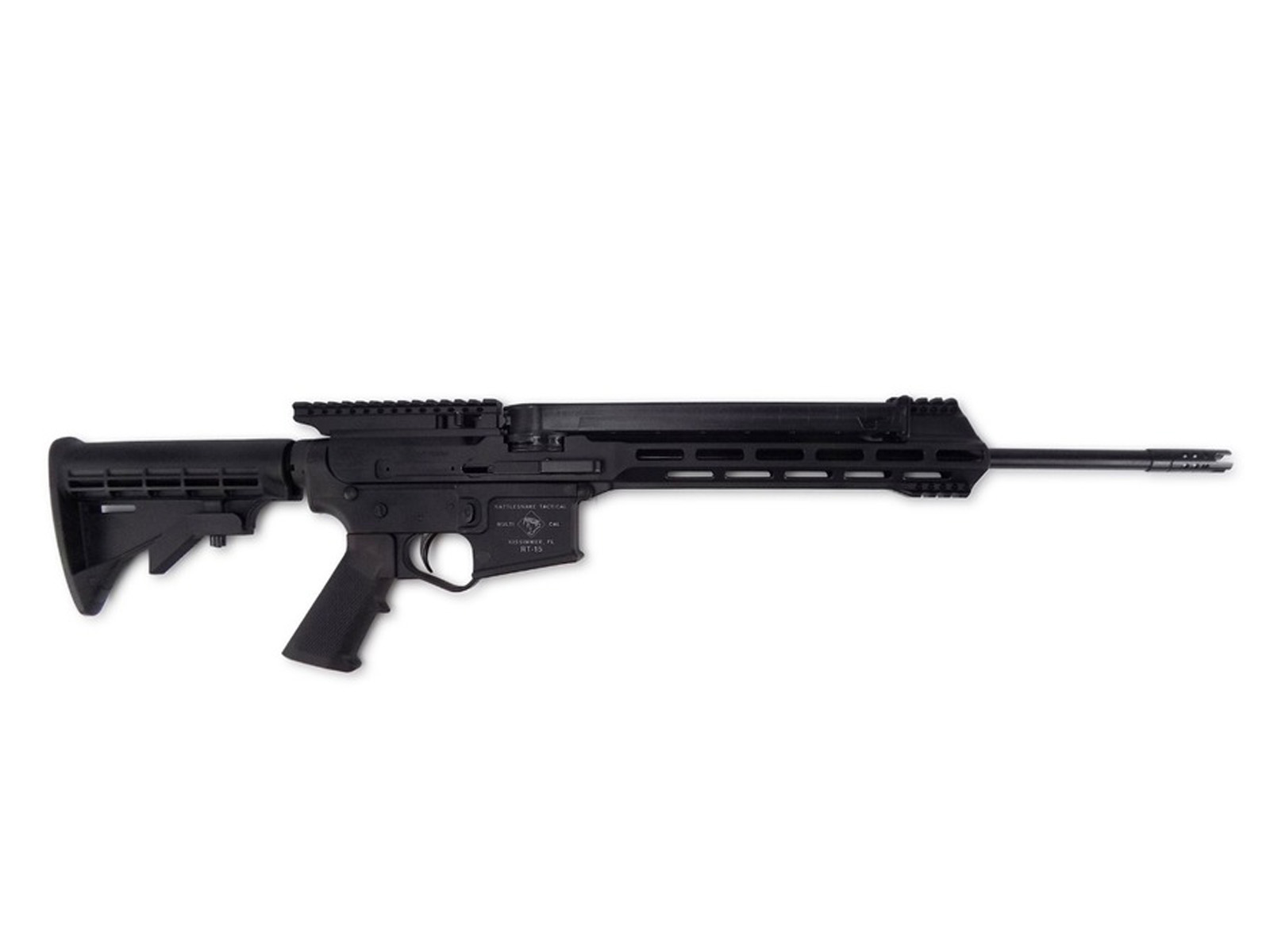
The rifle itself matters as much as the optic. A short, lightweight carbine in a practical caliber is the right starting point. Hunters working hog dogs often run 300 Blackout, 350 Legend, or 223 Rem in AR-style platforms because they are light, short, and easy to manage in thick cover. Lever-actions in 357 Mag or 44 Mag are also popular for their handling characteristics.
Look for an overall rifle weight under 7 pounds with optic. A short barrel – 16 inches is a practical minimum for most hunting setups – keeps the package maneuverable. A simple sling that lets the rifle hang chest-high when you need both hands is worth more than almost any other accessory.

Quick Checklist – Dog Hunting Rifle Setup
- Total rifle weight under 7 lbs with optic and sling
- Barrel length 16 inches or shorter for brush handling
- Red dot with at least 50,000 hour battery life
- Auto-brightness or easy manual brightness adjustment
- Single-point or two-point sling for quick one-hand transitions
- Caliber appropriate for game – enough energy, manageable recoil
- No magnification rings or adjustment knobs that snag brush
- Trigger that does not require excessive force for one-handed control
- Optic mounted low and forward for fast target acquisition
Common Mistakes Hunters Make Choosing the Wrong Optic
- Choosing an LPVO for versatility without testing one-handed use – range performance does not predict field performance
- Running magnification above 1x in close cover – it narrows your view at the worst possible moment
- Ignoring battery life on red dots – a dead red dot in the field is a paperweight; check it before every trip
- Mounting a red dot too far back – it should be forward enough to allow fast eye-to-dot alignment without perfect cheek weld
- Choosing a heavy optic on an already heavy rifle – every ounce matters when one arm is handling a dog all day
- Skipping one-handed dry fire practice – the ergonomics feel completely different without a support hand
- Not accounting for dog safety in shot angle decisions – the optic that keeps you most aware of your surroundings is the safer choice
FAQ – Optics, Hounds, and One-Handed Shooting Safety
Q: Is a red dot legal for hunting in all US and Canadian provinces and states?
A: In almost all jurisdictions, yes. A few areas restrict electronic devices or illuminated reticles in certain seasons – confirm with your local regulations before you head out.

Q: Can I use an LPVO for hog dog hunting if I already own one?
A: You can, but leave it on 1x and practice extensively one-handed. If you already have a quality LPVO, it is not a reason to buy a new optic – but be honest about its limitations in close, fast scenarios.

Q: What red dot size is best – 2 MOA or 4 MOA – for hunting with dogs?
A: A 4 MOA dot is faster to pick up in chaotic situations and works well for the close ranges most dog hunting involves. A 2 MOA dot is more precise but slower to acquire under stress.
Q: Is one-handed rifle shooting safe with dogs present?
A: It requires strict discipline. Always identify your target and what is beyond it before your finger enters the trigger guard. Know where every dog is before you shoot. Never take a shot you are not confident in just because the window is brief.
Q: What caliber do most hog dog hunters use?
A: 300 Blackout and 350 Legend are popular in AR platforms for their manageable recoil and short-range effectiveness. 44 Mag in a lever-action is also common. The goal is enough energy to anchor a hog cleanly without excessive recoil that affects one-handed control.
Q: Should I use a suppressor with a red dot for hog dog work?
A: A suppressor reduces muzzle blast near the dogs, which is a real benefit. It does add weight and length – factor that into your overall rifle balance before committing.
Quick Takeaways
- A red dot is the better choice for the vast majority of dog hunting scenarios
- One-handed shooting demands forgiving eye box and wide field of view – red dots deliver both
- LPVOs are not wrong, but their advantages disappear at close range under physical stress
- Rifle weight and overall package size matter as much as the optic itself
- Safe backstop identification is harder when you are moving – choose the optic that keeps you most aware
- Practice one-handed shooting specifically before the season, not just standard two-handed drills
- Scenario matters – open country treed game is the one place a low-power variable earns its weight





Comments are closed.