

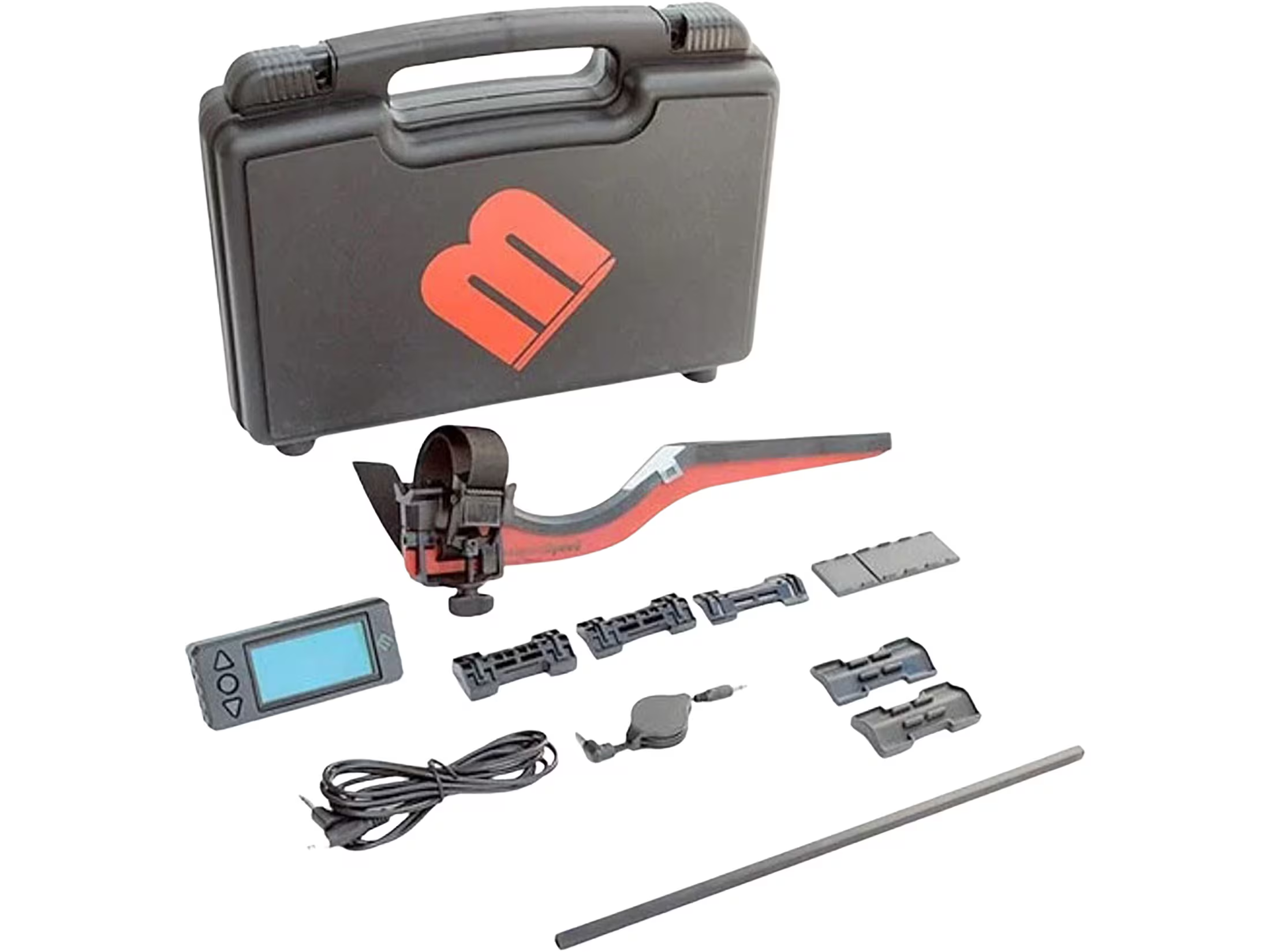
Precision at the Muzzle: Why Barrel-Mounted Chronographs Matter
We introduce barrel‑mounted chronographs and explain why measuring muzzle velocity at the source changes how we approach accuracy and load development. By capturing velocity right at the muzzle, MagnetoSpeed systems remove many variables that plague optical setups. That clarity helps us see real differences between bullets, powders, and seating depths faster and with more confidence.
We’ll demystify how MagnetoSpeed technology works, compare it to traditional optical chronographs, and show practical setups for hunting, competition, or range testing. Our goal is to give every shooter—casual plinker to precision marksman—a clear path to reliable, actionable data. Read on and adopt a hands‑on, experimental mindset so you can tune loads and improve consistency at the muzzle. We make complex data easy to use.


How Barrel-Mounted Chronographs Work: The Basics of MagnetoSpeed Technology
The simple idea: magnetic disturbance → precise time stamps
MagnetoSpeed chronographs sit on the barrel just forward of the action and listen, not look. A small sensor array detects the moment a bullet disturbs the local magnetic field as it leaves the muzzle. That disturbance creates a clear electrical pulse; two sensors spaced a known distance along the barrel register two pulses. We get two highly precise timestamps, and velocity is simply distance divided by time.
What’s happening inside (in plain language)
This approach is robust: because the sensors are mounted on the barrel, we’re measuring velocity at the muzzle — before wind, bullet drop, or optical misreads can distort the number.
How this compares to optical chronographs
Optical systems rely on two light gates farther downrange and can be fooled by lighting, shadows, or misaligned shots. We avoid those variables with barrel mounting. In practice, that means fewer spoiled string tests and faster, more actionable load development.
The kinds of data MagnetoSpeed gives us
What we can’t expect
Popular models like the MagnetoSpeed V3 and Sporter illustrate these principles in compact packages. With the basics clear, we’re ready to look at the practical advantages — portability, reliability, and how muzzle-based numbers change the way we test loads.
Practical Advantages: Portability, Reliability, and Real-World Accuracy
Small footprint, big convenience
Because we mount the chronograph on the barrel, our range kit shrinks dramatically. Instead of hauling tripods, mats, multiple light screens, and a spare battery box, we toss a compact MagnetoSpeed (V3 or Sporter) into the rifle case. Mounting takes a minute; when we’re done we pop it back in the case and move on. That portability means quicker sessions, less setup stress, and the freedom to chronograph in tight backcountry or crowded club ranges where laying out optical skyscreens isn’t practical.
Hands-on robustness in real conditions
Barrel-mounted tech removes many environmental headaches that ruin optical skyscreens:
We’ve chronoed at dawn with low sun and at midday under a cloudless sky with equal reliability. For hunting prep, that means we can test loads at the stand or a short-range private property without chasing perfect lighting.
Reliable across rifles, barrels, and suppressors
Because the sensor measures at the muzzle it works consistently across:
If you’ve ever tried to chronograph a suppressed rifle with optics-based gear, you know blast and reflections can trash readings. With a barrel-mounted unit we’re getting the true muzzle velocity — the number our ballistic solvers actually need.
Practical wins: how real shooters use it
Here are the quickest, high-payoff ways we put muzzle accuracy to work:
Quick tips to get usable data now
We find this combination of portability, environmental immunity, and muzzle-true readings turns velocity numbers into immediate, actionable decisions at the range and in the field.
Choosing the Right MagnetoSpeed Setup for Your Shooting Style
Key selection criteria
When we pick a MagnetoSpeed, we focus on a few practical factors that determine how useful it will be for our needs:
Matching setups to shooting goals
Here’s how we typically match models to roles:
Quick decision checklist
Ask ourselves these quick questions before buying:
Answering those points gets us to an appropriate model without paying for unused features. In the next section, we’ll walk through step-by-step setup and best practices so our chosen unit performs reliably every session.
Setting Up and Using a Barrel-Mounted Chronograph: Step-by-Step Best Practices
We want setup to be fast, repeatable, and low-stress so we spend range time shooting, not fiddling. Below is the workflow we use with MagnetoSpeed V3 and Sporter units to get reliable readings every session.
Safe mounting procedures
Recommended placement & alignment
Verifying function before live fire
Shot strings, cadence, and data capture
Quick troubleshooting checklist
We once chased a 50 fps outlier only to find the clamp had crept loose after the third shot—repeating the string immediately fixed it. With these steps we make setup predictable and spend our sessions improving loads and accuracy, not troubleshooting gear.
Turning Velocity Data into Performance Gains: Interpreting and Applying Results
We’ve collected clean strings with a MagnetoSpeed — now what? This section turns raw numbers into decisions that tighten groups, sharpen trajectories, and make hunting loads reliable.
Key metrics and what they tell us
Good practical targets: SD <10 fps for hunting loads, <5 fps for match-grade loads. ES under ~40 fps is a useful ballpark—if it’s higher, start troubleshooting.
How metrics guide load development
Refining BC and feeding trajectory tools
We refine ballistic coefficient empirically by shooting at a known distance, recording impact vs predicted drop, then adjusting BC in our app (Applied Ballistics, Strelok, etc.) until prediction matches reality. Use the MagnetoSpeed average muzzle velocity and local atmospheric inputs for precise modeling. Record SD so apps can show spread envelopes.
Weather, elevation, and patterns
Always log temperature, pressure, humidity, and elevation (Kestrel or smartphone apps). Higher altitude and temperature reduce air density; the same muzzle velocity will produce a flatter trajectory. If we see velocity drift with shot number, plot velocity vs shot index — a steady rise usually indicates barrel heating; a sudden jump often signals a loose clamp or seating anomaly.
Simple experiments to run
By approaching chronograph data methodically, we convert numbers into repeatable, performance-driven choices that improve accuracy on the next range trip.
Common Issues, Maintenance, and Advanced Tips for Consistent Performance
Batteries, firmware, and routine checks
We make a habit of a quick checklist before each range trip: batteries charged or fresh, firmware up to date, and fast visual check of mounts and cables. Follow the manufacturer’s update path (MagnetoSpeed’s support page) for firmware and back up any stored logs before updating. Remove batteries for long storage and keep a small pack of spares in the range bag.
Protecting the sensor from fouling and impact
Keep the sensor clean and mechanically protected—this extends service life more than anything else.
Muzzle devices, suppressors, and harmonics — mitigation strategies
Muzzle brakes and suppressors change local metal mass and harmonics, and can alter readings if the sensor is too close.
Quick verification and troubleshooting runs
We always run a 3–5 shot verification string after mounting or any adjustments. A sudden jump or drift is usually mechanical—loose clamp, slipped pad, or barrel heating.
Advanced workflows: data integration and redundancy
To get the most from our strings, we export CSVs to Google Sheets or load logs (Applied Ballistics, Excel). Tag each row with components, temp, and shot number to spot trends. For high-stakes validation, we cross-check with a second system (LabRadar or a second MagnetoSpeed) to confirm extreme-precision loads.
With these habits—simple maintenance, smart mounting, verification runs, and data workflows—we keep barrel-mounted chronographs accurate and dependable, setting us up for the article’s final thoughts.
Bringing Precision to Every Range Session
Measuring at the muzzle with a barrel‑mounted chronograph gives us practical, repeatable data that directly informs accuracy and smarter load choices. MagnetoSpeed setups are portable, reliable, and simple enough to use every range day; when we pair consistent measurement technique with careful record‑keeping, our ballistic decisions improve quickly.
We should experiment methodically, log velocities, SDs, and environmental notes, and apply findings to real shooting scenarios— from load development to zero confirmation. Let’s make every trip to the range an opportunity to learn, refine, and shoot better. Try it, record results, and keep improving today.


