
Winchester Model 70: The Legendary “Rifleman’s Rifle”


The Winchester Model 70 has been called the “Rifleman’s Rifle” for nearly ninety years, and the title isn’t marketing – it’s a description of what the rifle actually does. Since 1936, the Model 70’s controlled-round feed action has been the choice of hunters, military snipers, and anyone who needed a bolt-action rifle that worked without hesitation when conditions got difficult. Here’s an honest look at what makes it special, where it fits in the current market, and the one improvement worth making on any Model 70.
The Legacy – Why It Still Matters
The Model 70 emerged from Winchester’s New Haven factory as an improved version of the Model 54. The design refinements – a better safety, tighter tolerances, the Mauser-style claw extractor – created what became known as the “pre-64” Model 70, a rifle so well-regarded that collectors still chase clean examples sixty years later. Military snipers carried it through World War II, Korea, and Vietnam, which is a real-world evaluation that no marketing campaign can replicate.

The 1964 production changes that eliminated hand-fitting and simplified the action for cost savings sparked a buyer revolt that’s worth understanding. Winchester eventually returned to controlled-round feed in 1992 – an acknowledgment that the original design priorities were correct. Today’s Model 70 carries that legacy forward with modern manufacturing methods that maintain functional quality at more accessible price points than the hand-fitted originals commanded.
Controlled-Round Feed – The Core Advantage
Controlled-round feed means the Mauser-style claw extractor captures the cartridge rim the moment it leaves the magazine, maintaining positive mechanical control through the entire feeding and extraction cycle. Push-feed actions – the majority of modern bolt-action rifles – work differently: the bolt pushes the cartridge into the chamber and the extractor snaps over the rim at the last moment. That distinction is academic on a calm range day. It becomes real in the field.
A CRF action won’t drop a cartridge when you work the bolt at an odd angle climbing a steep hillside. When you need to quietly unload a chambered round without cycling it through the magazine, the cartridge stays under extractor control rather than falling loose. The massive claw extractor provides extraction force that push-feed designs simply can’t match – which matters when brass is dirty, slightly swollen from heat, or marginally out-of-spec. These are the conditions where rifles either work or don’t, and the Model 70’s design has been answering that question consistently since before most hunters were born.
The Ruger M77 Hawkeye shares this CRF philosophy – both rifles are reviewed on this site, and both earn their place for hunters who specifically value this design. The comparison between them is covered in the Ruger M77 Hawkeye – The Classic American Workhorse review.
The Three-Position Safety
The Model 70’s three-position tang safety is worth understanding before you handle the rifle for the first time, because it does more than most hunters expect from a safety. Position one is fire. Position two locks the trigger while keeping the bolt operational – you can open and close the bolt, chamber or unload rounds, with the trigger disabled. Position three is full safe with bolt locked closed.
The field application of position two is significant: if you’re climbing into a treestand, crossing a fence, or navigating difficult terrain with a round chambered, you can lock the trigger without locking the bolt – a more nuanced safety option than the simple two-position designs on most competing rifles. Many experienced hunters who’ve used this system won’t go back to a two-position alternative once they’ve understood what they’re working with.
Build Quality – Current Production Versus Pre-64
The pre-64 rifles had hand-fitted actions, more careful wood-to-metal fit, and craftsmanship that reflected a different manufacturing era. Collectors pay premium prices for them and they’re genuinely beautiful. For a working hunter deciding between a worn pre-64 and a current-production Model 70, the calculation isn’t as simple as “older is better.”
Current Model 70 actions are machined from solid steel – not cast – which provides the strength required for magnum cartridges and ensures long-term durability. Modern barrel manufacturing is more consistent than what was possible in the 1950s, and accuracy from current-production rifles is typically better than equivalent-era pre-64 examples. A clean current-production Featherweight in good condition will serve a working hunter better than a worn pre-64 that needs a restock, reblue, and trigger work.
Pre-64 rifles have genuine collector value and historical significance. They’re worth owning and appreciating. They’re not automatically superior to a well-maintained current-production rifle for the purpose of actually hunting with.
The M.O.A. Trigger – And the Upgrade Worth Making
Current Model 70 rifles ship with Winchester’s M.O.A. trigger system – adjustable, with a factory-set pull in the 3-4 lb range and a reasonably clean break for a production hunting rifle. It’s a meaningful improvement over the original non-adjustable factory triggers that critics pointed to for years. For most hunting applications, it’s functional and adequate.
Adequate, however, isn’t the same as optimized. The Model 70’s reputation rests on field reliability and a classic CRF action – but the trigger is the interface between shooter and rifle on every single shot, and the factory spring package leaves real performance on the table.
Old Beaver Gunsmith has developed a reduced-power trigger spring specifically for the Winchester Model 70 that addresses exactly this. The Winchester Model 70 Reduced Power Trigger Spring lightens the pull and cleans up the break – the qualities that matter most for precise shot placement at distance and consistent performance under field pressure. The full context for what the factory trigger does and how a spring upgrade changes it is covered in the Winchester Model 70 trigger upgrade guide on their site, and the step-by-step spring installation guide makes the process accessible to any mechanically comfortable shooter at home.
For a rifle with the Model 70’s heritage and mechanical quality, a trigger upgrade that brings the pull in line with what the action deserves is worth doing early. It’s the modification that makes a good rifle feel like the premium tool it was designed to be – and it costs a fraction of what custom trigger work would run through a gunsmith.
Model Variants – Which One Fits Your Hunting
The Model 70 lineup covers a wide range of applications, and the choice between variants matters for different hunters.
The Featherweight is the most popular and most practical variant for most hunters. At 6.5-7 lbs with a 22-inch barrel, it’s light enough for mountain hunting but substantial enough to shoot well. The slimmer contour makes it quick to shoulder. For a hunter who covers ground on foot – western elk, mountain deer, backcountry mule deer – this is the variant that makes the most sense and the one that best exemplifies the Model 70’s balance of portability and capability.
The Sporter adds weight and barrel length (typically 24 inches) for hunters who prioritize long-range capability or shoot magnum cartridges that benefit from additional barrel length for velocity. The extra mass also helps manage recoil in hard-kicking chamberings. For a rifle that primarily lives on a shooting bench or in a blind rather than on an all-day pack hunt, the additional weight is a benefit rather than a penalty.
The Super Grade is the premium tier – upgraded walnut with more figure, shadow-line cheekpiece, jeweled bolt body. The functional performance is identical to the Featherweight and Sporter. You’re paying for aesthetics and the satisfaction of owning a beautiful rifle. If that matters to you, it’s worth it. If you’re a working hunter who will scratch the stock on rocks and leave the rifle wet in a truck bed, the functional variants save money without costing performance.
The Alaskan configuration handles the heavy-recoiling dangerous game chamberings – .338 Win Mag, .375 H&H, .416 Rem Mag. The additional weight and barrel length are appropriate for cartridges with serious recoil and for hunting situations where the first shot may be at close range on a large, potentially dangerous animal.
Accuracy Expectations – What the Model 70 Actually Does
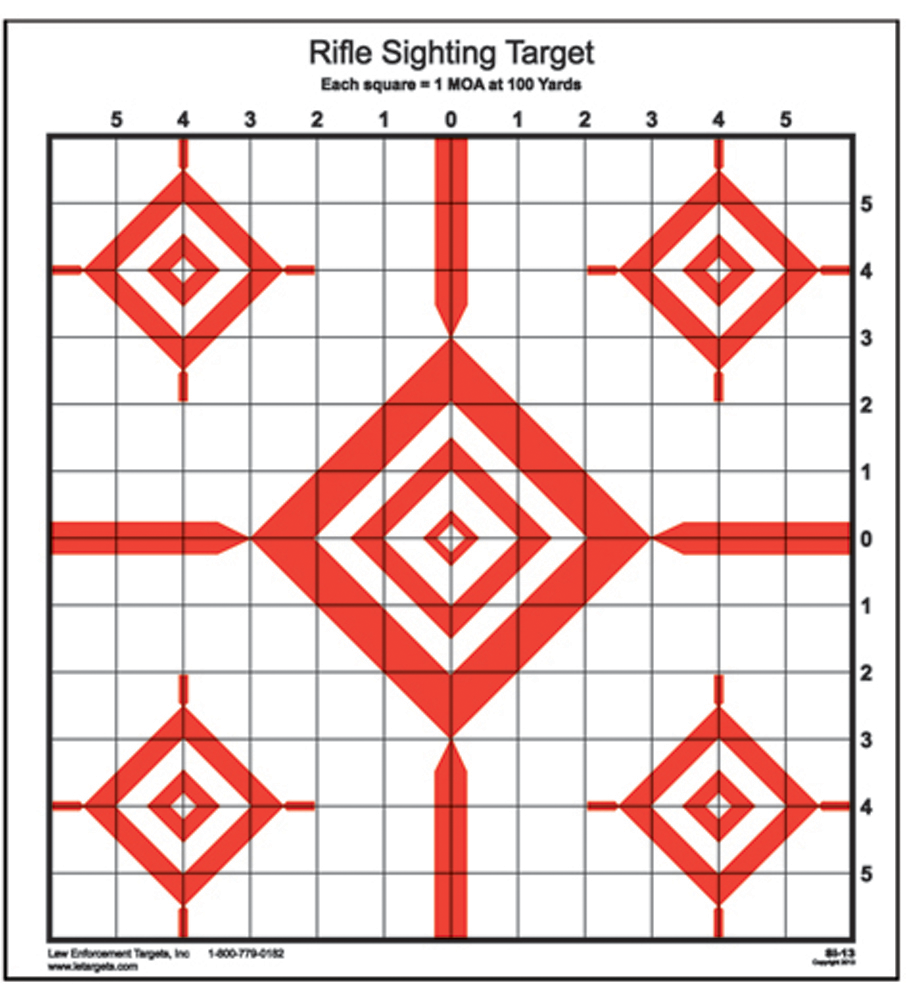
The Model 70 was not designed to be a benchrest rifle. Most current examples group 1-1.5 MOA with ammunition they prefer, which is meaningfully better than necessary for any ethical hunting shot at realistic field distances. Some rifles surprise their owners with sub-MOA performance. That’s not the primary design goal, and using accuracy as the primary metric for evaluating the Model 70 misses the point of the design.
The engineering priority is function under adverse conditions – which is exactly the reverse of what a benchrest design optimizes for. A rifle that groups 0.5 MOA on a calm afternoon at a climate-controlled range may or may not function reliably in a downpour with cold hands when a shot opportunity appears unexpectedly. The Model 70’s design priorities make more sense when you frame the accuracy question honestly: 1-1.5 MOA at 200 yards means a group under 3 inches, which is well within the vital zone of any big game animal. For hunting, that’s the relevant standard.
How the Model 70 Compares to Its Main Rivals
Ruger M77 Hawkeye – The closest CRF comparison
The Ruger M77 Hawkeye at $900-1,100 is the most direct functional comparison to the Model 70 – both rifles share CRF design philosophy, three-position safety, and a commitment to field reliability over modern features. The Model 70 has longer heritage and broader aftermarket support. The Hawkeye typically delivers a slightly better out-of-box trigger and more current production consistency. Either rifle is an excellent choice and the decision comes down to ergonomic preference and specific variant availability. Both are covered in detail separately on this site, and both benefit from a trigger spring upgrade – Old Beaver Gunsmith makes kits for both platforms.
Remington 700 – The push-feed alternative
The Remington 700 is the Model 70’s historical foil – a push-feed design with an enormous aftermarket following and the most aftermarket support of any bolt-action rifle on the market. The 700 is simpler and less expensive to manufacture, which historically made it accessible. Current-production 700s have faced quality control concerns that the Model 70 hasn’t. For a hunter who wants to build a custom rifle with maximum parts availability, the 700 action is the default choice. For a hunter who wants a reliable factory rifle that works as designed with a CRF system, the Model 70 is the stronger platform.
Tikka T3x – The modern precision alternative
The Tikka T3x at $800-1,000 is the choice for hunters who prioritize the smoothest action, consistent sub-MOA accuracy guarantees, and a modern lightweight package over traditional CRF design. The T3x uses push-feed, which the Model 70 purist will note. But the Finnish manufacturing quality and action smoothness are genuinely in a different class from most production rifles, and for hunters who don’t specifically need CRF, the T3x offers a compelling alternative at a similar price. See the Top 10 Most Trusted Hunting Rifles in the USA for the full comparison context.
Browning X-Bolt – Premium ergonomics
The Browning X-Bolt at $900-1,100 provides the best factory ergonomics in the segment – short bolt throw, detachable rotary magazine, and well-designed stock that handles more naturally than the Model 70’s traditional lines for many shooters. Push-feed design, excellent accuracy, and refined feel. For hunters who haven’t specifically grown up with traditional CRF rifles, the X-Bolt’s handling advantages are real.
The Bottom Line
The Winchester Model 70 earns the “Rifleman’s Rifle” title through genuine design merit, not nostalgia. The controlled-round feed action, three-position safety, and solid steel construction represent a coherent set of design choices that prioritize field reliability above all else – and that philosophy has proven itself across nearly nine decades of production and use in conditions that test equipment harder than any manufacturer’s guarantee could cover.

The first upgrade worth making on any Model 70: the trigger. Old Beaver Gunsmith’s Winchester Model 70 Reduced Power Trigger Spring brings the factory M.O.A. trigger’s performance in line with what the rifle’s mechanical quality deserves. Read the trigger upgrade guide first to understand what changes and why, then follow the spring installation guide for the home install. It’s the modification that best completes what Winchester designed – a reliable, accurate hunting rifle that performs at the level its heritage suggests.
Quick Specs – Model 70 Featherweight (most common variant)
| Spec | Detail |
|---|---|
| Action type | Controlled-round feed bolt-action |
| Extractor | Mauser-style claw extractor |
| Barrel length | 22 in (Featherweight), 24 in (Sporter/Super Grade) |
| Trigger | M.O.A. adjustable; upgradeable with reduced-power spring |
| Safety | 3-position tang safety |
| Magazine | Hinged floorplate, internal box magazine |
| Weight | 6.5-7 lbs (Featherweight); 7.5-8 lbs (Sporter) |
| Common calibers | .270 Win, .30-06 Springfield, .308 Win, .300 Win Mag, 6.5 Creedmoor and more |
| Typical street price | $900-$1,200 (Featherweight/Sporter); $1,400-$1,800 (Super Grade) |
How It Stacks Up Against Competitors
| Rifle | Feed system | Price range | Best for |
|---|---|---|---|
| Ruger American | Push-feed | $450-$600 | Budget accuracy, first hunting rifle |
| Ruger M77 Hawkeye | Controlled-round feed | $900-$1,100 | CRF alternative, heirloom durability |
| Winchester Model 70 | Controlled-round feed | $900-$1,200 | Heritage CRF, field reliability, classic design |
| Tikka T3x | Push-feed | $800-$1,000 | Smoothest action, sub-MOA accuracy |
| Browning X-Bolt | Push-feed | $900-$1,100 | Best ergonomics, refined feel |
| Remington 700 | Push-feed | $700-$1,000 | Widest aftermarket, custom builds |
Frequently Asked Questions
Yes – the Model 70’s M.O.A. trigger system responds well to a reduced-power spring upgrade that can be installed at home. Old Beaver Gunsmith makes a Winchester Model 70 Reduced Power Trigger Spring specifically for this purpose – it lightens the pull and cleans up the break without altering the safety characteristics of the original design. The full process is covered in their trigger upgrade guide, and the step-by-step installation guide walks through the home install. For a rifle with the Model 70’s mechanical quality, a trigger that matches that quality is the most worthwhile single upgrade available – and it costs a fraction of custom gunsmith work.
For collecting and aesthetics, yes – pre-64 rifles have genuine historical significance and the hand-fitted craftsmanship of that era is beautiful. For actual field use as a working hunting rifle, the case is less clear. Modern barrel manufacturing produces more consistent accuracy than was achievable in the 1950s. A worn pre-64 that needs a restock, reblue, and trigger work can easily cost more to bring to field-ready condition than a new current-production rifle. Current Model 70 rifles with CRF (1992 and later) offer the same functional reliability as pre-64 examples. If you’re buying a working hunting rifle, a clean current-production Model 70 serves the purpose better than a tired pre-64. If you’re buying a piece of American firearms history, the pre-64 is worth understanding and appreciating on its own terms.
They excel in different areas and the answer depends on what you’re building. The Model 70’s CRF action provides superior field reliability in adverse conditions – positive extraction, reliable feeding at odd angles, and mechanical control that push-feed designs can’t fully replicate. The Remington 700’s push-feed design has the widest aftermarket support of any bolt-action rifle, making it the preferred platform for custom rifle building. Current-production quality control has been more consistent on the Model 70 than the 700 in recent years. For a factory hunting rifle where field reliability is the priority, the Model 70 is the stronger choice. For a base action to build a custom precision rifle with maximum parts availability, the 700 architecture dominates.
The Model 70 was designed around the .30-06 Springfield and .270 Winchester, and it feeds both beautifully – smooth, positive, exactly as the designer intended. These standard long-action cartridges are the Model 70 at its natural best, delivering excellent terminal performance on any North American game with manageable recoil. The short-action .308 Win works equally well. For a first Model 70, any of these three is a sound choice with excellent ammunition availability. Magnum chamberings work but the additional recoil is noticeable in lighter variants – if you choose a magnum, the Sporter or Alaskan’s additional weight makes a meaningful difference in shootability. 6.5 Creedmoor is available in short-action variants and offers modern ballistic performance with the Model 70’s mechanical advantages.
Both are CRF rifles built around field reliability and traditional design, and they’re the two most direct functional comparisons on the American market at similar price points. The Model 70 has longer heritage, a more widely recognized “rifleman’s rifle” reputation, and the three-position safety that some hunters specifically prefer. The Hawkeye typically delivers a slightly better out-of-box trigger feel and is Ruger’s current production design with modern manufacturing consistency. Both benefit from trigger spring upgrades – Old Beaver Gunsmith makes spring kits for both platforms, which is worth knowing if you’re deciding between them. The choice often comes down to ergonomic preference: the Model 70’s classic stock geometry suits many hunters naturally, while the Hawkeye’s dimensions appeal differently. Either rifle is a legitimate lifetime purchase and the decision between them is less important than choosing one and shooting it well.
Position one is fire. Position two – the middle position – locks the trigger while keeping the bolt fully operational. You can open and close the bolt, chamber a round, or unload the chamber with the trigger disabled. This allows safe handling in situations where you want bolt functionality but not trigger function – climbing into a treestand, crossing a fence, navigating steep terrain. Position three locks both the trigger and the bolt closed. Most competing rifles offer only two positions: fire or full safe with bolt locked. The Model 70’s middle position provides a more nuanced safety option that experienced hunters find genuinely useful in the situations where it matters. Hunters who switch from a two-position safety to the Model 70’s three-position system typically don’t want to go back after they’ve understood what the middle position enables.




Comments are closed.