
Night Hunting and Pest Control 2026


In 2026, nighttime pest control in the United States is no longer “exotic Texas stuff” – it’s a distinct discipline with its own rules, culture, and equipment market. But here’s the hard reality: state laws and regulations decide everything. In one state, a thermal optic on coyotes is a normal working tool; in another, it’s taboo under “fair chase” principles, and you can easily find yourself in legal trouble.
Night work in 2026 is no longer a fringe hobby. Across big ranch country, farm edges, and suburban greenbelts, predator and pest control has become its own skill set – part hunting, part wildlife management, part equipment market discipline.
The key is to treat it like a system, not a gadget. Thermals and suppressors can make you more effective, but they also raise the bar for legality, identification, and safe shooting decisions.

This guide is written for real-world North American pest control targets – feral hogs, coyotes, foxes, and raccoons – with an emphasis on ethical shots, safe setups, and staying inside the law.
Why Night Pest Control Exists – Management, Not Entertainment
Wild hogs, coyotes, foxes, raccoons – these are often not “trophies,” but direct threats to farms, poultry, calves, crops, and infrastructure. USDA estimates damage and control costs from feral swine at approximately $2.5 billion per year in the U.S. agricultural sector alone. (APHIS)
That kind of impact creates demand for:
- Efficient removal – not one animal, but multiple animals
- Short response cycles – when damage starts, you can’t wait for “season vibes”
- Tools that work in darkness, fog, brush edges, and broken terrain
For predators (coyotes, foxes) and opportunists (raccoons), the driver is usually property protection – livestock, poultry, and nuisance pressure – and night is when a lot of that movement happens.
The Agricultural Reality Behind Night Hunting
Let’s be specific about why this matters in 2026:
Feral Hogs:
- Destroy crops (corn, soybeans, wheat, rice)
- Root up pastures and damage irrigation systems
- Prey on newborn livestock
- Spread disease (pseudorabies, brucellosis, E. coli)
- Reproduce rapidly (sows can have 2 litters per year, 4-6 piglets each)
Coyotes:
- Kill calves, lambs, and poultry
- Impact deer and turkey populations (predation on fawns and poults)
- Adapt quickly to human activity patterns
- Increasingly bold in suburban and rural-residential areas
Raccoons:
- Raid poultry coops and kill chickens
- Damage crops (especially corn)
- Carry rabies and raccoon roundworm
- Create structural damage to buildings and equipment
Foxes:
- Prey on poultry and game birds
- Compete with native predators
- Carry rabies and mange
- Can devastate ground-nesting bird populations
This isn’t about “fun shooting.” It’s about protecting livelihoods, managing invasive species, and maintaining ecological balance. Night hunting is often the most effective time because that’s when these animals are most active and vulnerable.
Start With the Uncomfortable Truth – Laws Decide Everything
Night hunting rules are not “one America.” They are a patchwork. Some states treat thermal optics as a practical tool for invasive species control, while others restrict or prohibit them based on fair-chase concerns. (Pulsar Vision)
California is a good example of how strict it can get. California Fish and Game Code section 2005 makes it unlawful to use or possess night vision equipment to assist in taking wildlife, and it explicitly describes night vision equipment in ways that cover common night-hunting setups. (FindLaw Codes)
So the rule for 2026 is simple:
- Before you buy gear or plan a trip, confirm the exact method rules for your state, your county (if relevant), and your target species
- Do not assume “predators are different” or “private land is different” – in some states it is, in some states it is not
A second truth that matters: many states draw a hard line between non-game or invasive control and big-game fair chase. Thermal-at-night may be treated as a management tool for hogs and coyotes, but not for deer/elk class animals. (Pulsar Vision)
State-by-State Reality Check for 2026
Here’s what you need to understand about the legal landscape:
States Generally Permissive for Night Hunting with Thermals (for specific species):
- Texas – feral hogs, coyotes, and other non-game species on private land with landowner permission
- Oklahoma – similar to Texas, focused on predator and pest control
- Arkansas – allows night hunting for certain species with proper licensing
- Louisiana – permits night hunting for nuisance animals and predators
States with Significant Restrictions:
- California – prohibits night vision and thermal devices for taking wildlife (FindLaw Codes)
- Colorado – restricts artificial light and night vision for big game
- Many Northeastern states – various restrictions on night hunting methods
The Critical Variables:
- Species – what’s legal for hogs may not be legal for coyotes
- Land ownership – private vs. public land rules often differ
- Licensing – some states require special permits for night hunting
- Equipment – thermal vs. night vision vs. artificial light regulations vary
- Season timing – some states have year-round predator seasons, others don’t
Where to verify: Check your state’s fish and game department website, and when in doubt, call them directly. Laws change, and online summaries (including this one) are not legal advice.
The 2026 Night-Gear Stack – What Matters and What’s Just Marketing
Thermal: Detection Is Easy, Identification Is the Hard Part
In 2026, thermal optics have moved from “spot a heat blob” to “make a confident decision.” That’s the important shift. Your biggest ethical failure at night is not missing – it’s shooting without proper identification.
A practical thermal setup usually breaks into two tools:
- A handheld thermal monocular for scanning and movement tracking
- A weapon-mounted optic (where legal) for aiming and shot confirmation
Why handheld first? Because scanning with a rifle is poor discipline and often unsafe. Scan with a monocular, then decide if you even have a legal target, and only then bring the rifle into the equation.
Thermal laws vary by state – some explicitly allow it for non-game like hogs and coyotes, others do not. (Sightmark)
What to Look for in Thermal Optics in 2026
Handheld Thermal Monoculars:
Key specs that matter:
- Detection range – how far you can see a heat signature (typically 800-1,500+ yards for quality units)
- Identification range – how far you can confidently ID the target (typically 300-600 yards)
- Refresh rate – 50Hz is smoother than 30Hz, matters for tracking moving animals
- Resolution – 640×480 is the sweet spot for serious work; 384×288 is budget-friendly
- Battery life – 4-8 hours is practical for a night’s work
Popular options in 2026:
- Pulsar Axion series – proven reliability, good image quality
- AGM Taipan series – solid mid-range performance
- FLIR Scout series – established brand, wide dealer network
Weapon-Mounted Thermal Scopes:
Key specs that matter:
- Base magnification – 2-3x is versatile for most pest control work
- Reticle options – simple crosshair or ballistic reticle depending on your shooting distances
- Zero retention – critical for rifles with recoil
- Mounting system – quick-detach vs. permanent mount
- Recording capability – useful for documentation and learning
Popular options in 2026:
- Pulsar Thermion series – widely used, proven track record
- AGM Rattler series – good value for performance
- Trijicon IR-Hunter series – premium option with excellent image quality
The honest reality: You don’t need the most expensive thermal to be effective. You need enough resolution to confidently identify your target at your typical shooting distances, and enough battery life to last your hunt.
Lights Still Matter
People love to argue “thermal replaces lights.” In practice, white or colored light is still useful for:
- Ground confirmation after the shot
- Safe movement, especially around fences, irrigation, and equipment
- Second verification when thermal contrast is confusing (warm rocks, livestock nearby, heated roofs, etc.)
Again, legality varies. Treat lights as a tool, not the plan.
Practical light setup for 2026:
- Handheld spotlight – 500-1,000 lumens, red or green filter option
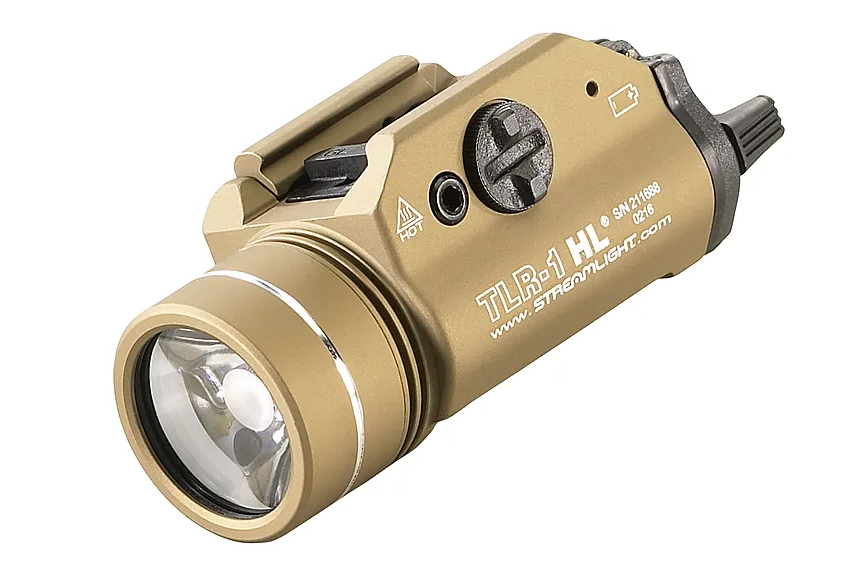
- Weapon-mounted light – for close-range confirmation and safety
- Headlamp – hands-free for field dressing and equipment handling
Rangefinders and Ballistic Solutions
Night hunting often means longer shots where you can’t judge distance by terrain features. A quality rangefinder is not optional.
What you need:
- Laser rangefinder – 600+ yard capability for open country
- Ballistic calculator – app or integrated system that accounts for your specific load
- Practice data – know your drops and wind calls at night before you hunt
Calls: Electronic or Manual, the Principle Is the Same
Calls don’t “create” animals. They exploit a decision loop – curiosity, territorial response, prey drive. Your job is to combine calling with a safe setup and predictable shooting lanes.
For coyotes and foxes, the calling basics stay old-school:
- Wind discipline – they will try to get downwind
- A plan for the downwind side – that’s where the smart ones show up
- Patience – rushing movement at night creates noise and silhouettes
For raccoons, bait and property patterns often matter more than fancy calling, depending on local rules and landowner needs.
Electronic callers in 2026:
- FOXPRO – industry standard, huge sound library, reliable
- ICOtec – good mid-range option with smartphone control
- Primos – budget-friendly, proven sounds
Manual calls still work:
- Cheaper and more portable
- No batteries to die
- Require more skill but can be more effective in pressured areas
- Good backup when electronics fail
Suppressors in 2026 – What Changed, What Didn’t, and Why Hunters Want Them
Suppressors are not movie silencers. They reduce blast and make shooting less punishing, but they don’t make gunfire “quiet.” Their real night-hunting value is practical:
- Less concussion in vehicles, blinds, and tight spaces
- Better communication with partners and safer follow-up decisions
- Less disturbance to neighbors and livestock in rural-residential edges
Legally, suppressors remain NFA-regulated, but 2026 brings a major tax change. A Congressional Research Service summary notes that P.L. 119-21 (One Big Beautiful Bill Act) sets a $0 tax rate effective January 1, 2026 for the making or transfer of NFA firearms that are not machineguns or destructive devices, while leaving other NFA requirements in place (registration and processes). (Congress.gov)
Translation for hunters:
- The tax cost barrier drops (previously $200 per suppressor)
- The compliance steps still matter – you still need to follow the process
- Background check and registration requirements remain
- Wait times may improve as the system adjusts to increased volume
For state legality, it’s still a map problem, not a federal “yes for everyone.” NSSF publishes a state-by-state suppressor law map and also warns laws can change and should be verified. (NSSF)
Why Suppressors Matter for Night Pest Control
Hearing protection:
- Reduces muzzle blast from 160+ dB to 130-140 dB (still loud, but much safer)
- Allows you to shoot without doubling up on ear protection
- Protects your hearing over years of shooting
Tactical advantages:
- Less muzzle flash – easier to stay on target and see your hit
- Reduced recoil – suppressor weight and gas management help
- Better communication – you can talk to partners without removing ear pro
- Less disturbance – follow-up shots on groups are more feasible
Practical considerations:
- Adds length and weight to your rifle
- Requires cleaning and maintenance
- Can shift point of impact – always re-zero with suppressor attached
- Heat buildup on extended shooting sessions
What to buy in 2026:
For pest control work, prioritize:
- Durability – you’re shooting volume, not precision bench work
- Sound reduction – get the most suppression you can afford
- Mounting system – quick-detach is convenient but adds cost
- Caliber rating – make sure it’s rated for your cartridge and barrel length
Popular options:
- SilencerCo Omega 36M – modular, multi-caliber, proven
- Dead Air Sandman series – tough, reliable, good for high round counts
- Rugged Suppressors – lifetime warranty, user-serviceable
Species-Specific Night Tactics for 2026
This is not a “how to violate rules” section. It’s a practical, ethical approach to being effective where legal.
Feral Hogs: Control Mindset, Not Trophy Mindset
Hogs are often a removal problem, not a single-shot problem. Your success is usually driven by:
- Finding the travel corridor from cover to food or water
- Timing the movement window (often predictable on working properties)
- Building safe shooting lanes and a plan for follow-up
Thermal helps you locate groups, but your discipline determines whether you take clean shots and avoid unsafe angles. If you hunt with a partner, establish safe sectors before darkness.
Also, remember that hogs can be around livestock and structures. The backstop is your responsibility, not the animal’s fault.
Practical hog tactics for 2026:
Scouting:
- Look for rooting damage – fresh sign indicates active feeding areas
- Find water sources – hogs need water daily, especially in warm weather
- Identify travel routes – trails between bedding and feeding areas
- Use trail cameras to pattern movement timing
Setup:
- Position downwind of expected approach
- Clear shooting lanes during daylight
- Establish safe backstops – know what’s beyond your target
- Plan for multiple shots – hogs often travel in groups
Shot placement:
- Broadside shoulder shot is ideal – anchors the animal quickly
- Avoid head shots at distance – small target, high risk of wounding
- Be ready for follow-up shots – wounded hogs can be dangerous
- Don’t shoot into the middle of a group – pick individual animals
Common mistakes:
- Shooting too early when the group is still moving
- Not having a plan for the second and third shot
- Underestimating how tough hogs are – they require solid hits
- Losing track of wounded animals in thick cover
Coyotes: Wind and Patience Still Rule
Coyotes are the classic “they circle downwind” predator. Night gear helps, but the core problem is still wind management.
What works in 2026 is not a new secret call, it’s:
- Setting up so the downwind approach lane is visible
- Staying still and quiet longer than feels comfortable
- Not forcing shots through brush just because you can see a heat signature
Night hunting raises the risk of misidentification. Thermal can compress distance perception. Be conservative.
Practical coyote tactics for 2026:
Calling strategy:
- Start with low-volume sounds – don’t blow them out immediately
- Use distress calls (rabbit, fawn, bird) for initial attraction
- Switch to challenge howls if distress isn’t working
- Be patient – coyotes often take 15-30 minutes to commit
Setup considerations:
- Elevation advantage helps with visibility and scent control
- Set up with wind in your face, watching downwind approaches
- Use terrain features to funnel coyotes into shooting lanes
- Have a partner watch your back – coyotes often circle
Shot placement:
- Chest/shoulder shot for quick kills
- Avoid running shots unless you’re confident
- Wait for the coyote to stop – use a distress call to pause them
- Be ready for quick follow-ups – coyotes can cover ground fast when hit
Common mistakes:
- Calling too loud and too long
- Moving too much during the stand
- Not watching the downwind side
- Shooting at the first heat signature without proper ID
Foxes: Smaller Target, Faster Commitment
Foxes often commit faster than coyotes and can appear suddenly. That makes target identification and safe lane setup even more important. They can also be close to farm buildings and pens.
If your local rules allow lights or thermal, your job is the same:
- Clear lane
- Confirm target
- Take the shot only when you own the backstop
Practical fox tactics for 2026:
Calling strategy:
- Foxes respond well to mouse squeaks and bird distress
- They often commit quickly – be ready
- Less volume than coyote calling – foxes are smaller and more curious
- Short stands (10-15 minutes) can be effective
Setup considerations:
- Foxes are often near structures and livestock – be extra careful with backstops
- They’re smaller and harder to see – positive ID is critical
- They can appear very close – be ready for short-range shots
- Multiple foxes may respond – plan for follow-ups
Raccoons: Nuisance Control With “Close-Range Chaos”
Raccoons are often handled as nuisance or damage control around feed storage, poultry, and trash. They are common, they move at odd times, and they appear in cluttered environments.

The temptation is to rush. Don’t.
In tight environments, safety is the entire game: angles, ricochets, and knowing what is behind the target matter more than any gear advantage.
Practical raccoon tactics for 2026:
Approach:
- Raccoons are often around buildings and equipment – safety is paramount
- They’re opportunistic – bait and pattern work better than calling
- Close-range shots (under 50 yards) are typical
- Multiple animals are common – plan accordingly
Equipment:
- Rimfire (.22 LR, .17 HMR) is often ideal for close-range work
- Shotgun with appropriate load for very close work
- Thermal helps locate them in cluttered environments
- Good light for positive ID and safety verification
The Biggest Mistakes People Make in Night Pest Control
- Treating thermal as permission to shoot instead of a tool to observe
- Moving too much – noise, silhouettes, and careless scanning
- Not having a hard “no shot” rule when identification is not perfect
- Ignoring local legality and assuming “predator control is always allowed”
- Over-focusing on gear and under-investing in setup discipline
- Poor backstop awareness – not knowing what’s beyond the target
- Shooting at maximum range – just because you can see it doesn’t mean you should shoot it
- Not practicing at night – assuming daytime skills transfer perfectly
- Inadequate target identification – shooting at heat signatures without confirmation
- Solo hunting without communication plan – no one knows where you are or what you’re doing
In 2026, the best night hunters are not the guys with the most expensive optic. They are the guys who make fewer, cleaner decisions.

A Practical ShooterDeals Buying Order for 2026
If you’re building a night-control setup from zero, the most sensible order usually looks like this:
Step 1: Handheld thermal monocular ($1,500-3,000)

- Observation and identification discipline
- Most important tool for safe, ethical night hunting
- Can be used for scouting, recovery, and general property management
Step 2: Stable rest system ($100-400)
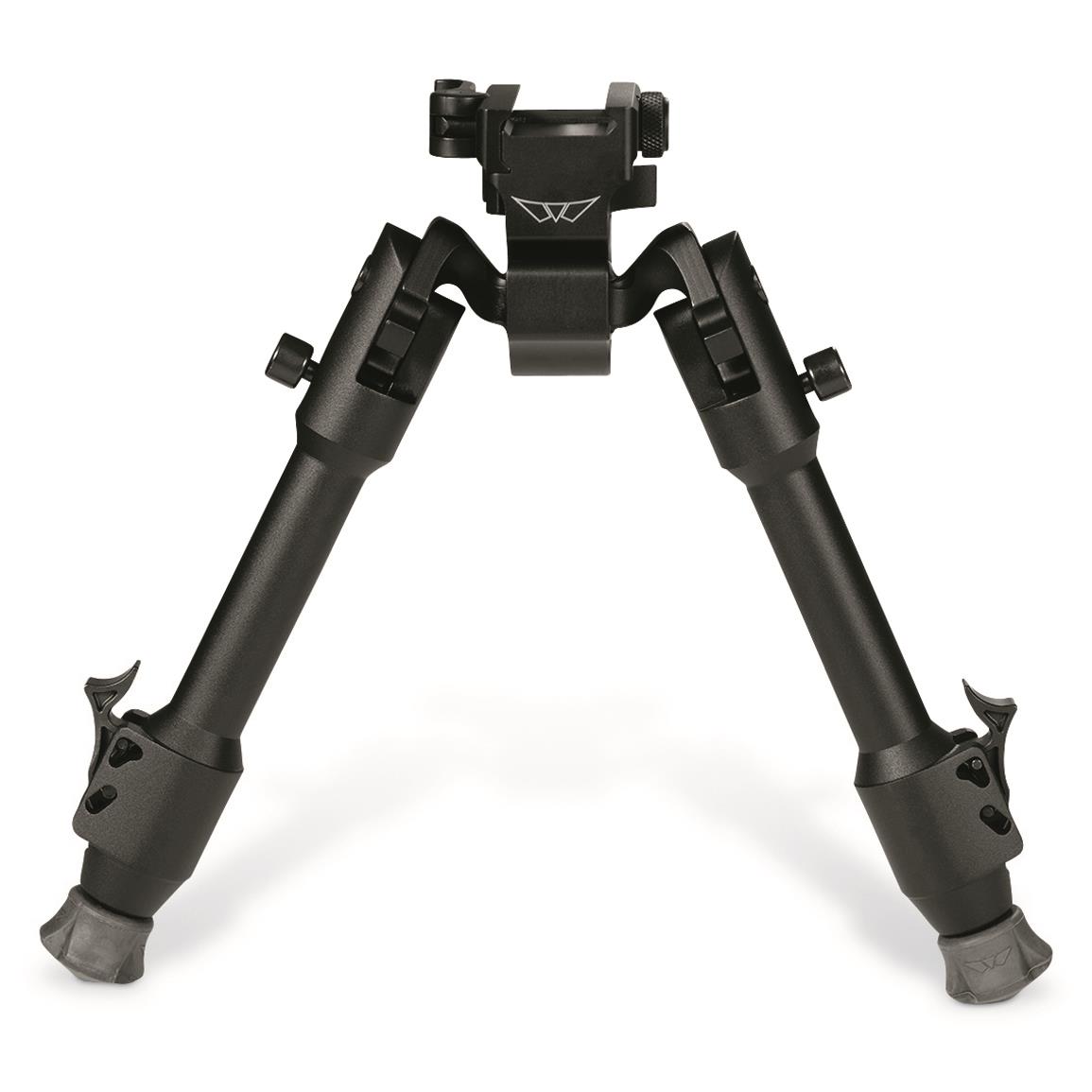
- Tripod, shooting sticks, or bipod
- Critical for accurate shots at distance
- Reduces fatigue on long sits
Step 3: Calling solution ($50-400)
- Manual calls ($50-100) or electronic caller ($200-400)
- Based on your style and local rules
- Don’t overspend here until you know what works
Step 4: Weapon-mounted optic ($2,000-5,000)
- Only if legal where you hunt
- Thermal scope or clip-on thermal device
- This is where costs escalate quickly
Step 5: Suppressor considerations ($400-1,200 + compliance)
- Only if legal in your state
- Factor in the cost of the suppressor plus any gunsmithing
- Remember the NFA process even with $0 tax (Congress.gov)
Step 6: Support gear ($200-500)
- Quality rangefinder
- Lights (handheld and weapon-mounted)
- Extra batteries for everything
- Field dressing and recovery equipment
This order keeps you from spending money on “cool” items before you can safely find, confirm, and take a shot.
Where Faith Fits In – Stewardship and Responsibility
I’m a person of faith, and I view pest control through the lens of stewardship – the biblical concept that humans are given responsibility to manage creation wisely and ethically.
Night hunting for pest control isn’t about thrill-seeking. It’s about:

- Protecting livelihoods – farmers and ranchers who depend on their land
- Managing invasive species – feral hogs that destroy ecosystems
- Maintaining balance – predator populations that impact livestock and wildlife
- Preventing waste – crops and animals destroyed by unmanaged pests
But stewardship also means:
- Ethical kills – taking only shots you can make cleanly
- Proper identification – never shooting without certainty
- Respecting the law – following regulations even when inconvenient
- Minimizing suffering – using appropriate equipment and shot placement
This isn’t about domination or entertainment. It’s about responsible management of the resources we’ve been given, done with discipline, respect, and humility.
The Bottom Line – Technology Helps, But Responsibility Stays Old-School
Night hunting and pest control in 2026 sits at the intersection of ecology, agriculture, and hunting culture. Feral hog costs and control pressures are real. (APHIS) Thermal and suppressor technology is advancing fast. (Pulsar Vision)
But the fundamentals don’t change:
- Know the law where you stand – state, county, and species-specific regulations
- Identify targets with certainty – thermal shows heat, not species
- Own your backstop – know what’s beyond your target every single time
- Take only the shots you can make cleanly – distance, angle, and conditions matter
The 2026 reality:
Night pest control is more accessible than ever due to:
- Better, more affordable thermal technology
- Reduced suppressor tax burden (though compliance remains)
- Growing recognition of the agricultural need for effective pest management
But it’s also more scrutinized:
- Fair chase debates continue
- State regulations are evolving
- Public perception matters
- Ethical standards are rising
My recommendation:
If you’re getting into night hunting in 2026:
- Start with education – learn your local laws thoroughly
- Invest in quality optics before expensive rifles
- Practice extensively before hunting
- Find experienced mentors who hunt legally and ethically
- Treat it as wildlife management, not entertainment
The best night hunters in 2026 aren’t the ones with the most gear. They’re the ones who make the fewest mistakes, take the cleanest shots, and stay well within the law.
Night hunting regulations vary significantly by state and species. Always verify current laws before hunting. This article is for educational purposes and is not legal advice. Practice extensively before attempting night hunting. Prioritize safety and ethical shot placement above all else.







Comments are closed.