
Best Bipods and Front Rests for Your 7mm PRC Rifle


The 7mm PRC has quickly become one of the most popular long-range cartridges among precision shooters and hunters alike. With its impressive ballistic performance capable of reaching out past 1,000 yards, this cartridge deserves a shooting platform that matches its potential. Whether you’re setting up for a long-range hunt in the mountains or working up loads at the bench, a quality bipod or front rest isn’t just an accessory – it’s essential equipment that can make the difference between a first-round hit and a miss.
Choosing the right support system for your 7mm PRC rifle depends on how you plan to use it. Field hunters need lightweight, versatile bipods that can adapt to uneven terrain, while precision shooters often prefer heavier, more stable options or dedicated bench rests. In this guide, we’ll explore the best bipods and front rests available today, breaking down the features that matter most for getting the most out of your 7mm PRC’s long-range capabilities.
Why Your 7mm PRC Needs a Quality Bipod
The 7mm PRC is designed for precision at extended ranges, where even minor shooter-induced movement can send bullets off target. At 500 yards, a tiny wobble at the muzzle translates to inches of deviation at the target; at 1,000 yards, that same movement can mean feet. A quality bipod eliminates much of this instability by creating a solid, repeatable shooting platform that lets you focus on fundamentals like trigger control and follow-through rather than struggling to keep your crosshairs steady. The cartridge’s performance potential is wasted without a stable foundation.
Beyond just stability, the right bipod actually improves your shooting technique and reduces fatigue during long sessions. Holding a 9-10 pound rifle steady offhand or even with improvised rests quickly exhausts your muscles and introduces shake. A proper bipod supports the rifle’s weight, allowing you to settle into a comfortable, sustainable position whether you’re waiting for that trophy elk to step into the clear or shooting a 20-round string working on load development. For a cartridge that excels at precision work, a quality bipod isn’t optional – it’s fundamental to realizing the 7mm PRC’s true capabilities.
Top Bipods for Hunting with the 7mm PRC
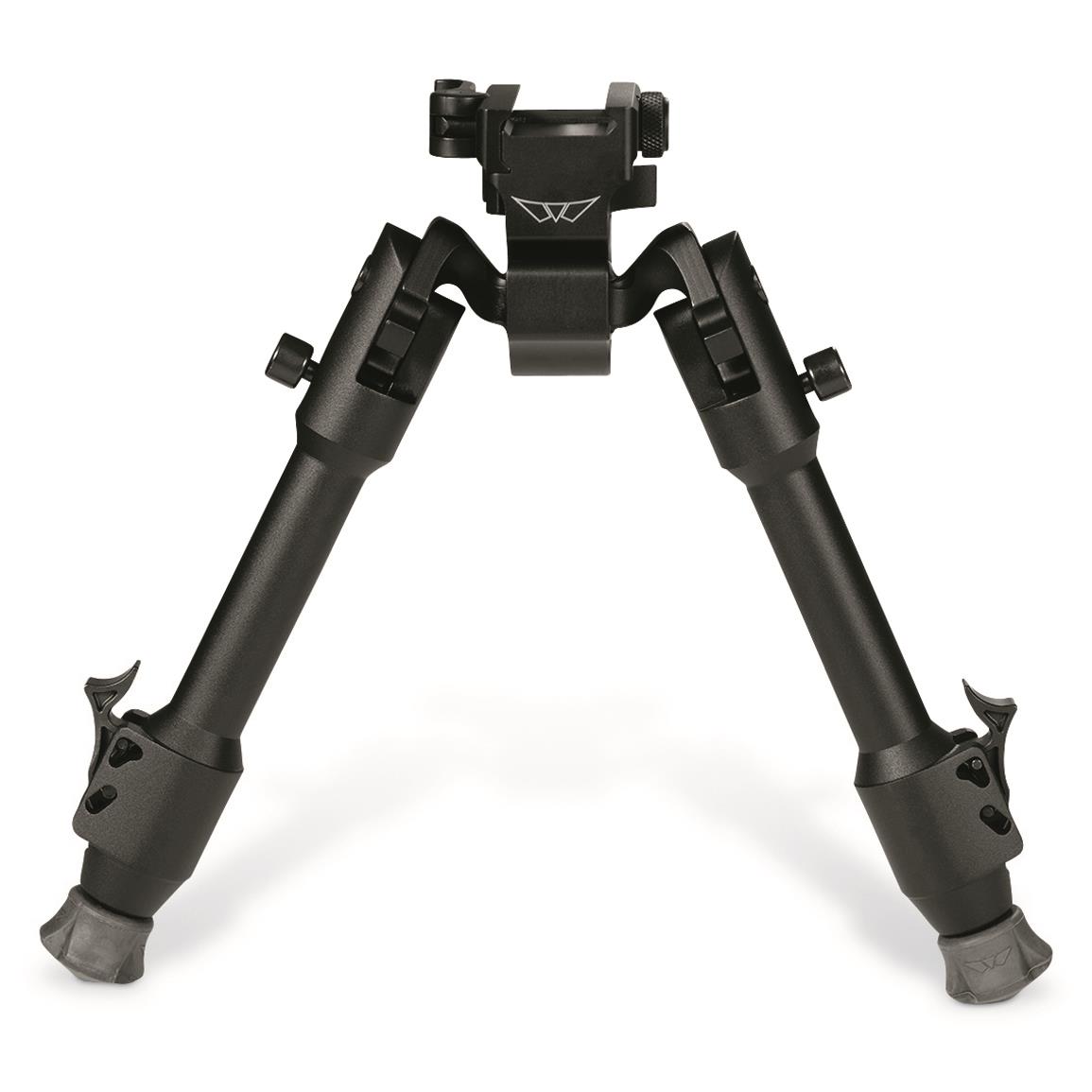
Atlas Bipods have earned legendary status among serious hunters and precision shooters, and for good reason. The Atlas PSR (Precision Sniper Rifle) and BT10 models offer exceptional build quality with features that matter in the field: cant and pan adjustments that let you level your rifle on uneven terrain, quick-detach mounting, and a range of height options. The Pan and Cant model (BT10-LW17) is particularly popular for hunting, offering 30 degrees of pan and 15 degrees of cant in a package that weighs just over 11 ounces. Yes, they’re expensive at $250-$350, but the precision machining, smooth adjustments, and bombproof durability make them worth every penny for a rifle as capable as the 7mm PRC.
For hunters who want proven performance without the Atlas price tag, Harris Bipods remain the gold standard for reliability and value. The Harris S-BRM (6-9 inches) with swivel capability has been the go-to choice for hunters for decades, offering solid lockup, easy height adjustment, and cant capability for around $100-$120. While they lack the pan feature and refined adjustments of the Atlas, Harris bipods are incredibly durable, lightweight (around 13 ounces), and simple to operate – important considerations when you’re miles from the trailhead. The Magpul Bipod offers a modern alternative in the $100-$150 range, with clever features like 50-position leg angle locks and tool-free adjustments, making it an excellent choice for hunters who want something between Harris simplicity and Atlas refinement.
Best Bench Rests for Precision 7mm PRC Shooting
When you’re serious about load development or precision shooting from the bench, a dedicated front rest outperforms any bipod. The Caldwell Rock BR Competition Front Rest represents the gold standard for shooters who demand repeatable accuracy. This beast weighs about 15 pounds and features fine windage adjustments, a stable cast-iron base, and smooth elevation controls that let you make tiny adjustments between shots. The wide, stable footprint and precision controls make it ideal for working up those perfect handloads for your 7mm PRC, where you need to eliminate every variable except the load itself. At around $250-$300, it’s an investment, but one that serious precision shooters won’t regret.
For shooters who want excellent bench performance without the weight or cost of competition-grade rests, the Caldwell Lead Sled 3 offers a different approach. Rather than just supporting the rifle, it uses weight (lead bags or sand) to reduce recoil, which can be beneficial when shooting extended sessions with the 7mm PRC’s substantial recoil. The adjustable platform and rear buttstock support create a complete shooting system for around $150-$200. Alternatively, the Sinclair Benchrest Windage Rest provides a lighter, more portable option at about $200 that still delivers precision adjustments and rock-solid support. These rests excel at the range but aren’t field-portable, so they’re purpose-built tools for the serious bench shooter who wants to extract every bit of accuracy from their 7mm PRC.
Bipod Features That Matter for Long-Range Work
When you’re shooting at extended ranges with the 7mm PRC, cant and pan adjustments transform from nice-to-have features into essential tools. Cant (the ability to tilt the rifle side-to-side) lets you level your scope even when shooting from sloped terrain, which is critical because a canted rifle throws shots off target in unpredictable ways – the further you shoot, the worse it gets. Pan (the ability to swivel the rifle horizontally) allows you to track moving game or transition between targets without breaking your shooting position or fighting the bipod’s resistance. For long-range hunting scenarios where you might need to adjust quickly for a moving animal or set up on uneven ground, these features can make or break the shot.
Height adjustment range is another crucial consideration that many shooters overlook. A bipod that extends from 6 to 9 inches works great from prone positions on flat ground, but what about shooting over tall grass, from a sitting position, or across uneven terrain? Models offering 9-13 inches or even taller provide versatility for real-world hunting situations. Equally important is leg deployment speed and security – notched legs that lock firmly in position beat friction-based systems that can slip under the 7mm PRC’s recoil. Look for bipods with independent leg adjustments so you can adapt to terrain quickly, and preloading capability (the ability to load the bipod forward to reduce jump and maintain target view through recoil) which significantly aids in spotting your own impacts at long range.
Mounting Your Bipod: Picatinny vs Sling Swivel
The Picatinny rail mounting system has become the preferred choice for precision-oriented shooters, and for good reason. Picatinny mounts offer rock-solid attachment with zero wobble, quick-detach capability that’s actually quick, and repeatable return-to-zero when you remove and reattach the bipod. Most modern precision rifles, including many chambered in 7mm PRC, come with Picatinny rails already installed on the forend. The main advantage is the rigid, precise connection – there’s no play, no rotation, and no gradual loosening over time. Atlas, Magpul, and higher-end Harris models all offer Picatinny-compatible versions, and while you’ll pay slightly more for quick-detach models, the convenience and security are worth it for serious long-range work.
Sling swivel mounts represent the traditional approach and still have their place, especially on hunting rifles without factory Picatinny rails. Harris bipods built their reputation on the simple swivel stud mount, which attaches to the same point as your sling. The advantages are simplicity, lighter weight, and no need to modify your rifle or add rails. The disadvantages include potential for slight wobble over time as the stud wears, less rigid attachment, and slower attachment/detachment. For dedicated precision rifles, Picatinny is the clear winner, but for lightweight hunting rifles where you don’t want to add rails or extra weight, a quality swivel-mount bipod like the Harris still performs admirably. Some shooters split the difference by installing an Arca-Swiss rail, which offers another mounting standard that’s gained popularity in the precision rifle community and works with specialized bipod adapters.
Choosing Between Field Bipods and Bench Rests
The decision between a field bipod and a bench rest ultimately comes down to how you primarily use your 7mm PRC. If you’re a hunter who occasionally shoots from the bench for load development and zeroing, a quality field bipod is the clear choice – it’s the tool you’ll use 90% of the time. An Atlas or Harris bipod can serve double duty at the range and in the field, providing adequate stability for bench work while being portable enough to carry on hunts. The versatility matters because the 7mm PRC shines as a hunting cartridge, and having your support system with you when that shot opportunity presents itself is what counts. A bipod that lives in your range bag doesn’t help when you’re glassing a ridgeline at dawn.
Conversely, if you’re primarily a precision shooter focused on load development, competition, or long-range target work, a dedicated bench rest makes sense as your primary investment. The superior stability and fine adjustments of a quality front rest will help you shoot smaller groups and develop better loads, which ultimately makes you more effective even when you do take the rifle hunting. Many serious shooters end up owning both: a competition-grade rest for serious bench work and a lightweight field bipod for hunting and practical shooting. If budget forces you to choose one, consider that a $250 Atlas bipod works pretty well at the bench but a $250 bench rest is useless in the field – let your primary use case guide your decision, and remember that the 7mm PRC’s versatility means your support equipment should probably match that flexibility.
Selecting the right bipod or front rest for your 7mm PRC is about matching the support system to your shooting style and the cartridge’s intended use. Whether you choose the bombproof versatility of an Atlas bipod, the proven reliability of a Harris, or the precision of a dedicated bench rest, you’re making an investment in accuracy that lets your rifle and cartridge perform to their potential. The 7mm PRC is capable of extraordinary precision at ranges that would have seemed impossible just a generation ago, but that precision requires a stable shooting platform.
Remember that the best support system is the one you’ll actually use. A heavy bench rest won’t help on a backcountry elk hunt, and a lightweight field bipod might limit your precision during serious load development. Consider your primary use, budget for quality (this isn’t the place to cut corners), and don’t be afraid to invest in both a field bipod and a bench rest if you do serious work in both environments. Your 7mm PRC deserves a support system as capable as the cartridge itself – choose wisely, and you’ll see the difference in your groups and your success in the field.






Comments are closed.