
How to Zero and Dial Your 7mm PRC for Long Range

How to Zero and Dial Your 7mm PRC for Long Range
The 7mm PRC has quickly become one of the most popular cartridges for long-range shooting, and for good reason. With its excellent ballistic coefficient, manageable recoil, and impressive downrange energy, it’s an outstanding choice for precision shooting at extended distances. However, owning a capable rifle chambered in 7mm PRC is only the first step—learning how to properly zero your rifle and dial for distance is what separates casual shooters from those who can consistently ring steel at 1,000 yards and beyond.
Whether you’re new to long-range shooting or transitioning from another caliber, understanding the fundamentals of zeroing and dialing is essential. This guide will walk you through the entire process, from establishing that critical 100-yard zero to building your dope card and making confident adjustments in the field. By the end, you’ll have the knowledge and confidence to maximize your 7mm PRC’s potential at any distance.
Getting Your 7mm PRC Zeroed at 100 Yards
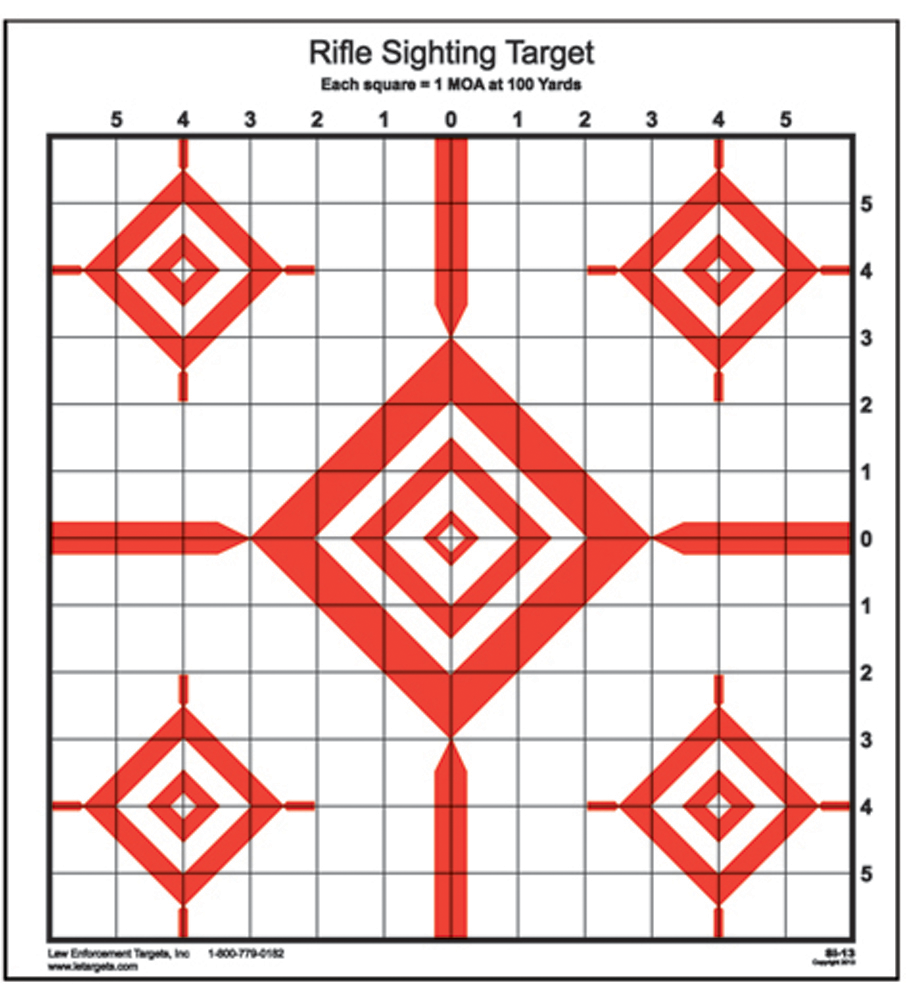
Establishing a solid 100-yard zero is the foundation of all your long-range shooting with the 7mm PRC. Start by setting up a stable shooting position—preferably from a bench rest with a quality front rest and rear bag. Make sure your rifle is properly secured but not over-torqued, as this can affect point of impact. Begin with a clean, cold bore and fire a three-shot group, allowing the barrel to cool between strings. Don’t chase individual shots; wait until you have a group to assess where your point of impact actually is relative to your point of aim.
Once you’ve established where your rifle is shooting, it’s time to make adjustments. Most shooters prefer a 100-yard zero because it provides a known reference point that’s easy to verify and makes mathematical calculations simpler for longer distances. After adjusting your scope, fire another three-shot group to confirm your zero. Remember that your first shot from a cold, clean barrel may impact slightly differently than subsequent shots, so many experienced shooters will take note of this "cold bore shift" for hunting situations. Once you’re consistently printing groups centered on your aiming point, you’ve achieved your 100-yard zero.
Building a Dope Card for Your 7mm PRC
A dope card (Data On Previous Engagements) is your personalized reference guide for what adjustments your specific rifle needs at various distances. While ballistic calculators are helpful, nothing beats real-world data gathered from your actual rifle with your specific ammunition. Start by shooting at known distances beyond your zero—200, 300, 400, 500 yards, and so on. At each distance, record the exact scope adjustment needed to achieve center hits, along with environmental conditions like temperature, elevation, and barometric pressure.
Your dope card should be simple, durable, and accessible. Many shooters laminate a small card that attaches to their rifle stock or keeps one in their scope cap. Include columns for distance, elevation adjustment (in MOA or MILs), wind hold (typically recorded in full-value wind speeds like 5 or 10 mph), and any notes about that particular distance. Don’t forget to record the specifics of your load—bullet weight, powder charge, and velocity—as these fundamentals determine your trajectory. Update your dope card regularly as you gather more data, and consider creating separate cards for different ammunition lots or environmental extremes.
Understanding Your Scope Turrets: MOA vs MIL
The two primary measurement systems for scope adjustments are MOA (Minute of Angle) and MIL (Milliradian), and understanding which system your scope uses is crucial. One MOA equals approximately 1.047 inches at 100 yards (often rounded to 1 inch for simplicity), meaning a 1 MOA adjustment moves your point of impact about 10 inches at 1,000 yards. MIL adjustments are based on the metric system, where one milliradian equals 10 centimeters at 100 meters, or roughly 3.6 inches at 100 yards. Neither system is inherently better—what matters most is that your scope’s reticle and turrets match (a MIL reticle with MIL turrets, or MOA with MOA).
Learning to use your turrets effectively requires understanding both the mechanical aspects and the math involved. Most quality scopes have tactile and audible clicks that correspond to specific angular measurements—commonly 1/4 MOA or 0.1 MIL per click. Before heading to the range, practice dialing your turrets in a controlled environment to understand how they feel and sound. Count your clicks, understand your scope’s revolution indicators (many turrets complete one full rotation before starting a second), and learn the total adjustment range of your scope. This familiarity will become invaluable when you need to make quick adjustments in the field.
Dialing Elevation for Long Range Precision
Dialing elevation is the process of adjusting your scope’s turret to compensate for bullet drop at extended ranges. Once you have your 100-yard zero established, shooting at longer distances becomes a matter of determining how much your bullet drops and dialing the corresponding elevation into your scope. For example, if your 7mm PRC drops 50 inches at 600 yards and you’re using a scope with 1/4 MOA clicks, you’d need to dial up approximately 8 MOA (50 inches divided by 6, since 1 MOA equals roughly 6 inches at 600 yards, equals 8.3 MOA).
The key to successful dialing is having confidence in your data and executing the mechanical process correctly. Always dial in the same direction to avoid backlash in your turret’s mechanisms—if you overshoot your target adjustment, dial back down past your intended setting and come back up to it. Many shooters develop a ritual: check the dope card, announce the adjustment out loud, dial the turret while counting clicks, then visually verify the turret reading before taking the shot. After your shot, it’s good practice to dial back to your zero, which helps prevent confusion and ensures you’re starting from a known reference point for your next engagement.
Common Mistakes When Zeroing the 7mm PRC
One of the most frequent mistakes new long-range shooters make is not allowing their barrel to properly cool between shot groups. The 7mm PRC is a relatively hot round, and a heated barrel will often shoot to a different point of impact than a cold one. This can lead to chasing a zero that doesn’t actually exist. Take your time during the zeroing process—bring a book, enjoy the range day, and let physics work in your favor. Similarly, many shooters fail to properly torque their scope rings and bases, leading to a zero that shifts as screws settle or loosen under recoil.
Another common error is not accounting for parallax at different distances. Parallax error occurs when your eye isn’t properly aligned with the scope’s optical axis, causing the reticle to appear to move against the target. Most long-range scopes have an adjustable parallax or side focus knob—use it at every distance, not just when zeroing. Additionally, many new shooters don’t verify their zero under different conditions. A zero established on a cool morning may shift slightly on a hot afternoon due to temperature’s effect on powder burn rates and barrel harmonics. Shoot your rifle in various conditions to understand how your specific setup behaves.
Tips for Consistent Long Range Performance
Consistency is the cornerstone of long-range accuracy, and it starts with your ammunition. The 7mm PRC shines with quality factory ammunition or carefully developed handloads, but consistency in your ammunition is more important than chasing the absolute highest velocity. Use the same lot of ammunition for practice as you’ll use in the field, and if you’re handloading, weigh your charges precisely and pay attention to seating depth consistency. Small variations in ammunition can translate to significant differences at extreme distances.
Beyond ammunition, develop a consistent shooting routine that you execute the same way every time. This includes your body position, cheek weld, breathing pattern, and trigger press. Many long-range shooters use a pre-shot checklist, mentally or even verbally running through each element before breaking the shot. Keep detailed range notes about what works and what doesn’t—environmental conditions, equipment performance, and even how you felt during successful shooting sessions. The 7mm PRC is an incredibly capable cartridge, but it’s the shooter’s skill and consistency that ultimately determine success at long range. Practice regularly, shoot in various conditions, and always be learning from each session behind the rifle.
Mastering the 7mm PRC for long-range shooting is a journey that combines technical knowledge, practical skills, and consistent practice. By establishing a reliable 100-yard zero, building accurate dope data, understanding your scope’s adjustments, and avoiding common pitfalls, you’re setting yourself up for success at extended distances. Remember that even the most expensive rifle and scope combination won’t shoot well without a solid foundation of fundamental skills.
The beauty of the 7mm PRC is that it’s forgiving enough for new long-range shooters while still offering the performance that experienced marksmen demand. Take your time learning your specific rifle’s personality, trust your data, and don’t be afraid to verify and re-verify your zero and dope under different conditions. With patience and practice, you’ll soon be confidently engaging targets well beyond what you might have thought possible. Now get out to the range, start collecting that real-world data, and enjoy the remarkable capabilities of your 7mm PRC.





Comments are closed.