
Best Gas Block for AR-15 in 2026

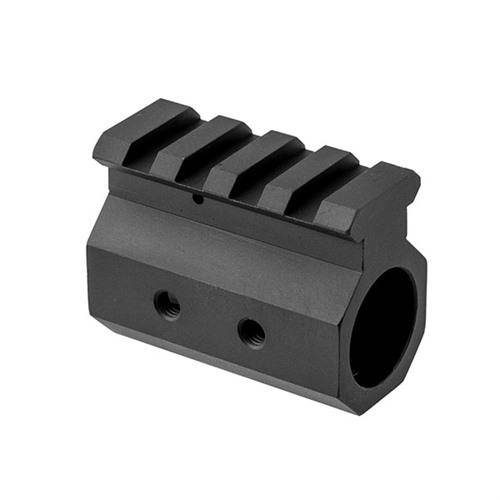


Your factory AR-15 runs roughly 20% over-gassed – manufacturers deliberately over-gas rifles to guarantee cycling with bargain ammo in dirty conditions, which batters your BCG and dumps excess carbon into your receiver. A quality gas block for AR-15 builds fixes that, and if you’re running a suppressor, an adjustable block goes from nice-to-have to mandatory. Superlative Arms is our top overall pick, but the right choice depends on your build, your budget, and whether you’re running a can. For buffer pairing advice, check out our Best AR-15 Buffer guide.
Best Gas Block for AR-15 in 2026: Quick Picks
🏆 Best Overall: Superlative Arms Adjustable Gas Block – $90 – Bleed-off design vents excess gas forward, not into your face
💰 Best Value: Wojtek Weaponry Adjustable Gas Block – $45 – Click-adjustable reliability at half the Superlative price
🔰 Best Budget: Aero Precision Low-Profile Gas Block – $18 – Solid fixed block for free-float handguard builds
🎯 Best Set-and-Forget: BCM Low-Profile Gas Block – $45 – Fixed block with BCM quality control you can trust
⭐ Best Premium: SLR Rifleworks Sentry 7 Adjustable – $100 – Tool-less front adjustment without removing your handguard

What to Look For in an AR-15 Gas Block
Journal diameter is your first checkpoint – most modern AR-15 barrels run a .750 journal, but pencil-profile barrels use .625 and some heavy profiles use .875, so measure before you buy. Beyond diameter, the mount style matters: set-screw blocks require a dimpled barrel for security, clamp-on designs grip the journal mechanically without dimpling, and pinned blocks are permanent but bombproof. Adjustable blocks need a reliable detent mechanism – cheap adjustment screws strip after a handful of turns, which is exactly why we disqualified the $15–$20 Amazon generics. Low-profile geometry is non-negotiable for any free-float handguard build.
What most guides miss is the factory over-gassing problem and why it matters beyond just recoil. Manufacturers add 15–20% extra gas volume to guarantee cycling with any ammunition in any condition – that excess velocity hammers your buffer, accelerates wear on your bolt carrier, and pushes carbon fouling into the upper receiver on every shot. Add a suppressor and backpressure increases gas flow another 15–20% on top of that, turning an already over-gassed gun into a brutally over-gassed one. An adjustable gas block lets you dial down to the minimum gas needed for reliable cycling – that’s the real performance gain, not just softer recoil.
Superlative Arms Adjustable Gas Block – Best Overall
Superlative Arms Adjustable Gas Block is the one adjustable block that genuinely solves the suppressor over-gassing problem rather than just managing it. Street price runs $90 for the .750 clamp-on version, and what you’re paying for is the bleed-off design – instead of restricting gas flow back into the receiver, it vents excess gas forward through a port in the block itself. That’s a fundamentally different approach from standard adjustable blocks, and it matters when you’re running a suppressor and backpressure is already elevated. The 416 stainless construction and 21-position click adjustment give you precise, repeatable tuning.
In real-world use, the bleed-off system means you’re not just dialing back gas – you’re actively redirecting it away from your BCG and receiver, which translates to dramatically less carbon fouling over a shooting session. The clamp-on mount is secure without requiring a barrel dimple, though you can use the set screws with a dimple for extra retention. The honest limitation is that 21 clicks requires patience during initial tuning – plan on a dedicated range session to find your sweet spot. For suppressed builds especially, this is the block to buy.
✓ Best for: Suppressed AR-15 builds and recoil-sensitive shooters
✓ Street price: $90
✗ Watch out: Bleed-off vents gas forward – minor visible venting during firing
Wojtek Weaponry Adjustable Gas Block – Best Value
Wojtek Weaponry Adjustable Gas Block hits the sweet spot that most mid-range adjustable blocks miss – it’s genuinely click-adjustable with detent positions you can actually track, not just a set screw you tighten and hope stays put. Street price is $45 for the .750 version, made from 4140 steel with a Melonite finish that handles heat and corrosion well. The low-profile geometry clears virtually any free-float handguard, and the detent-click adjustment system gives you repeatable positioning without counting wrench turns in the dark.
The Wojtek performs like blocks that cost significantly more – tuning from over-gassed to minimum-reliable-cycling takes maybe 20 minutes at the range, and the detent clicks hold their position under recoil without backing out. The adjustment screw is small and requires a specific Allen wrench, so keep one in your range bag. It’s a set-screw design, meaning you should dimple your barrel for long-term security. For anyone who wants adjustability for a suppressor build or recoil tuning but doesn’t want to spend $90 on the Superlative, this is the honest answer.
✓ Best for: Adjustable gas block under $50 – suppressor-ready on a budget
✓ Street price: $45
✗ Watch out: Set-screw mount requires barrel dimple for maximum security
Aero Precision Low-Profile Gas Block – Best Budget
Aero Precision Low-Profile Gas Block is the correct answer when you need a fixed gas block to complete a budget build or replace a standard A2 front sight base for free-float handguard clearance. Street price is $18, it comes in .750 journal diameter, and the phosphate or nitride finish is adequate for the application. This is not an adjustable block – it flows standard gas volume – but for a non-suppressed build running standard ammunition, that’s perfectly functional. The geometry is genuinely low-profile, clearing slim handguards without issues.
Installation is straightforward set-screw mount, and Aero’s manufacturing tolerances are tight enough that the block sits square on the barrel without fuss – a gas block canted even 5° off the gas port axis will starve your system, so fit matters even on budget parts. The honest limitation is simple: there’s no tuning capability whatsoever, so if you later add a suppressor or find your rifle over-gassed, you’ll be replacing this block. For a first build or a dedicated non-suppressed range rifle, $18 is hard to argue with.
✓ Best for: Budget free-float builds where adjustability isn’t needed
✓ Street price: $18
✗ Watch out: Non-adjustable – no tuning capability for suppressor use
BCM Low-Profile Gas Block – Best for Set-and-Forget Builds
BCM Low-Profile Gas Block costs more than the Aero Precision fixed block, but you’re buying BCM’s quality assurance and the option of a pinned installation that no set-screw block can match. Street price is $45 in .750 journal diameter with a phosphate finish, and BCM offers both set-screw and pinned versions depending on your preference. For a dedicated duty rifle, patrol carbine, or any build where you want zero variables and zero maintenance on the gas block, the pinned option is genuinely worth the premium over a $18 set-screw block.
BCM’s manufacturing consistency means the block face seats properly against the barrel shoulder, the gas port aligns correctly, and the finish holds up to sustained fire without issues – these sound like basic requirements, but budget fixed blocks occasionally fail on all three. The honest limitation is straightforward: $45 for a non-adjustable gas block is a real premium when the Aero does the same basic job for $18. You’re paying for BCM’s QC reputation and the pinned installation option. For a serious non-suppressed build, that’s a reasonable trade.
✓ Best for: Duty and defensive builds where reliability over adjustability is the priority
✓ Street price: $45
✗ Watch out: Premium price for a fixed block – no adjustability at any price point
SLR Rifleworks Sentry 7 Adjustable – Best Premium
SLR Rifleworks Sentry 7 Adjustable Gas Block earns its $100 street price with one genuinely useful design feature: the adjustment hex is accessible from the front of the block, which means you can tune gas without removing your handguard. On most adjustable blocks, the adjustment screw sits on top or underneath – fine during initial setup, but inconvenient if you’re dialing between suppressed and unsuppressed use at the range. The Sentry 7 runs 20 click positions, 416 stainless construction with Melonite finish, and a clamp-on mount that secures to the .750 journal without requiring a barrel dimple.
The front-adjust design is the differentiator here – if you regularly swap between suppressed and unsuppressed shooting, being able to reach the adjustment point without a handguard removal is a legitimate quality-of-life improvement. The exposed front port is the trade-off: in a duty or hard-use context, debris could theoretically interfere with adjustment, though this is rarely a practical concern for range use. At $100, it’s the most expensive option here, and the Superlative Arms bleed-off design arguably solves a more fundamental problem for suppressor users specifically.
✓ Best for: Shooters who frequently switch between suppressed and unsuppressed – front-adjust convenience
✓ Street price: $100
✗ Watch out: Front adjustment port is exposed to debris in hard-use environments
Head-to-Head Comparison: All 5 Gas Blocks Ranked
| Feature | Superlative Arms | Wojtek Weaponry | Aero Precision | BCM | SLR Sentry 7 |
|---|---|---|---|---|---|
| Price | $90 | $45 | $18 | $45 | $100 |
| Adjustable | Yes | Yes | No | No | Yes |
| Mount | Clamp-on | Set-screw | Set-screw | Set-screw/Pin | Clamp-on |
| Bleed-Off | Yes | No | No | No | No |
| Material | Stainless | 4140/Melonite | Phosphate/Nitride | Phosphate | SS/Melonite |
| Our Rating | 4.8/5 | 4.5/5 | 4.2/5 | 4.3/5 | 4.6/5 |
Superlative Arms wins for suppressed builds specifically because the bleed-off design addresses over-gassing differently than any other option. Wojtek delivers 90% of that adjustability at half the price. SLR Sentry 7 is the convenience pick for frequent suppressor swappers. BCM and Aero Precision serve fixed-block builds at opposite price points – choose based on whether BCM’s QC premium is worth it for your application.
What We’d Actually Buy
For my own suppressed 5.56 build, I’d grab the Superlative Arms at $90 without hesitation – the bleed-off design isn’t marketing, it’s a genuinely different approach to managing backpressure that keeps your receiver cleaner and your BCG moving at the right velocity. For a non-suppressed build on a budget, the Wojtek at $45 gives you adjustability to tune out factory over-gassing, which is worth doing even without a can. If budget is the hard constraint, the Aero Precision at $18 gets the job done for a fixed build.
The products we specifically avoided: cheap Amazon adjustable gas blocks in the $15–$20 range – we’ve seen adjustment screws strip after three or four turns and set screws that won’t hold under recoil, which leaves you with an unreliable gas system and no easy fix at the range. Odin Works adjustable is adequate but the adjustment mechanism isn’t as refined as either the Superlative or Wojtek, making it a middle-ground product that doesn’t clearly beat either alternative.
Frequently Asked Questions
Q: Do I need an adjustable gas block?
A: Not for every build – a fixed block works fine on a non-suppressed rifle running standard ammunition. The moment you add a suppressor, an adjustable block becomes essentially mandatory to manage the increased backpressure.
Q: How do I tune an adjustable gas block?
A: Start fully open, then close the adjustment one click at a time until the bolt fails to lock back on an empty magazine, then open two clicks back – that’s your minimum reliable setting. Do this with your actual carry ammunition, not just one brand.
Q: Clamp-on vs. set-screw vs. pinned – which is best?
A: Clamp-on is most secure without barrel modification; set-screw requires a dimple for long-term retention; pinned is permanent and bombproof but requires a gunsmith. For most builds, clamp-on or properly dimpled set-screw is sufficient.
Q: Will an adjustable gas block fix my over-gassed AR?
A: Yes – dialing down to minimum reliable gas reduces felt recoil, slows bolt carrier velocity, and significantly reduces carbon fouling in the receiver. The improvement is noticeable within one range session.
Q: How do I know if my AR is over-gassed?
A: Brass ejecting at 3–4 o’clock is properly gassed; brass flying to 5 o’clock or beyond indicates over-gassing. Excessive BCG velocity, heavy carbon fouling on the bolt face, and harsh felt recoil are also reliable indicators.
Final Recommendation
Budget build: Aero Precision at $18.
Best value with tuning capability: Wojtek Weaponry at $45.
No-compromise suppressed build: Superlative Arms at $90.
The bottom line is that factory over-gassing is a real problem worth solving, and an adjustable gas block is the most direct fix available.
One practical tip: whatever block you choose, confirm your barrel is properly dimpled or your clamp is torqued correctly – a gas block that shifts even slightly off the gas port will leave you chasing reliability problems that have nothing to do with your ammo or BCG.



Comments are closed.