
How to Spot Quality Hunting Optics: The Flashlight Test


A rifle with a bad scope is like a truck with bald tires. You might get there, but not safely and not well.
The Test That Takes One Minute
I’ve handled a lot of optics over the years – at gun shows, at shops, borrowed from hunting partners, bought and returned, bought and kept. And I’ve learned that most of what’s printed on the box or spoken in a sales pitch is useless for telling you whether the glass you’re holding will perform at 6:15 a.m. on an October morning when the light is marginal and the buck is standing in shadow at the edge of a treeline.
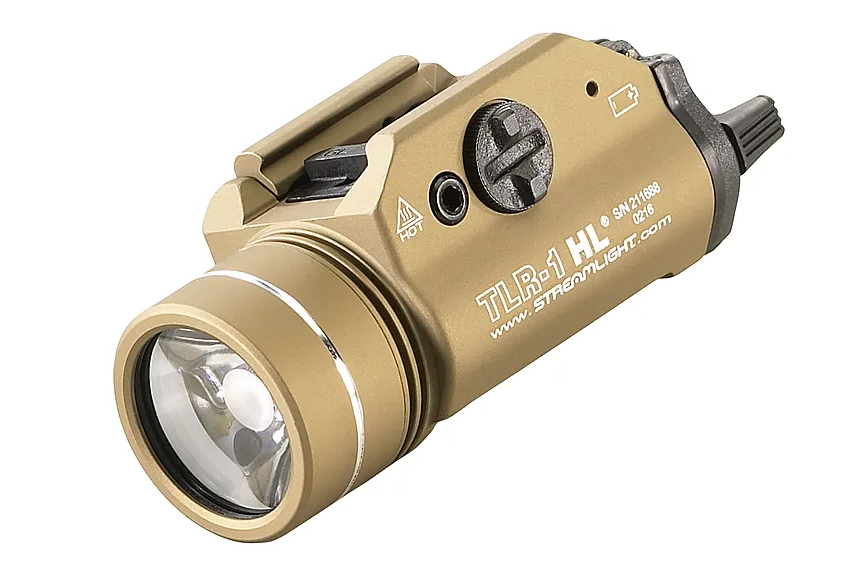
There’s a test that tells you more than the packaging in about sixty seconds. You need a small flashlight – a penlight if you have one, a phone flashlight if you don’t. That’s it. No expensive equipment, no special knowledge required.

Here’s what you do: remove the lens caps, shine the light into the objective lens at a shallow angle, and look back through the eyepiece while slowly rotating the optic. Watch what the internal reflections look like. If you see faint, colored reflections – greens, purples, ambers – the coatings are there and doing their job. If you see bright, clean white reflections coming back from multiple internal surfaces, those surfaces are uncoated or undercoated, and that scope or binocular is going to disappoint you in exactly the conditions that matter most.
That’s the whole test. The physics behind it takes a few minutes to understand, and understanding it is worth your time because it explains why optics that look identical on the shelf can perform so differently in the field.
Why Coatings Matter – The Physics Version
Every surface where light moves from one medium to another – air to glass, glass to air – reflects a portion of that light back instead of letting it pass through. Without any coating, each air-to-glass interface reflects roughly 4 to 5 percent of the incoming light. That sounds small until you account for the number of surfaces inside a typical rifle scope or binocular: 10 to 14 air-to-glass interfaces is common. Stack those 4 to 5 percent losses across all of them and you’ve lost a meaningful fraction of the light that entered the objective before it ever reaches your eye.
What you see as the result is a washed-out, low-contrast image that “goes gray” earlier in the morning and later in the evening than better-coated glass. You’ve seen this if you’ve ever compared a cheap scope against a quality one in low light – the cheap one looks like you’re looking through a dirty window. The expensive one looks like you’re looking through open air. The difference isn’t the size of the objective lens. It’s the coatings.
Anti-reflection coatings work by creating interference that cancels out the reflected light wave, allowing more of the original signal to pass through. Applied to every air-to-glass surface in the optical stack, they can bring reflective losses down from 4 to 5 percent per surface to under 0.5 percent. That’s the difference between losing 30 to 40 percent of your incoming light and losing 5 to 10 percent. In low light, that gap is enormous.
Premium optics use fully multi-coated glass – multiple layers of coating on every internal surface, applied in vacuum chambers at the molecular level. The process is expensive, which is part of why quality glass costs what it does. It’s also part of why a well-built 40mm scope can genuinely outperform a poorly coated 56mm model at dusk, even though the larger objective gathers more raw light. More light in doesn’t help if you lose most of it to uncoated surfaces before it reaches your eye.
What the Colored Reflections Actually Mean
The color you see in the reflections is the wavelength of light that the coating is reflecting rather than transmitting. A greenish reflection means the coating is bouncing back some green wavelengths while letting red and blue through. A purple reflection means yellow-green is being partially reflected. Different coatings reflect different colors depending on their chemical composition and thickness.
None of that matters as much as the key distinction: colored reflection means coatings are present. White reflection means they’re not. The specific color doesn’t tell you the coating is good or bad – it tells you it exists. What you’re looking for is whether the reflections are faint and colored versus bright and white. Faint and colored means the coating is absorbing most of what it’s supposed to absorb. Bright and white means that surface is sending light back at you instead of through the glass.
This exposes the “green lenses are premium” myth directly. A greenish tint on the lens, or a purple sheen when you look at it from the front, doesn’t tell you anything meaningful about coating quality. It tells you the color of the dominant reflection – which depends on coating chemistry, not coating excellence. Don’t shop for lens tint. Shop for faint, minimal reflections across all surfaces when you run the flashlight test.
What Good and Bad Glass Actually Look Like in the Field
The practical difference between coated and uncoated glass shows up most obviously at the edges of shooting light – the first twenty minutes of legal morning and the last twenty minutes of legal evening. These are also, not coincidentally, the moments when game tends to move.
Through well-coated glass at 6:15 a.m., you can still pick out tine tips against a dark treeline. Neck lines and ear shapes are readable. When the sun starts to come through the timber, you don’t see halos spreading around the light source or smearing that washes out contrast. Edge-to-edge sharpness holds. Your eyes don’t tire quickly.
Through poorly coated glass at the same moment, the image is flat and gray. Details that should be readable aren’t. When low sun enters the picture at any angle, you get fat halos and glare that make glassing uncomfortable and imprecise. Eye fatigue builds fast – your visual system is working hard to extract information from a low-contrast signal, and it tires. You back off the glass to rest, and during the time you’re resting, things happen.
I’ve made this comparison side-by-side on actual hunts, running two rifles with different quality optics on the same morning in the same conditions. The difference is not subtle. It’s the difference between seeing the animal clearly and squinting at a gray shape and trying to decide.
The Online Marketplace Problem
The reason this test matters more now than it did ten years ago is the current state of the optics market. Online marketplaces are full of scopes marketed as “tactical,” “sniper-grade,” or “HD” that feature large objectives, illuminated reticles, and aggressive pricing. The photography is good. The spec claims are written by people who understand what hunters want to see. And inside, the glass is cheap, the coatings are minimal or absent, and the assembly is loose enough that the reticle shifts under recoil after a few sessions.
Common failure modes from this category of scope: reticle movement under recoil, fogging in damp weather despite “sealed” claims, terrible dusk performance despite 50 or 56mm objectives, and turrets that don’t track reliably. A $79 scope is a fine decision for a plinker that never leaves the range in daylight. It is not a fine decision for an ethical shot at the edge of legal light on an animal you’re going to eat or a predator you’re going to pelt.
The flashlight test catches most of these. You’ll see the white reflections, you’ll count more than two or three bright internal flares, and you’ll put the scope back on the shelf with a clear conscience about the decision.
One more thing worth knowing: the brand name on the scope body is not always the company that made the lenses inside it. Many optics companies source glass elements from OEM manufacturers – sometimes very good ones, sometimes not. This is why two scopes at similar price points from respected brands can perform quite differently. The flashlight test doesn’t care about the name on the outside. It tells you what’s actually happening with the glass inside.
The Full Checklist Before You Buy
The flashlight test is the most important check, but it’s not the only one. When I’m evaluating a scope or binocular before committing to it, I run through a short list that takes five minutes and answers most of the questions worth asking.

Flashlight test first. Colored faint reflections or minimal flares – keep going. Multiple bright white reflections – put it back.
Edge-to-edge sharpness. Find something with vertical lines at distance – a power pole, fence posts, a building edge – and run the field of view across it. Sharp corners should stay sharp to the edge of the image. Soft, mushy corners are a sign of cheaper glass or poor assembly.
Contrast into shadow. Look into dark brush or a shadowed doorway. Shapes should remain readable. Cheap glass tends to smear contrast in low-contrast conditions, making dark shapes blend together rather than resolve.
Mechanical feel. Run the magnification ring through its full range. It should move smoothly with no gritty spots. Dial the turrets several clicks in one direction and back – the adjustments should feel positive and consistent, not mushy. Check the focus or parallax adjustment for the same. Anything that feels loose, stiff in spots, or rough is a problem that will get worse with use.
Markings that actually mean something. FMC means fully multi-coated – every surface. MC means multi-coated – some surfaces. Coated means single layer on some surfaces. ED or HD glass means low-dispersion elements that reduce chromatic aberration. Waterproof and fogproof ratings should come with specifics – IPX7 or similar standards rather than vague “weatherproof” language.
Warranty and service reality. A lifetime warranty from a brand that will actually be around in three years to honor it is worth something. A lifetime warranty from a brand that changes names every two seasons is not. Established brands with real service centers – Vortex, Leupold, Bushnell, Kahles, Zeiss – stand behind their products in ways that matter when something goes wrong in the field.
The Bottom Line
Optics are the most important equipment decision a hunter makes after the rifle itself, and they’re also the category where the gap between what marketing promises and what physics delivers is widest. Buzzwords and large objectives and colorful lens tints don’t determine how well a scope performs at the edge of legal light. Coatings determine that, glass quality determines that, and assembly quality determines that.
You can test for all three in a store with a penlight and five minutes of attention. Do the flashlight test. Check the edges. Check the contrast. Feel the mechanics. Compare what you find to what you’re being asked to pay.

You get what you pay for in optics in a way that’s more literal than almost any other category of hunting gear. Cheap glass saves money on coatings and assembly, and you pay the price in glare, in low-contrast images, and in shorter hunting minutes at the edges of the day when the best opportunities tend to appear.
The physics hasn’t changed. Trust the test.
Frequently Asked Questions
Can I use my phone flashlight for the test instead of a penlight?
Yes, a phone flashlight works. A slim penlight gives you better angle control and makes it easier to isolate specific internal surfaces, but a phone light reveals the same basic information. Shine at a shallow angle into the objective, rotate slowly, and watch for white versus colored reflections. The colored-versus-white distinction is clear enough to see with either light source.
Does a big objective lens (50mm or 56mm) guarantee a brighter image?
No – and this is one of the most common misconceptions in optics marketing. A larger objective gathers more raw light, but without adequate coatings on all internal surfaces, a significant portion of that light is lost to reflections before it reaches your eye. A well-coated 40mm scope can genuinely outperform a poorly coated 56mm model in low-light conditions. Objective size matters, but coatings matter more.
What does “fully multi-coated” actually mean?
Fully multi-coated (FMC) means multiple layers of anti-reflection coating applied to every air-to-glass surface in the optical system. This is the highest coating standard and produces the maximum light transmission. Multi-coated (MC) means multiple layers on some surfaces. Coated means a single layer on some surfaces. The difference in real-world low-light performance between FMC and single-coated glass is significant and measurable at the edges of shooting light.
Is ED or HD glass worth the premium?
ED (extra-low dispersion) and HD (high-definition) glass reduces chromatic aberration – the color fringing that appears on high-contrast edges when different wavelengths of light focus at slightly different points. It improves contrast and color accuracy, particularly noticeable at higher magnification settings. It does not replace proper multi-coatings – you want both for the best image quality. ED/HD glass with inadequate coatings will still underperform well-coated standard glass in low light.
Should I trust a lifetime warranty on a budget optic?
Only if the brand behind it will actually be there to honor it. A lifetime warranty from Vortex, Leupold, or Bushnell is backed by real service infrastructure and years of warranty claims being honored. A lifetime warranty from a brand that’s been selling under its current name for two years is a marketing claim, not a meaningful commitment. Research the brand’s warranty service track record before relying on the warranty as part of the value calculation.




Comments are closed.