
Garmin Xero C1 Pro vs. Athlon Midas: Compact Chronographs Face-Off


The chronograph is the one piece of equipment that tells you the truth about your load when everything else is just giving you opinions.
Why Velocity Data Actually Matters
Reloaders talk about consistency in terms of group size. That’s a downstream measurement – it tells you the result but not the cause. A chronograph tells you what’s happening at the muzzle: the velocity of each round, the spread between your fastest and slowest shots, the standard deviation of the string. With that data you can make actual decisions about your load rather than guessing from holes in paper.
Extreme spread and standard deviation are the numbers that matter most to a precision loader. A load that puts five shots into half an inch at 100 yards but shows 45 fps of extreme spread is a load with an underlying consistency problem that distance will expose. A load with 12 fps of extreme spread and 4 fps standard deviation is a load you can trust at 500 yards. The chronograph is the only instrument that shows you the difference.

The Garmin Xero C1 Pro is the most talked-about chronograph in the current market, largely because it takes a different approach to the problem than most of its competition. Instead of placing a unit downrange and hoping you don’t shoot it, or dealing with the limitations of optical systems in poor light, the C1 Pro is a muzzle-mounted Doppler radar chronograph. Here’s what that means in practice and who it’s actually right for.
What the Garmin Xero C1 Pro Actually Is
The C1 Pro mounts to a Picatinny rail just forward of the muzzle and uses a Doppler radar system to track the bullet as it travels downrange. The radar doesn’t need to see the bullet optically – it’s tracking the reflected radar signal – which means it works in any light condition, any weather, and at any range. You don’t need to set up a downrange unit, worry about bullet path clearance over a sensor, or deal with the light-dependent accuracy limitations of optical chronographs.
It connects to the Garmin Connect app via Bluetooth. Data from each shot is recorded automatically with velocity, and the app calculates extreme spread, standard deviation, and average velocity across your string. You can log notes, label loads, and build a history of your reloading data over time. For a reloader who’s developing loads across multiple rifles and cartridges, the organized data storage is genuinely useful rather than just a convenience feature.
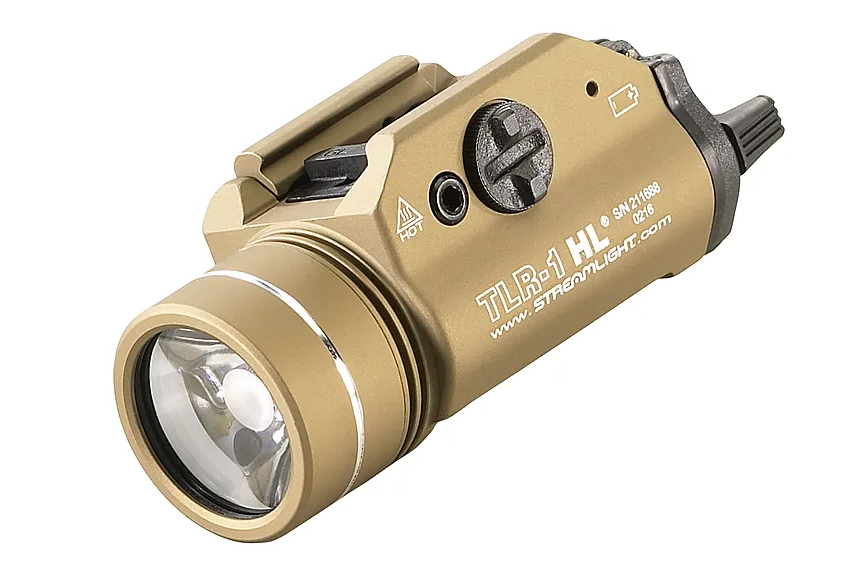
The unit is small – roughly the size of a compact tactical light – and adds modest weight to the rifle. Setup is quick: mount it, open the app, shoot. There’s no downrange setup, no praying the sun angle cooperates, and no worrying about the unit being hit by a round or affected by muzzle blast from adjacent shooters.
Accuracy and Real-World Performance
Doppler radar chronographs are genuinely accurate when set up correctly. The C1 Pro’s velocity readings are consistent with reference measurements and with readings from established optical units like the LabRadar and MagnetoSpeed V3 when tested side by side. The accuracy is not the question.
The practical limitations are worth understanding. The radar beam has a finite width, and at close range the bullet needs to be traveling within that beam for accurate readings. This means the unit needs to be properly mounted and aligned – a crooked mount produces missed readings or inconsistent data. The app walks you through a calibration process, but it requires attention the first time and re-verification when you swap rifles.
At very high velocities – some accelerator loads, very light bullets at magnum velocities – the radar can occasionally misread or miss shots. This is uncommon with standard hunting and target loads but worth knowing for the edge cases. The unit handles .22 LR through large magnum cartridges reliably under normal conditions.
One real limitation for suppressors: mounting the C1 Pro forward of a suppressor puts it farther from the muzzle than the radar geometry prefers, and reading quality can drop. Garmin has updated firmware to improve suppressed rifle performance, but if you shoot suppressed regularly, test carefully before depending on it for precision load development.
The App and Data Management
The Garmin Connect integration is the feature that separates the C1 Pro from competitors most clearly. The app stores every string with date, label, and shot-by-shot velocity. You can compare strings across different powder charges, different primers, different seating depths – the kind of systematic load development data that previously required a spreadsheet and manual entry.
The interface is clean and the data is presented in a format that makes sense for a reloader. Extreme spread, standard deviation, and average velocity are displayed automatically. Shot-by-shot velocity is visible for each string. You can see where outliers occur within a string, which sometimes reveals seating depth issues or primer sensitivity that average data would hide.
The limitation is the Garmin ecosystem dependency. The data lives in Garmin Connect, not in a neutral format you can easily export to other analysis tools. If you want to work with the data in a ballistic solver or a reloading log outside Garmin’s platform, the export options are limited. For a shooter who uses Garmin’s other devices – GPS units, hunting tools – the integration is natural. For everyone else, it’s a walled garden.
How It Compares to the Alternatives
The shooting chronograph market has consolidated around a few clear options at different price and capability levels, and understanding where the C1 Pro sits requires knowing the competition.
The LabRadar is the other Doppler radar unit that serious reloaders consider. It sits downrange rather than on the rifle, which some shooters prefer because it doesn’t add anything to the rifle. It’s also more expensive and requires setup time that the C1 Pro eliminates. LabRadar data export is more flexible. For a precision rifle shooter who works at a static bench, LabRadar is the established standard. For a hunter or field shooter who moves between positions, the muzzle-mounted C1 Pro’s setup speed is a meaningful advantage.
The MagnetoSpeed V3 is a barrel-mounted optical chronograph that uses sensors around the barrel rather than radar. It’s accurate and reliable, costs significantly less than the C1 Pro, and works well in all light conditions. Its limitation is that the barrel attachment changes where the rifle shoots – not drastically, but enough that you can’t develop loads at the bench with a MagnetoSpeed and assume the data transfers perfectly to field conditions with the unit removed. The C1 Pro mounts forward of the muzzle on the rail and has less effect on zero.
Traditional optical chronographs on tripods – Caldwell, Shooting Chrony, CED Millenium – are the affordable entry point. They require downrange setup, depend on adequate light for the optical sensors, and have the ever-present risk of taking a hit from a shooter who forgets where the screens are. They work and they’re cheap. They’re also the most friction-heavy option for regular use.
At roughly $600, the C1 Pro costs more than a MagnetoSpeed V3 and about the same as a LabRadar. What you’re paying for relative to the MagnetoSpeed is the radar technology, the app integration, and the elimination of the barrel-attachment zero-shift. What you’re paying for relative to the LabRadar is convenience and the muzzle-mounted form factor.
Who Should Buy the C1 Pro
The C1 Pro is the right chronograph for a specific kind of shooter: someone who reloads seriously, moves between multiple rifles, values organized data, and wants the fastest possible setup at the bench without compromising accuracy.
If you do most of your load development at a static bench and shoot the same rifle repeatedly, the LabRadar or MagnetoSpeed V3 both offer excellent value at lower cost or with better data export flexibility. The C1 Pro’s advantages – muzzle mount, app integration, no downrange setup – matter most when you’re working across multiple rifles and platforms or when you’re doing field chronographing in positions other than a formal bench.
For hunting applications, the C1 Pro is particularly useful for verifying velocity with hunting loads at different temperatures. Powder temperature sensitivity is a real factor in hunting conditions, and being able to chronograph your specific hunting load at ambient temperature before a hunt – without setting up a downrange unit in a field – is a practical advantage that other chronograph types can’t match as conveniently.
For new reloaders: this isn’t the first chronograph to buy. The fundamentals of load development don’t require Bluetooth or app integration. A basic optical unit at $80 to $120 teaches the same lessons and produces usable data. The C1 Pro is the upgrade for someone who’s already comfortable with the process and wants to make it more efficient and more organized.
The Honest Assessment
The Garmin Xero C1 Pro is the best chronograph for the shooter who values convenience and ecosystem integration above all else. It does what it promises – accurate velocity data with the fastest setup of any chronograph in its class – and the app makes managing load development data across multiple rifles genuinely easier than a paper log or spreadsheet.
It’s not the best value per dollar in chronographs. For the same money or less, the LabRadar gives you more flexible data export and the established reputation of the precision shooting community’s preferred unit. The MagnetoSpeed gives you barrel-mounted accuracy at a fraction of the price. Both require more setup time or have the barrel-attachment limitation that the C1 Pro avoids.
The decision comes down to what you’re optimizing for. If it’s raw data quality and export flexibility: LabRadar. If it’s proven accuracy at lower cost: MagnetoSpeed V3. If it’s the fastest path from rifle in hand to velocity data on screen with the least friction: the C1 Pro is the answer, and the premium is justified for the shooter who will use it constantly rather than occasionally.
Quick Comparison
| Feature | Garmin Xero C1 Pro | LabRadar | MagnetoSpeed V3 |
|---|---|---|---|
| Technology | Doppler radar, muzzle-mounted | Doppler radar, downrange | Optical, barrel-mounted |
| Price (approx.) | ~$600 | ~$560 | ~$280 |
| Setup time | Fast (mount and shoot) | Moderate (position downrange) | Fast (barrel attachment) |
| Light dependent | No | No | No |
| Zero shift | Minimal | None | Yes (remove before shooting for record) |
| Data app | Garmin Connect (good UI, limited export) | Bluetooth app (flexible export) | Basic app |
| Suppressor use | Limited (firmware improving) | Good | Good |
| Best for | Multi-rifle reloaders, field use | Bench precision work | Budget-conscious reloaders |
Frequently Asked Questions
Does the Garmin Xero C1 Pro affect point of impact?
Less than barrel-mounted units like the MagnetoSpeed, but not zero. The C1 Pro mounts to a rail forward of the muzzle and adds weight ahead of the action, which can slightly affect barrel harmonics and point of impact at the margins. In practice, most shooters report negligible shift in point of impact between having the unit mounted and removed. This is significantly better than the MagnetoSpeed’s barrel clip, which attaches directly to the barrel and produces a more consistent point of impact shift that needs to be accounted for when developing loads you plan to shoot without the unit attached.
Can the C1 Pro be used with a suppressor?
With limitations. Mounting the C1 Pro forward of a suppressor positions it further from the muzzle than the radar geometry prefers, which can reduce reading consistency. Garmin has updated firmware to improve suppressed performance, and many users report acceptable results with the current firmware on rifles with moderate suppressor lengths. For precision load development with a suppressed rifle where you need consistent readings on every shot, testing your specific setup before depending on the data is essential. Some suppressor configurations work well; others produce enough missed readings to be frustrating. The LabRadar’s downrange positioning avoids this issue entirely.
What’s a good standard deviation target for a hunting load?
For hunting applications, a standard deviation below 15 fps is generally considered acceptable, and below 10 fps is good. Extreme spread below 30 fps across a five-shot string is a reasonable target for a load you plan to use on game. For long-range hunting where shots extend past 400 yards, tighter consistency matters more – SD under 8 fps and ES under 20 fps are the targets for loads used at distance where velocity variance translates directly to vertical dispersion on target. The chronograph shows you where your load actually sits relative to these benchmarks rather than requiring you to infer consistency from group size alone.
Is the Garmin Xero C1 Pro worth it for a casual reloader?
Probably not. For a reloader who develops loads infrequently and works with one or two rifles, the basic optical chronograph at $80 to $120 produces the same fundamental information – velocity, extreme spread, average – without the premium price. The C1 Pro’s advantages are most meaningful for shooters who chronograph regularly, work across multiple platforms, or want the app-based data organization for systematic load development. If you’re setting up a chronograph a few times per year for basic load verification, the premium is hard to justify. If you’re at the bench every week and developing loads across several rifles and cartridges, the C1 Pro’s convenience compounds into meaningful time savings across a season.
How does the C1 Pro handle .22 LR and other rimfire cartridges?
Well, in most configurations. The radar system handles the lower velocities of .22 LR subsonic and standard velocity rounds without the light-dependent accuracy limitations that plague optical chronographs in marginal light conditions. For .22 LR load testing and velocity verification – particularly for subsonic loads where knowing actual velocity relative to the speed of sound matters for suppressor performance – the C1 Pro is a practical tool. The main consideration is rail availability: a standard 10/22 or similar rifle needs a rail adapter to mount the C1 Pro if it doesn’t have an integral Picatinny section. With rail access, rimfire performance is generally reliable.





Comments are closed.