
Fixed scope or LPVO? We compare both for hunters.


The promise of “one optic to rule them all” has driven countless hunters toward low power variable optics – LPVOs – in recent years. The logic sounds bulletproof: why settle for a single magnification when you can dial from 1x to 6x or even 1x to 8x? But experienced hunters know that the KISS principle – Keep It Simple, Stupid – has saved more hunts than any piece of fancy glass. The fixed power scope, whether a classic 4x or a battle-proven ACOG-style optic, refuses to die for good reason.
This comparison is not about declaring a universal winner. It is about matching the right tool to your actual hunting style, terrain, and budget. If you have been going back and forth between a fixed power scope and an LPVO for your next hunting build, this breakdown covers the practical differences that matter in the field – not just on paper.

Fixed Power Scopes – Why Simplicity Wins
A fixed power scope does one thing and does it without apology. You mount it, zero it, and forget about it. There is no magnification ring to bump, no parallax shift between power settings, and no temptation to fiddle when a buck steps out at 80 yards. Hunters who grew up on fixed 4x scopes often describe a sense of confidence that comes from knowing exactly what the sight picture will look like every single time they shoulder the rifle. That kind of muscle memory is hard to replicate with a variable optic.
From a practical standpoint, fewer moving parts mean fewer failure points. A fixed scope has no erector tube adjustment mechanism for magnification, which translates to a lighter, more compact, and often more rugged package. For hunters building lightweight mountain rifles or brush guns, shaving three to five ounces off the optic matters more than people think after mile eight on a steep ridgeline. Fixed scopes also tend to cost less at equivalent glass quality, which means your dollar goes further toward sharper, brighter images rather than paying for mechanical complexity.
LPVO Flexibility – When Variable Pays Off
The core advantage of an LPVO is adaptability. On true 1x, a quality LPVO behaves like a red dot – both eyes open, fast target acquisition, minimal tunnel vision. Crank it up to 6x or 8x and you have enough magnification for a 300-yard shot across a clearing. For hunters who face mixed terrain in a single outing – think eastern hardwoods that open into power line cuts or food plots – that flexibility is genuinely useful rather than just a nice-to-have feature.
Modern LPVOs have also closed the gap on durability concerns. Reputable manufacturers now build variable optics that handle recoil from magnum cartridges and survive rough weather without losing zero. The true 1x capability is what separates a hunting LPVO from a traditional 1-4x or 2-7x variable scope. If you hunt thick cover where snap shots on moving game are common but also need to reach out occasionally, the LPVO earns its keep. Just be honest about whether you actually encounter those mixed scenarios or if you are buying versatility you will never use.
Glass Clarity at the Same Price Point
This is where fixed power scopes punch above their weight. When you spend $400 on a fixed 4x scope, nearly all of that budget goes into glass quality, coatings, and build materials. Spend $400 on an LPVO and a significant portion pays for the zoom mechanism, additional lens elements, and the engineering required to maintain image quality across the magnification range. The result is predictable: a fixed scope at any given price point almost always delivers sharper, brighter images than an LPVO at the same price.
The difference becomes most noticeable in low light – exactly when many hunters need their optic to perform best. Dawn and dusk are prime time for whitetail, elk, and mule deer, and a scope that transmits even five percent more light can be the difference between a confident shot and a pass. If you are shopping for an LPVO and want glass quality comparable to a good fixed scope, expect to spend roughly 30 to 50 percent more. That is not a knock on LPVOs – it is just physics and economics.
| Factor | Fixed Power Scope | LPVO (1-6x or 1-8x) |
|---|---|---|
| Glass clarity at $400 | Excellent | Good |
| Weight (typical) | 10-14 oz | 16-22 oz |
| Low-light performance | Superior at same price | Requires higher budget |
| Speed of use | Very fast – no adjustment | Fast on 1x, slower if dialing |
| Versatility | Single magnification | Full range |
| Failure points | Minimal | More mechanical complexity |
Weight and Durability on Hunting Builds
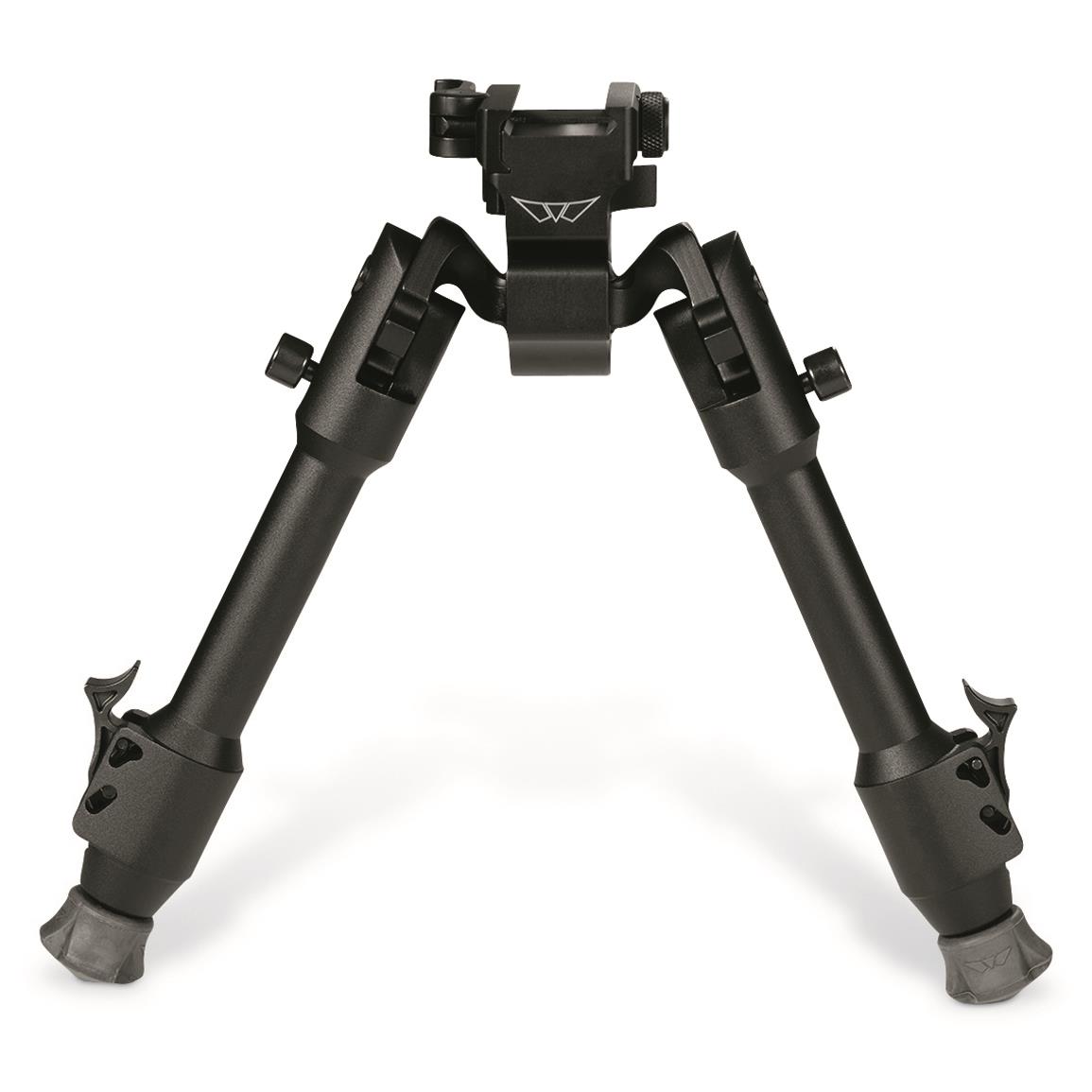
Weight matters on a hunting rifle in ways it does not on a range toy or a home defense carbine. A typical fixed 4x scope weighs between 10 and 14 ounces. A comparable LPVO usually lands between 16 and 22 ounces – and that is before you account for the often heavier mount required for an LPVO’s longer tube. On a lightweight hunting build where every ounce is scrutinized, that difference adds up. Pair it with a sling, loaded magazine, and a bipod, and your “ultralight” rifle starts feeling distinctly average.
Durability in harsh conditions favors fixed scopes on principle, though modern LPVOs are far tougher than their reputation suggests. Fewer moving parts inherently means fewer things that can break, fog internally, or lose calibration. That said, quality LPVOs from established manufacturers routinely survive brutal recoil, subzero temperatures, and driving rain. The real durability question is not “will it break” but “how much do I trust a mechanical system I cannot field-repair?” If your hunt takes you days from the nearest road, simplicity has tangible value.
Quick Checklist – Choosing Between Fixed and LPVO
- What is your typical shot distance? Under 200 yards favors fixed. Mixed ranges favor LPVO.
- How much does weight matter? Backcountry and mountain hunts reward lighter optics.
- What is your budget? Fixed scopes deliver better glass per dollar.
- Do you hunt thick cover? True 1x on an LPVO helps with snap shots.
- Do you hunt low light? Fixed scopes transmit more light at the same price.
- How remote are your hunts? Simplicity wins when repair is not an option.
- Are you comfortable with a magnification ring? Some hunters find it distracting under pressure.
- Do you already own quality glass? If your current fixed scope works, upgrading to an LPVO may not improve your results.
Common Mistakes Choosing Your Optic
Hunters make the same errors repeatedly when deciding between fixed scopes and LPVOs. Most of these mistakes come from buying for imagined scenarios rather than real ones.
- Buying versatility you do not need. If 90 percent of your shots happen inside 150 yards in eastern timber, a 1-6x LPVO is solving a problem you do not have.
- Cheaping out on an LPVO. Budget LPVOs often have poor true 1x performance – the fisheye distortion makes both-eyes-open shooting uncomfortable. If you cannot afford good glass in a variable, a quality fixed scope serves you better.
- Ignoring the weight penalty. Hunters obsess over barrel profiles and stock materials, then bolt on a 20-ounce LPVO without a second thought.
- Assuming fixed means outdated. Modern fixed power scopes feature excellent multi-coated lenses, capped turrets, and illuminated reticles. They are not your grandfather’s Weaver K4.
- Overthinking magnification. A 4x fixed scope is effective for ethical shots well beyond 300 yards in skilled hands. Most hunters overestimate how much magnification they actually need.
- Forgetting about the mount. LPVO mounts – especially cantilever or QD options – add weight, cost, and potential failure points that fixed scope rings do not.
FAQ – Fixed Scope or LPVO for Hunters
Do I really need magnification beyond 4x for hunting?
For the vast majority of North American hunting scenarios, 4x is plenty. Whitetail in the east, black bear over bait, and even mule deer inside 300 yards are well served by a fixed 4x. If you regularly take shots beyond 350 yards on western hunts, 6x to 8x becomes more useful – but be honest about how often that actually happens.

Is an LPVO reliable enough for a serious hunting rifle?
Yes – if you buy from a reputable manufacturer with a proven track record. Modern LPVOs are built to handle magnum recoil and harsh weather. The reliability concern is more about budget models where quality control is inconsistent. Look for scopes with solid warranty support and positive long-term reviews from hunters, not just tactical shooters.
What is the best fixed magnification for elk hunting?
A fixed 4x remains the most versatile single magnification for elk. It provides enough field of view for timber shots and sufficient clarity for 300-yard meadow crossings. Some hunters prefer a fixed 6x for open country in Montana or Wyoming, but 6x can feel tight in dark timber. If your elk hunting covers both environments, this is one scenario where an LPVO genuinely earns its place.

Can I use an ACOG-style scope for hunting?
You can, though most ACOG models are designed for tactical use and may not have the reticle subtensions or eye relief ideal for hunting cartridges with heavy recoil. Some hunters love them for their bombproof construction and fiber-optic illumination that requires no battery. If you already own one, it can work well on a 223 Rem or 308 Win hunting platform.
Does an illuminated reticle replace the need for an LPVO?
An illuminated reticle on a fixed scope can improve low-light performance and speed up target acquisition, narrowing one of the LPVO’s advantages. It does not give you variable magnification, but for hunters whose main reason for considering an LPVO is faster shooting in dim conditions, an illuminated fixed scope is a lighter and less expensive alternative.
Quick Takeaways
- Fixed power scopes deliver superior glass clarity, lighter weight, and greater simplicity at every price point.
- LPVOs earn their premium when you genuinely face mixed-distance scenarios in a single hunt.
- At budget price points, a quality fixed scope almost always outperforms an entry-level LPVO.
- Weight savings from a fixed scope compound over long backcountry hunts.
- Be honest about your real hunting scenarios – not the ones you imagine – before choosing.
- Either optic works if it is quality glass properly mounted and zeroed. The best scope is the one you practice with and trust.




Comments are closed.