
MOA or MRAD? A practical guide for hunters.


Choosing between MOA and MRAD is one of those decisions that can send a new long-range hunter down a rabbit hole of forum debates and YouTube arguments. Here is the truth most experienced shooters will tell you – the system you pick matters far less than using it consistently. Both MOA and MRAD will get your bullet where it needs to go. The real question is which one fits the way your brain already works, and which one matches the gear you already own or plan to buy.
This guide breaks down the practical differences between MOA and MRAD for hunters in the US and Canada. No engineering lectures, no military worship, no tribal loyalty to one system. Just a clear look at how each system performs when you are behind a rifle in real hunting conditions – from a 200-yard coyote setup in Kansas to an 800-yard elk shot across a Montana canyon.

MOA vs MRAD – Why Consistency Beats Both
The single biggest mistake hunters make is not choosing the wrong system – it is mixing systems. Running an MOA turret with an MRAD reticle, or dialing MOA on the scope while your rangefinder spits out MRAD holdovers, creates confusion at the worst possible moment. Consistency across your entire shooting system is what actually matters. Pick one language and make every piece of gear speak it.
Professional guides and competitive shooters who use both systems will tell you the same thing. Neither MOA nor MRAD is inherently more accurate. One MOA subtends 1.047 inches at 100 yards. One MRAD (mil) subtends 3.6 inches at 100 yards. They are just different ways of slicing up the same angular pie. The system that makes you faster and more confident in the field is the right one for you.
How MOA Clicks Work in Inches at Range
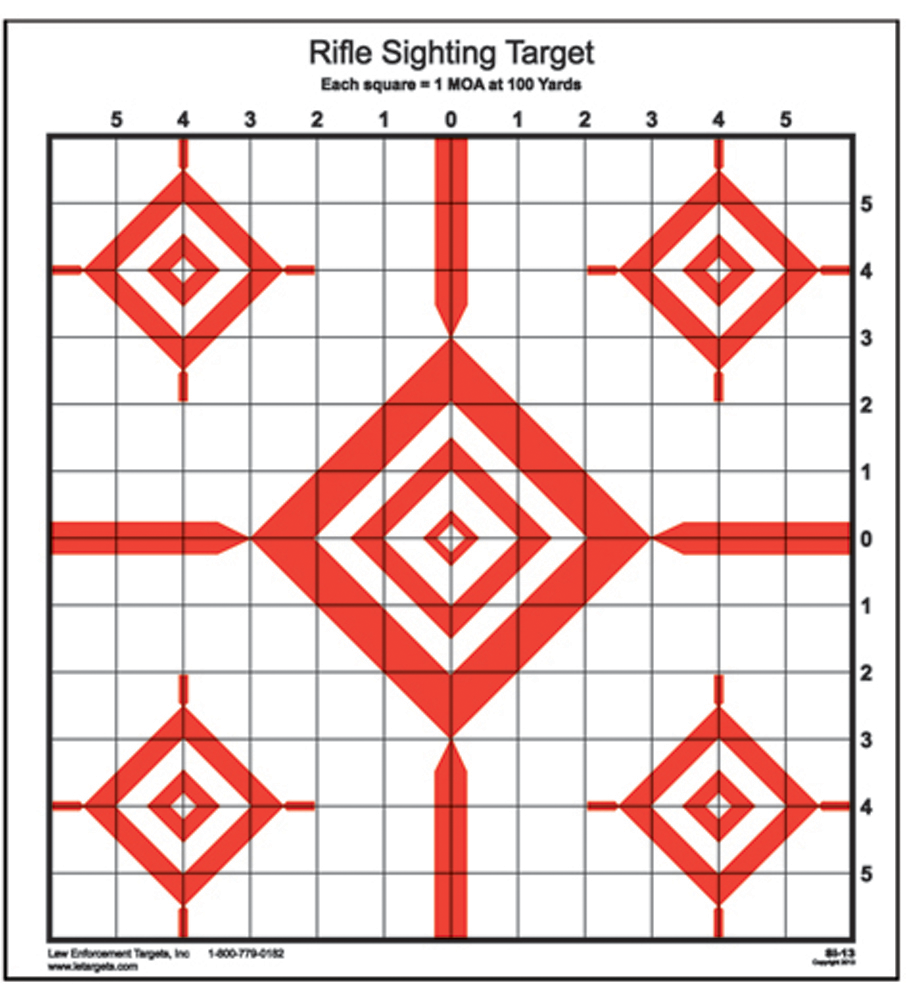
MOA stands for Minute of Angle, and it divides a circle into 21,600 increments. For hunters, the practical takeaway is simple – 1 MOA equals roughly 1 inch at 100 yards, 2 inches at 200 yards, 5 inches at 500 yards, and so on. Most hunting scopes use 1/4 MOA clicks, meaning each click moves your point of impact about a quarter inch at 100 yards. This relationship between inches and yards feels natural if you grew up with the imperial system.
The comfort factor is real. When a buddy at the range says “my rifle shoots a one-inch group at 100,” he is essentially describing a 1 MOA group. That intuitive connection between MOA and inches makes zeroing and basic adjustments straightforward for most American and Canadian hunters. If you are shopping for an MOA scope, look for matched turrets and reticle – both in MOA – so your adjustments stay in one language from glass to click.
| Distance | 1 MOA (inches) | 1 MRAD (inches) | 1/4 MOA Click | 1/10 MRAD Click |
|---|---|---|---|---|
| 100 yds | 1.047 | 3.6 | 0.26 | 0.36 |
| 300 yds | 3.14 | 10.8 | 0.79 | 1.08 |
| 500 yds | 5.24 | 18.0 | 1.31 | 1.80 |
| 800 yds | 8.38 | 28.8 | 2.09 | 2.88 |
MRAD Mental Math Under Hunting Pressure
MRAD – also called mils or milliradians – divides a circle into 6,283 increments. One mil equals 3.6 inches at 100 yards, which does not sound intuitive at first. But here is where MRAD shines – the math scales cleanly in a base-10 system. With 1/10 mil clicks, each adjustment is a simple decimal. Your rangefinder says 4.2 mils of drop, you dial 42 clicks. No fractions, no converting quarters into whole numbers.
Under hunting pressure – cold hands, elevated heart rate, a bull elk about to walk behind timber – simple math wins. MRAD users tend to report fewer dialing errors in high-stress scenarios because the decimal system reduces mental steps. This is exactly why most military and professional precision rifle programs adopted MRAD. If you are comfortable thinking in decimals rather than fractions, MRAD may feel faster even though the imperial inch connection is less obvious.
Which System Builds Competency Faster?
For most beginners, MOA is easier to understand on day one because of the inch-per-hundred-yards shortcut. But MRAD is often easier to master over time because the math stays cleaner at extended range. If you plan to invest in long-range training or take a precision rifle course, know that most instructors teach MRAD. Neither path is wrong – just pick one and train with it until the adjustments become automatic.
Match Your Turrets and Rangefinder System
This is where many hunters quietly sabotage themselves. Your scope turrets, reticle, rangefinder, and ballistic solver all need to output the same unit. If your rangefinder gives you a holdover in MRAD but your turrets are marked in MOA, you are doing mental conversion math while your target is moving. That is a recipe for a missed shot or worse – a wounded animal.
A quick system-matching checklist:
- Scope reticle and turrets use the same system (MOA/MOA or MRAD/MRAD)
- Rangefinder outputs holdover data in your chosen system
- Ballistic app or solver is configured to match your turret units
- Dope cards and range notes are written in one system only
- If you use a Kestrel or similar weather meter, set it to match everything else
- Custom turrets or dial labels match your ballistic solution output
- Verify zero confirmation at the range using the same unit language
If you already own a rangefinder that outputs in one system, it may make sense to choose your scope system to match rather than the other way around. A simple upgrade like a ballistic rangefinder that pairs with your phone app can tie the whole system together. Look for rangefinders and apps that let you toggle between MOA and MRAD so you are not locked in if you switch scopes later.
What Professional Hunters and Guides Actually Use
The trend among professional hunters, outfitters, and PRS competitors in North America has shifted heavily toward MRAD over the past decade. That said, plenty of highly skilled guides in the western US and Canadian Rockies still run MOA setups they have trusted for years. The takeaway is not to follow the trend blindly – it is to recognize that industry momentum means more MRAD-compatible gear, training resources, and ballistic tools are available now than ever before.
Common Mistakes When Picking MOA or MRAD
Even experienced shooters fall into these traps. Avoid them and you will save money, time, and frustration.

- Mixing reticle and turret systems. An MOA reticle with MRAD turrets forces constant conversion. Always match them.
- Choosing based on brand loyalty instead of system logic. Buy the system that fits your workflow, not the one your favorite influencer runs.
- Ignoring your existing gear. If you already own a quality MOA scope and rangefinder, switching to MRAD means replacing everything – not just the scope.
- Overthinking precision differences. At hunting distances under 500 yards, both systems adjust finely enough. A 1/4 MOA click and a 1/10 MRAD click are both smaller than most hunting rifles can consistently group.
- Not practicing dial-ups before hunting season. Knowing the theory means nothing if you have never actually dialed a correction under time pressure. Dry-fire practice with your turrets builds the muscle memory that matters.
- Forgetting to confirm after dialing. Regardless of system, always verify your turret is back to zero after a shot sequence. Leaving elevation dialed in is a common cause of high misses on subsequent hunts.
- Skipping the ballistic solver setup. A solver configured incorrectly – wrong unit, wrong zero range, wrong atmospheric defaults – will give bad data in any system.
One ethical note worth mentioning – if you are not confident in your ability to make a clean, accurate correction at extended range, the responsible choice is to close the distance rather than take a marginal shot. No measurement system replaces good field judgment.
FAQ – MOA vs MRAD for American Hunters
Can I mix MOA and MRAD in my setup?
Technically yes, but practically no. Mixing systems forces you to convert units in the field, which adds mental steps and increases the chance of dialing errors. If your reticle is MRAD and your turrets are MOA, every holdover or correction requires multiplication by 3.438. That is not something you want to do with an animal in your crosshairs. Keep everything in one system.

Which is better for a beginner getting into long-range hunting?
If you are starting fresh with no existing gear, MRAD is slightly easier to learn for long-range work because the base-10 math scales cleanly. If you already have MOA equipment and understand the inch-per-hundred-yards concept, there is no reason to switch. The best system for a beginner is the one they will actually practice with consistently.
How do I convert between MOA and MRAD?
Multiply MRAD by 3.438 to get MOA. Multiply MOA by 0.2909 to get MRAD. But honestly, if you find yourself converting regularly, that is a sign your gear is mismatched. Fix the system consistency rather than memorizing conversion factors.
Does one system work better with specific calibers?
No. Both MOA and MRAD work identically across all calibers. Whether you are shooting 6.5 Creedmoor, 300 Win Mag, or 308 Win, the angular measurement system does not change how the bullet flies. It only changes how you communicate the correction to your scope.
What do most hunting scope manufacturers offer now?
Most major manufacturers offer their popular hunting models in both MOA and MRAD configurations. The selection gap that once favored MOA has largely closed. If you are shopping, you will find plenty of quality options in either system across all price ranges.
Is MRAD only for military and tactical shooters?
Not anymore. While MRAD gained its North American foothold through military adoption, it is now mainstream in hunting and competition. Many of the best-selling hunting scopes on the market come in MRAD versions, and ballistic apps default to MRAD output. The “tactical only” stigma is outdated.

Quick Takeaways
- Pick one system and match everything – scope reticle, turrets, rangefinder, and ballistic solver should all speak the same language
- MOA feels intuitive for American hunters because 1 MOA is roughly 1 inch at 100 yards
- MRAD scales more cleanly at long range thanks to base-10 math and 1/10 mil clicks
- Neither system is more accurate than the other – consistency and practice matter more than the unit itself
- The industry trend favors MRAD, but MOA remains a perfectly effective choice
- Do not switch systems unless you are willing to replace or reconfigure all your gear
- Practice dialing corrections at the range before hunting season, regardless of which system you choose





Comments are closed.