
Sniper Bipod vs Shooting Tripod: Stability Showdown for Precision Hunting


How Bipods and Tripods Changed Precision Hunting
Not long ago, most hunters steadied their rifles with a rolled-up jacket, a fence post, or a set of shooting sticks passed down from their grandfather. Sandbags ruled the bench, and field positions were improvised at best. Then military-influenced gear started filtering into the hunting world, and suddenly precision rifle support became a real category with real options.
Today, hunters chasing elk in steep coulees, shooting prairie dogs at 400 yards, or glassing for mountain goats in British Columbia have two serious choices: a rifle bipod or a shooting tripod. Both solve the same core problem – holding the rifle still enough to break a clean shot – but they do it differently, and the right choice depends heavily on your terrain, your shooting position, and how far you are willing to carry the gear.

Harris vs. Atlas – Picking the Right Bipod
The Harris Legacy
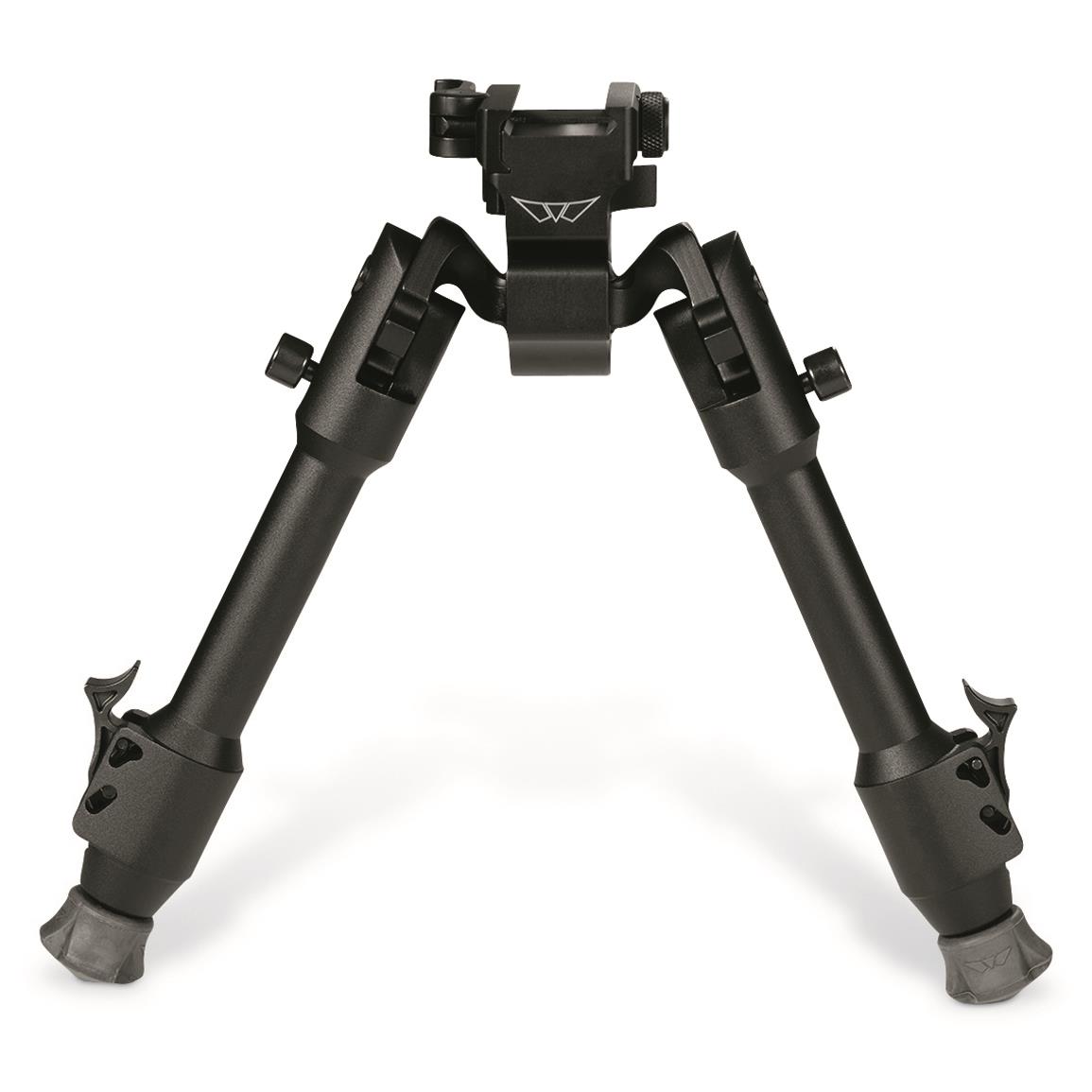
The Harris bipod has been the standard for decades. It clamps to a sling swivel stud, deploys fast, and holds up hard. Legs extend to different height ranges, and the swivel models allow the rifle to cant left or right to level the reticle on sloped ground. If you are hunting mostly from prone or low positions on relatively flat terrain, a Harris-style bipod is hard to beat for the money.
The Atlas bipod pushed things further by adding a full pan-and-tilt head with multiple leg positions – not just straight down but angled forward or backward. That flexibility matters when you are shooting off a log, a rock ledge, or any surface that is not perfectly flat. If you are shopping, look for features like leg angle adjustment, a cant function, and a quick-detach mount so you can swap between rifles.
Key Bipod Buying Checklist
- Look for a pan/cant function if you hunt hilly terrain
- Leg height range should cover your typical shooting position
- QD (quick-detach) mounting saves time in the field
- Rubber feet grip better on hard surfaces than bare metal
- Weight under 14 oz keeps the front end manageable
- Check compatibility with your rifle’s rail or stud system
Why Tripods Win on Uneven and Elevated Terrain
A bipod needs two points of contact with the ground plus the shooter’s body to create a stable triangle. On flat ground that works great. On a sidehill, in deep grass, or when you need to shoot from a sitting or standing position, the bipod starts showing its limits fast. A shooting tripod solves this by giving you three independently adjustable legs that can be spread and angled to suit almost any surface.
The other big advantage is height range. Most bipods top out around 9 to 13 inches, which keeps you prone or very low. A good hunting tripod can go from knee height all the way to standing, meaning you can shoot over brush, shoot from a seated position in a blind, or take a standing offhand shot that is dramatically more stable than unsupported. For hunters who cover big country on foot and may not know what position they will need until they spot the animal, that flexibility is a genuine advantage.
Stability Metrics – Recoil, Wobble, and Follow-Through
What the Numbers Actually Mean in the Field
Oscillation – the small side-to-side wobble before the shot – is where bipods and tripods diverge the most. A bipod attached to the rifle shares every movement you make, which means your heartbeat and breathing cycle transfer directly into the reticle picture. A tripod with a fluid head or ball head decouples some of that motion, especially when the rifle rests in a V-block or saddle rather than being hand-held.
Recoil management and follow-through observation are also different. A bipod lets the rifle recoil naturally rearward, which most shooters manage well in prone. A tripod saddle can actually allow you to watch your bullet trace and spot your own impacts on steel or dirt at distance – a real benefit when hunting in open country where you want to see where a miss went. For cartridges like 300 Win Mag or 6.5 Creedmoor at extended range, seeing your trace can tell you a lot about wind conditions before your next shot.
Weight and Pack Size for Backcountry Rifle Hunts
| Support Type | Typical Weight | Packed Length | Best Use Case |
|---|---|---|---|
| Standard bipod | 8-14 oz | Stays on rifle | Flat to moderate terrain |
| Carbon fiber bipod | 5-9 oz | Stays on rifle | Ultralight backcountry |
| Aluminum tripod | 2.5-4 lbs | 18-24 inches | Mixed terrain, dual use |
| Carbon fiber tripod | 1.5-2.5 lbs | 16-22 inches | Serious backcountry |
A bipod wins on packability every single time. It stays attached to the rifle, adds minimal weight, and requires zero extra space in your pack. If you are doing a seven-day sheep hunt in the Yukon or a solo elk pack-out in Colorado, every ounce matters, and a quality lightweight hunting bipod under 10 oz is nearly invisible in your kit.
A carbon fiber tripod cuts the weight penalty significantly, but you are still looking at a separate piece of gear that needs to be strapped to your pack or carried in hand. For hunters who already carry a spotting scope on a tripod, the math changes – one tripod that works for both glassing and shooting is a real weight saving compared to carrying both a spotter tripod and a separate bipod.
Deployment Speed When Seconds Cost You the Shot
A bipod deploys in about two seconds from folded to shooting position. Flip the legs down, push forward into the bipod, and you are ready. That speed is hard to match, and in situations where a deer steps into a shooting lane or a coyote pauses at 200 yards, fast setup wins.
A tripod takes longer – typically 10 to 20 seconds to extend legs, set height, and position the rifle in the saddle. Some hunters practice this until it becomes muscle memory and get it down to 8 or 10 seconds, but it will rarely beat a bipod for raw speed. The trade-off is that tripods shine in glassing-intensive hunts where you are set up, waiting, and watching – not reacting to surprise opportunities. Western hunters glassing from a ridge for hours before the shot have time to set up properly.
Common Mistakes Hunters Make With Rifle Supports
- Loading the bipod too hard – pushing forward aggressively helps, but over-loading it stiffens the rifle unnaturally and causes point-of-impact shifts
- Using a bipod on a steep sidehill without cant adjustment – shooting with the reticle canted and the crosshair “cheated” over causes missed shots
- Setting tripod legs unequally – one short, two long causes wobble that defeats the whole purpose
- Skipping the rear bag – a bipod without a rear support bag still leaves the stock unsupported and allows vertical wobble
- Deploying too close to cover – muzzle blast off grass or brush directly in front of the bipod creates turbulence that can throw a shot
- Not practicing positional transitions – hunters who only ever shoot prone with a bipod get caught off guard when the only shot available is from a sitting or kneeling position
- Ignoring rifle balance with a heavy tripod head – a top-heavy setup on a light tripod is less stable than a lighter setup properly balanced
FAQ – Bipods, Tripods, and Precision Hunting Accuracy
Can I shoot accurately from a tripod in the field?
Yes, and many long-range hunters argue a tripod is more accurate than a bipod for shots beyond 300 yards because it reduces body-induced wobble. The key is using a rifle saddle or V-block that cradles the forend properly rather than just balancing the rifle on a ball head.
What is the best lightweight hunting bipod for backcountry use?
Look for a carbon fiber or aluminum alloy bipod in the 6-10 oz range with a cant function and leg height that covers your typical shooting position. Features matter more than brand name – pan and cant are more important than a famous logo.

Can a tripod replace a bipod entirely?
For most Western hunters doing glassing-based stalks, yes. For whitetail hunters in stands or ground blinds where shooting windows are tight and fast, a bipod is usually a better fit. Many serious hunters carry both – a bipod on the rifle and a small tripod for glassing that can double as a rifle rest if needed.
What cartridges benefit most from a tripod rest?
Any cartridge where you are shooting past 400 yards benefits from the added stability a tripod provides. This includes flat-shooting rounds like 6.5 Creedmoor, 28 Nosler, and 300 Win Mag where small wobble errors at the muzzle become large misses at distance.
Are shooting sticks the same as a tripod?
Not quite. Traditional shooting sticks are two crossed poles that support the forend – fast to use but limited in height adjustment and lateral stability. A modern hunting tripod with a rifle saddle offers far more stability, height range, and precision. Shooting sticks are a good budget starting point, but they are not in the same class for precision work.
Is it safe to use a bipod or tripod on public land?
Yes, using a rifle support is standard practice and has no legal restrictions. Always follow your state or provincial hunting regulations regarding loaded firearms, safe direction of fire, and safe zones of fire. A stable rest does not replace good target identification – it just makes the shot cleaner once you have confirmed your target.
Quick Takeaways
- Bipods are faster, lighter, and better for flat terrain and prone shooting
- Tripods win on uneven ground, elevated positions, and long-range follow-through
- A cant-capable bipod is a minimum requirement for mountain or hilly terrain
- Carbon fiber versions of both exist for serious backcountry weight savings
- A tripod that doubles as a spotter mount saves weight on glassing-heavy hunts
- Neither system replaces fundamentals – trigger control and reading wind still matter most
- Match your support system to your most common shot scenario, not your dream scenario





Comments are closed.